
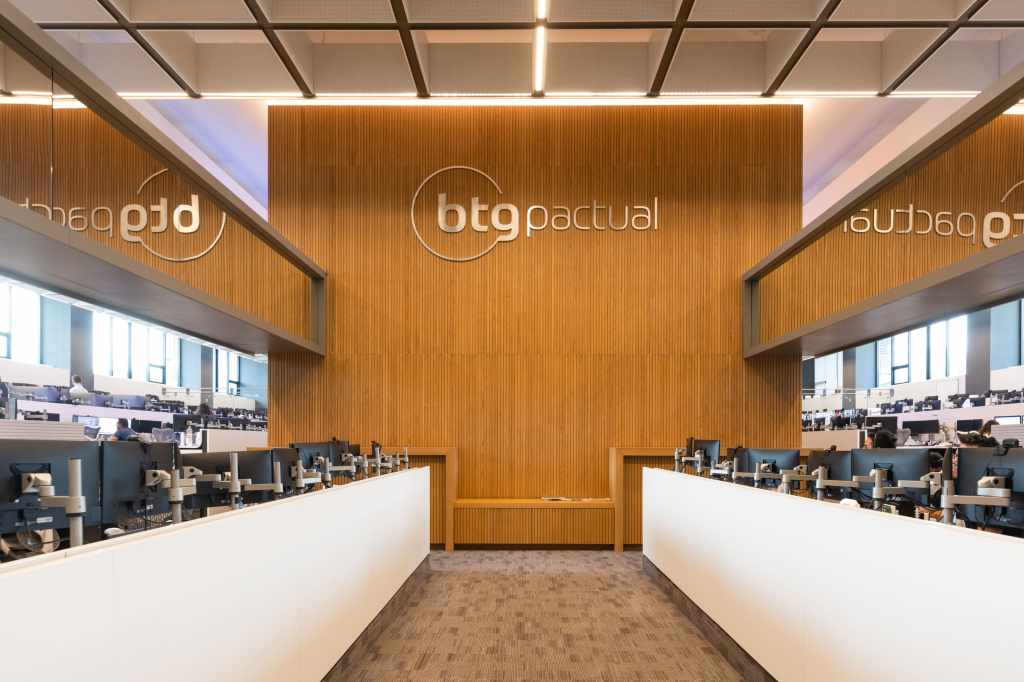
By Brasil Stock Guide – Shares of BTG Pactual’s units (BPAC11) jumped 13.12% on Tuesday (August 12), closing at R$45.27, after the Brazilian investment bank reported record second-quarter results. The performance caught the attention of major financial institutions, which highlighted BTG’s resilience and ability to deliver growth in a less favorable environment for investment banking. The news was first reported by Valor Econômico.
Analysts at Safra described the quarter as “very strong,” offering a glimpse of the bank’s earnings potential in a more supportive market. “It’s interesting to see how this volatility in results used to happen quite a lot around 2020/21, when we had this investment banking and brokerage line delivering bigger surprises, and it shows how the bank is ‘underearning’ because of the macroeconomic environment,” they noted.
Citi praised the record-breaking quarter in both revenues and profitability, driven by solid improvements across all business lines. “We believe the results highlight not only BTG’s ability to read and navigate market conditions, but also the bank’s opportunistic approach to consolidating market share, maintaining operational leverage, allowing revenues to outpace expenses and, therefore, improve profitability,” the bank said. According to Citi, BTG’s well-diversified revenue streams, strong competitive position, and ability to organically generate capital should continue to drive growth prospects.
While Genial Investimentos does not formally cover BTG, its daily report emphasized that the bank posted a record adjusted net income, with all-time highs in investment banking, lending, and brokerage operations. It also recorded net inflows of R$59 billion in Asset & Wealth Management — a figure the firm described as both strong and strategically important for sustaining expansion.
With robust earnings, diversified business lines, and positive market sentiment, BTG Pactual appears well positioned to capture new opportunities. If analyst projections hold, the recent rally in its units could mark the start of a more sustained upward cycle.