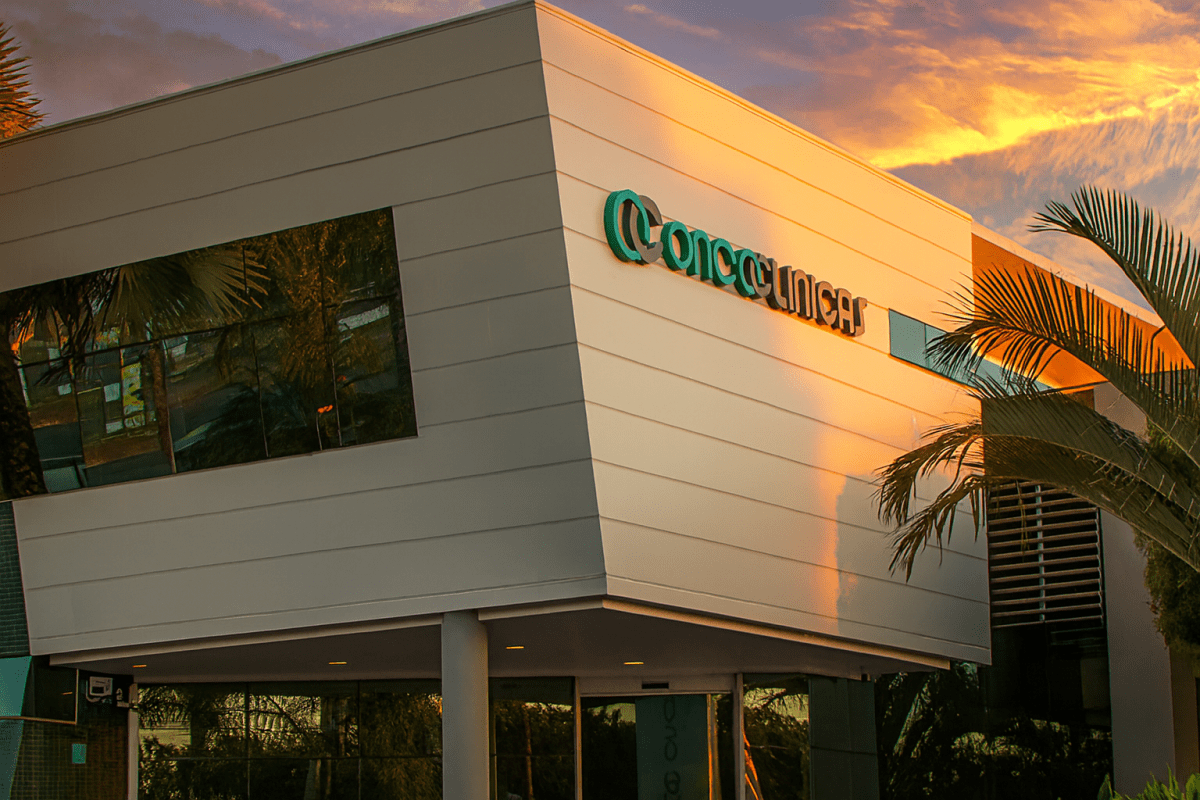
By Brazil Stock Guide – Fitch Ratings on Friday (Sept. 5) cut the national long-term rating of Oncoclínicas (B3: ONCO3) to BBB(bra) from AA-(bra) and placed it on Negative Watch. The downgrade reflects falling revenue, tighter margins and a cash burn of BRL 650 million (US$124 million) in the first half, alongside growing risks of covenant breaches and refinancing.
“The approval of the planned capital increase on Sept. 9 will be decisive for the company’s financial rebalancing strategy,” Fitch said.
From IPO Euphoria to Debt Hangover
Founded by oncologist Bruno Ferrari, Oncoclínicas raised BRL 3.6 billion (US$694 million) in its 2021 IPO, pitching investors on Brazil’s aging population and rising cancer incidence. Since then, shares have tumbled 82%, reflecting rapid debt-fueled expansion beyond its operational capacity.
Second-quarter results showed net debt of BRL 3.7 billion (US$713 million), equal to 4.4 times EBITDA — above the 3.5x covenant due by year-end. Most of the debt is floating-rate, tied to Brazil’s CDI benchmark, inflating costs as interest rates remain in double digits.
Asset Sales and Capital Hunt
To ease pressure, the company sold hospitals in Rio de Janeiro and is negotiating the sale of a Belo Horizonte unit. Meanwhile, a premium oncology clinic under development in Riyadh, Saudi Arabia, requiring up to US$20 million in investment, has raised questions over focus and execution.
Oncoclínicas has hired Rothschild to oversee a capital increase, expected to include debt-to-equity conversion. The move may dilute stakes held by Goldman Sachs and Banco Master, two major shareholders that have shown little appetite to inject new funds.
Ferrari Under Pressure
Ferrari, who owns 8% and serves as CEO, remains in charge amid shareholder reshuffling. Banco Master, with 15%, is seeking to exit, while Centaurus Capital’s Josephina III fund holds 31.8% and is the largest investor. Uncertainty over the controlling bloc’s strategy clouds the outlook.
The company faces a forced reset: rising competition from Rede D’Or (B3: RDOR3), Mater Dei (B3: MATD3) and Fleury (B3: FLRY3) collides with defaults by insurers such as Unimed, which collapsed in 2024.
Returning to oncology roots while cutting exposure to general hospitals has become the survival path. Without fresh capital, however, Oncoclínicas risks seeing its still-compelling demographic thesis strangled by execution missteps and heavy debt.