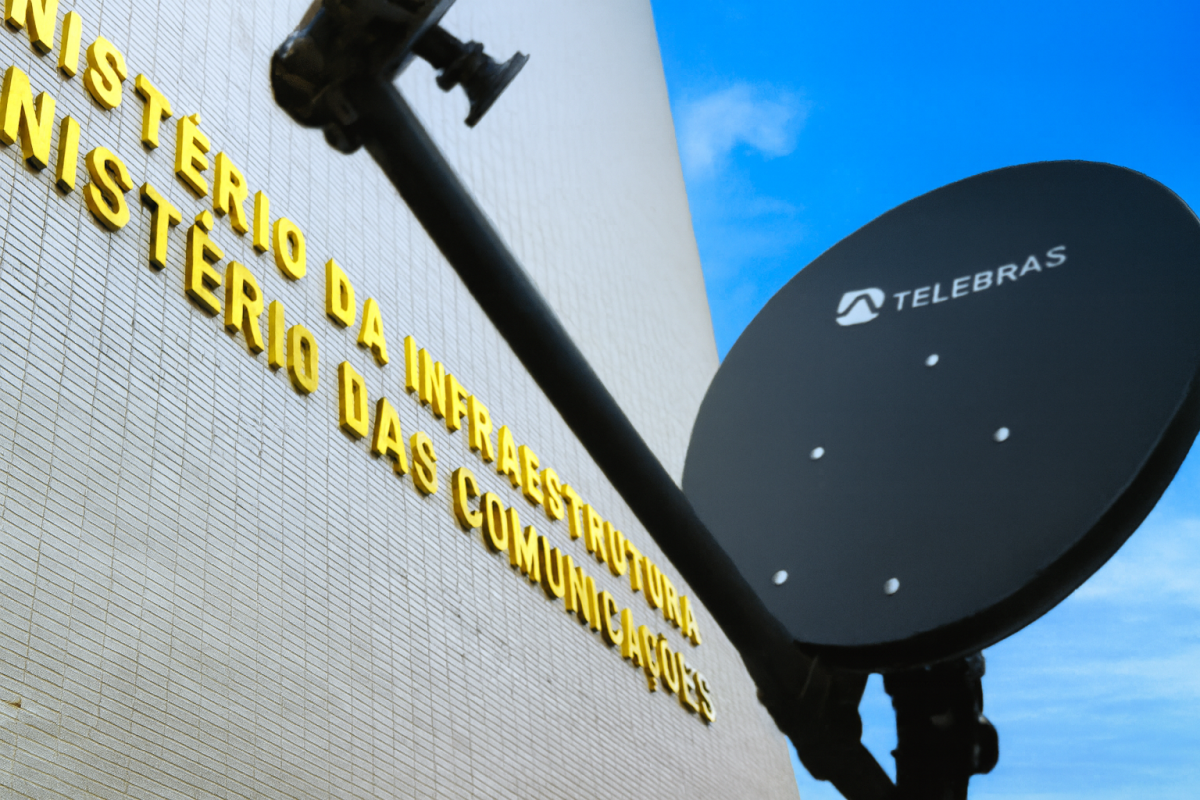
By Brazil Stock Guide – Founded in 1972 and stripped of its phone monopoly in 1998, Telebras (B3: TELB3; TELB4) is changing its scope. The company is repositioning itself as a public connectivity provider and on Friday (Sept. 5) signed a management contract with Brazil’s Ministry of Communications.
The measure, unprecedented among Brazil’s state-owned firms, lets companies classified as Treasury-dependent use revenues outside fiscal rules. In practice, Telebras will continue to receive government transfers for operating costs but will be able to channel service revenues directly into business expansion and public programs. The five-year contract includes an Economic and Financial Sustainability Plan (PSEF) with performance targets, cash flow projections and regular reports.
Treasury transfers and financial performance
Telebras still relies on Treasury transfers, with about R$ 523 million (US$ 104 million) planned for 2025, within a total of R$ 24 billion (US$ 4.8 billion) distributed annually to 17 dependent state-owned firms. Meanwhile, the company has reported stronger results. In 2024, recurring Ebitda rose 55% to R$ 288 million (US$ 57 million), while net income increased 47.7%. Cash relative to obligations grew 57.6%. Gross operating revenue advanced 29.9% between the first quarter of 2023 and the fourth quarter of 2024.
“The contract gives Telebras predictability and long-term sustainability,” said CEO André Leandro Magalhães. “We will reinvest results in new projects and strengthen the company’s role as a partner of the State in digital transformation.”
Defense, education and digital inclusion
In June 2025, Telebras was accredited as a Strategic Defense Company (EED), reinforcing its position within Brazil’s Defense Industrial Base and aligning with policies on sovereignty, institutional security and technological autonomy. The following month, the company signed a contract worth up to R$ 262.9 million (US$ 52 million) under the Connected Learning Project, part of the National Strategy for Connected Schools (ENEC), to bring broadband to public elementary schools across the country.
“The actions focus on expanding the client portfolio, notably including INSS, DATASUS, Ministry of Labor, Ministry of Education, ICMBio, INMET and the Court of Justice of Minas Gerais,” the Ministry of Communications said in a statement.
What’s at stake
The government expects Telebras to become a non-dependent state-owned company by the end of the contract in 2030. If successful, it could operate without regular Treasury transfers and even pay dividends to the federal government.
Telebras is moving toward consolidation as a public connectivity company. Its scope spans digital inclusion programs such as Wi-Fi Brasil and GESAC, which provide internet to remote communities, Indigenous villages and health posts. In education, besides Connected Learning, it supplies connections to federal universities and research institutes.
In defense, it ensures strategic communications for security agencies and the Armed Forces, particularly in border areas. The company also provides emergency support in humanitarian operations, including migrant assistance in Pacaraima (Roraima) and relief efforts after the Brumadinho mining disaster in Minas Gerais.