By Brazil Stock Guide – Brazil, the world’s top beef exporter, expects shipments to climb between 12% and 14% in 2025, even as steep US tariffs slash export volumes. The outlook was shared by Roberto Perosa, head of the beef exporters association Abiec, during the Pecuária Brasil Forum hosted by consultancy Datagro.
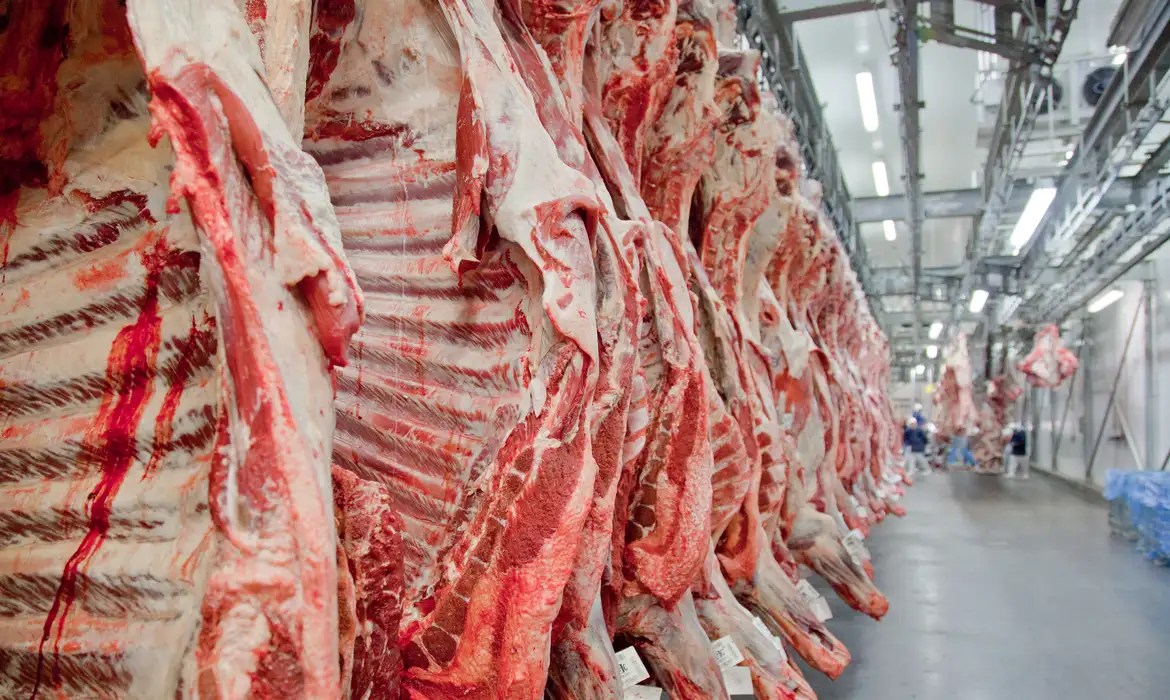
In 2024, Brazil exported 2.89 million metric tons of beef to nearly 150 countries, generating $12.9 billion. The US, historically its second-largest destination, imposed a 76.4% duty under President Donald Trump. Even so, Brazil continues to ship meat across the tariff barrier. “Despite tariffs and geopolitical issues, Brazilian ranching has strong capacity to reallocate its products,” Perosa said, according to Reuters.
Monthly shipments to the US, once at 30,000 tons, have dropped to between 7,000 and 9,000 tons. “The volume fell drastically, but we still ship premium cuts and processed beef, such as jerked beef, including contracts with the US government,” Perosa said. He emphasized Brazil’s competitive edge: its leaner beef is sought after for blending in hamburgers, meatballs and ready meals. “This complementarity makes our beef so demanded,” he added.
Abiec projects export revenue could rise as much as 16% in 2025, supported by new market openings. Vietnam recently authorized Brazilian beef imports, and Japan may soon follow. “A favorable context was built, and the government has worked hard. I believe Japan is close to being opened,” Perosa said, adding he hopes for approval by the end of 2025.
Talks with Turkey remain stalled due to technical demands such as animal-by-animal testing, while South Korea requires greater diplomatic engagement from Brasília, he noted. The recognition of Brazil as free of foot-and-mouth disease without vaccination also opens opportunities for higher-value shipments of offal and bone-in cuts.
Domestic stability
On the domestic front, Perosa dismissed projections of shrinking consumption and slaughter. While Datagro forecast a 9.3% decline in cattle slaughter for 2026, he said conditions point to stability. “I don’t believe in a contraction. Even next year, government measures should support consumption, especially in an election year,” he said. Rising employment and income, along with productivity gains, may keep demand steady. “I think consumption could remain stable or even grow,” he added.
Need for US trade normalization
Despite diversification, Perosa stressed the importance of restoring trade with the US. “We need to resume a regular commercial flow with the US,” he said. He called for stronger government pressure to negotiate a reduction in tariffs, describing the American market as highly profitable and essential for the sector’s long-term strategy.