By André Vieira, Brazil Stock Guide
A month after its grand opening, there were still lines at the door of H&M’s first store in Brazil, at Shopping Iguatemi, one of São Paulo’s most traditional shopping centers. Not as long as in the first few days, but steady: groups of onlookers and shoppers came in to explore a brand that had taken decades to land in the country. Fast fashion, the global airport staple, now occupied a prime 1,000-square-meter in the country’s largest city. And with it arrived the paradox that has long accompanied the segment: how to reconcile rapid-fire collections and low prices with the banner of sustainability?
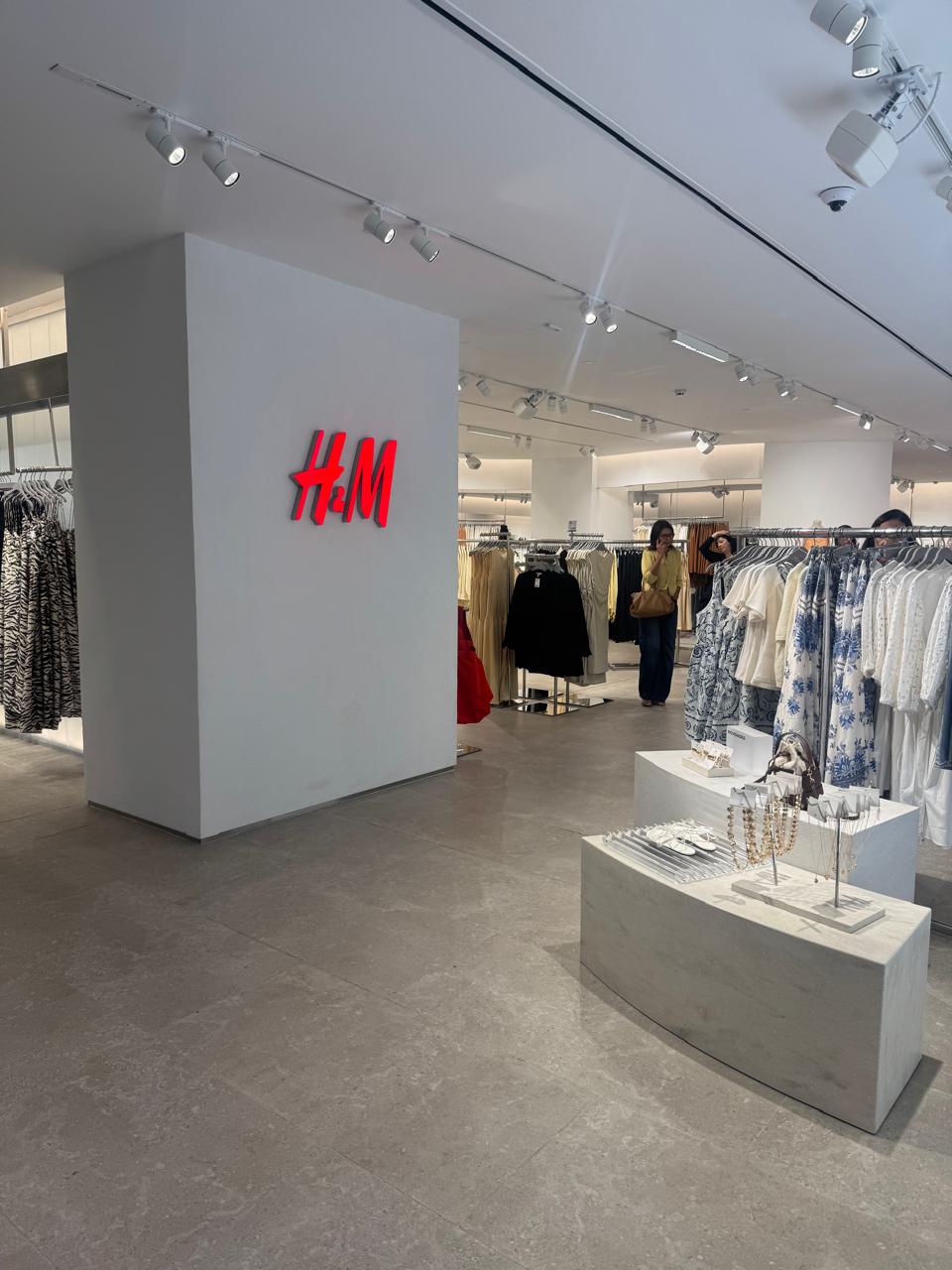
The store is not like H&M’s European outposts – compact, bustling, and overloaded with racks. At Iguatemi, what one finds is a minimalist stage, designed with wide corridors and distanced racks. The explanation seems simple: in Brazil, space was planned for crowds. Better to let the flow move smoothly than risk the crush of other global capitals. The result is an architecture reminiscent of Zara, with its white palette and clinical lighting, but with the air of an inaugural showcase – everything too spaced, too carefully staged to be overlooked.
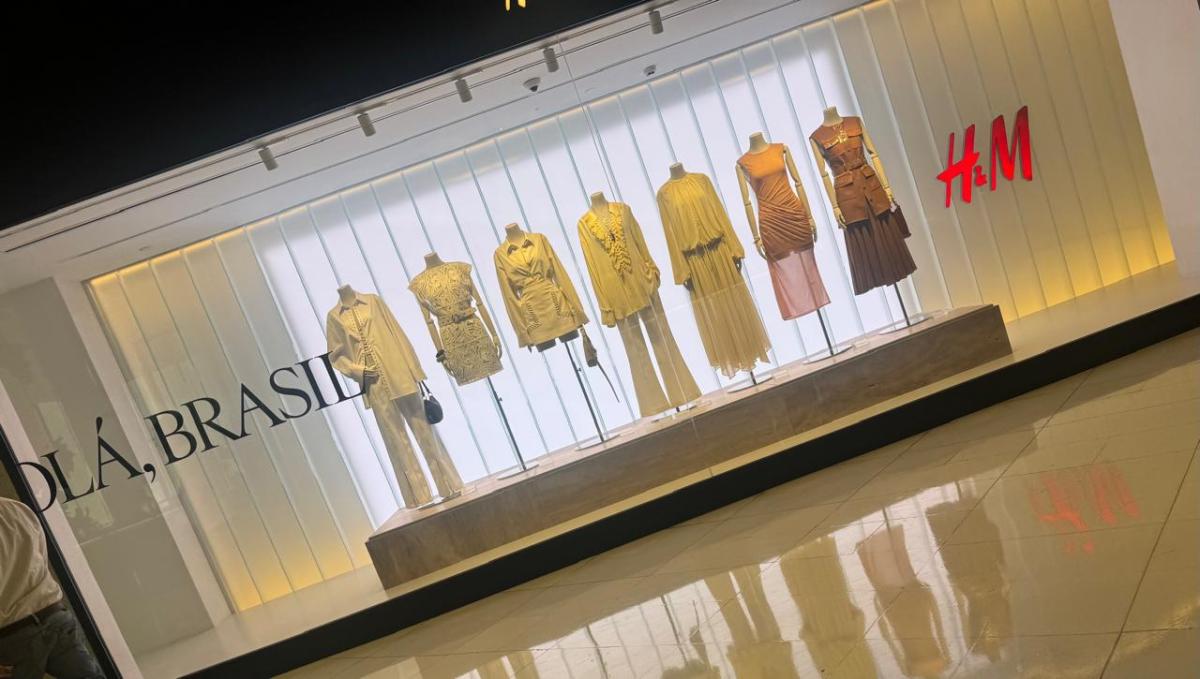
At the entrance, a large “Olá, Brasil” (Hello, Brazil) shares attention with golden mannequins in women’s clothing, watched over by a discreet security guard. The music plays almost inaudibly; no perfume lingers in the air; the logo appears only sparingly, as if the company wanted to stage a debut while hiding within it. The racks, filled to the brim, confirm abundant stock, but the mise-en-scène is one of calculated neutrality, as if H&M were saying: everything is here, but nothing screams. The spotlights function as improvised runway floodlights. Everything thought through, so as not to look thought through at all.
Invisible staff
Sales associates circulate, friendly and busy, but wear no uniforms. They dress in ordinary clothes, nothing styled, perhaps bought from competitors. The only sign of their role is the red badge, serving as a minimalist uniform. In the antiseptic white setting, the red tags flicker like tiny flags in the void. In this sense, the only true design piece is the badge itself.
Another striking detail is the absence of menswear. At Iguatemi, only women’s clothing is offered; the men’s section has been set aside for the Anália Franco mall, across town. Lingerie, meanwhile, occupies a well-defined, almost demure space, as if the very layout asked for discretion. Women browse the racks with silent focus, eyes locked on fabric, as if nothing beyond the garment mattered. It is a precise portrait of the minimalism the brand chose to import here: not the chaos of international airports, but a Brazilian version—bright, spacious, domesticated.
Delay and contrast
The delay in H&M’s arrival is striking. Rivals like Dutch C&A and Spanish Zara landed in São Paulo before the 2000s, while local giants Renner and Riachuelo cemented national presence with hundreds of stores. In the meantime, Brazilian consumers grew accustomed to buying H&M abroad – in Miami, Paris, or Madrid – and bringing back pieces as airport souvenirs: too cheap to be luxury, too stylish to be plain.
The company is betting big on Brazil: it will add two more stores in the fourth quarter of 2025, followed by four contracted openings in 2026 — in Rio de Janeiro, two in the southern city of Porto Alegre, and one in Sorocaba, a wealthy hub in São Paulo’s interior (After this report was published, H&M gave an interview. Read the full Q&A with the country manager below.)
Founded in 1947 by Erling Persson under the name Hennes, initially dedicated to womenswear, the company merged with a hunting-and-fishing retailer named Mauritz in 1968, becoming Hennes & Mauritz – H&M for short. Today, it counts more than 4,000 stores in around 80 countries. In Brazil, it arrives without the freshness of absolute novelty, but laden with accumulated curiosity.
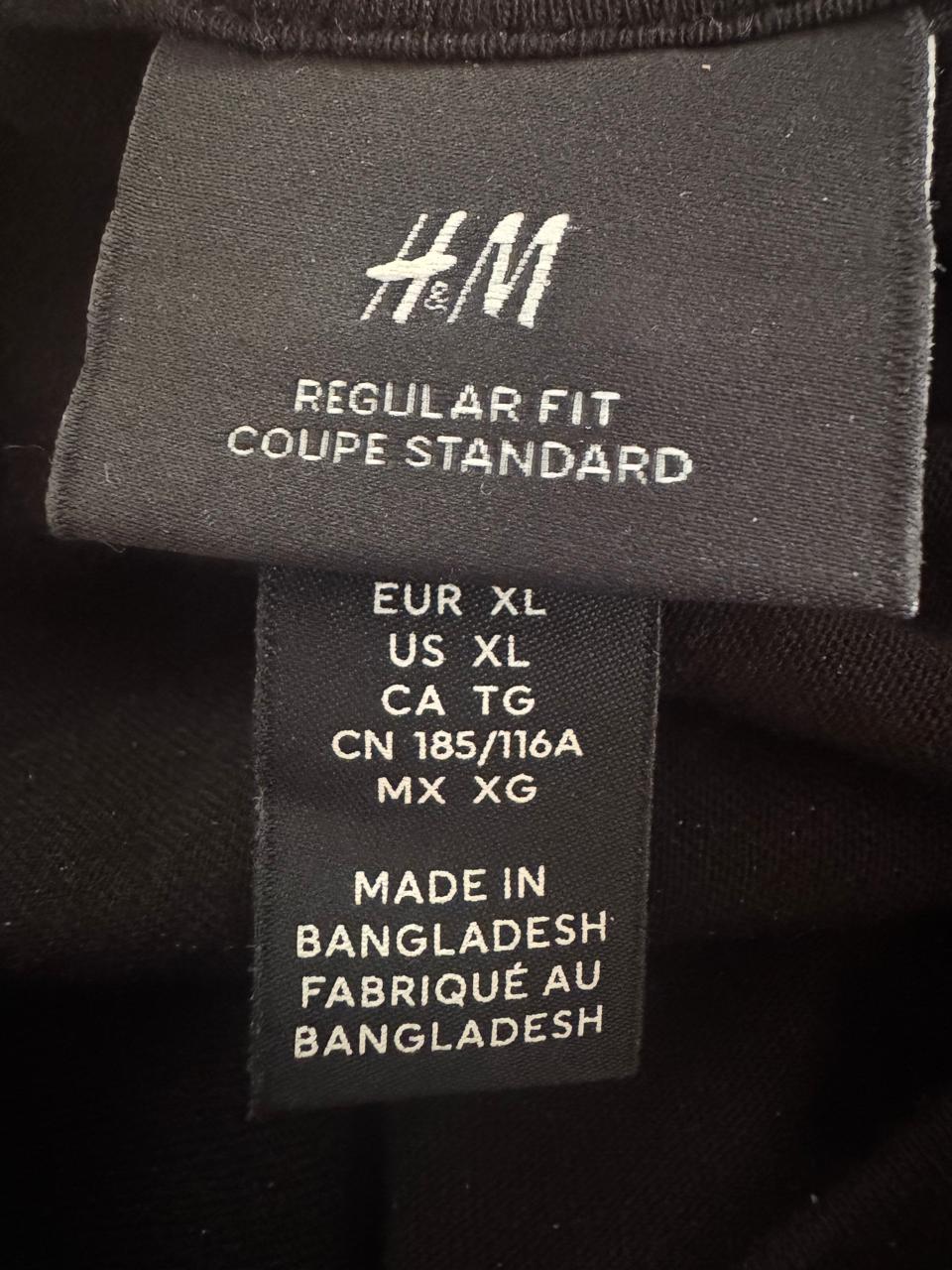
The digital operation is already running nationwide. The website offers basic men’s T-shirts for less than R$70 and sweatpants for around R$140. Navigation, however, is clumsy: changing a product’s color means selecting a new item altogether, multiplying clicks. Delivery comes via Correios in four to five business days, packed in a large paper envelope made in Spain – even though the clothes themselves are manufactured mostly in Asia, in countries such as Bangladesh. Globalization in pure form: Swedish design, international branding, Asian stitching, delivered by Brazilian post.
At Iguatemi, the choice was to craft a more “premium” shopping experience, with less crowding and more visual comfort- a way to align with the local shopping center standard. Yet the essence remains: selling the imported as desire. The paradox of fast fashion — speed and low cost versus sustainability — remains unresolved. After all, few things please Brazil’s upper middle class more than wearing something from abroad- even if it is just a basic T-shirt, bought after a few minutes in line under spotlights that are anything but discreet.
H&M sets sights on sustainable expansion in Brazil
Speaking to Brazil Stock Guide, Joaquim Pereira, H&M Brazil’s country manager, said the retailer deliberately timed its entry to align global brand maturity with local market readiness. With two São Paulo stores and nationwide e-commerce already live, H&M plans four additional openings by 2026 — including Rio de Janeiro and Rio Grande do Sul. Pereira stressed that the company’s edge lies in blending accessibility, sustainability, and customer experience:
Why did it take H&M so long to enter the Brazilian market, while competitors like Zara and C&A arrived earlier?
We have been studying the Brazilian market for a long time because for us it’s not just about opening stores but building a long-term presence. Brazil is a tremendous growth market, and we wanted to enter at the right moment. We believe 2025 is that moment — when our brand maturity and the market’s readiness align. Now, we’re confident the timing is right to bring H&M to Brazil and contribute to its dynamic fashion landscape.
How many stores are planned to open in Brazil by the end of 2025, and in which regions?
Currently, we have two physical stores in São Paulo — one at Iguatemi São Paulo and another at Anália Franco Shopping — alongside our online store, hm.com.br. In the fourth quarter of 2025, we plan to open two additional stores. Looking ahead to 2026, four more locations are already contracted: one in Rio de Janeiro, two in Rio Grande do Sul, and one in Sorocaba.
Does H&M’s e-commerce already cover the entire country?
Yes. Our collections are accessible nationwide via e-commerce, and what makes our Brazilian entry unique is that, for the first time, we launched physical stores, e-commerce, and our app simultaneously. Since the launch of hm.com.br and the H&M app, customers have access to all departments — including H&M Move, H&M HOME, and Kids. In São Paulo, we guarantee delivery within three days, while our nationwide promise ensures delivery across the country within five days.
How is the pricing strategy defined for Brazil? Is it based on international standards or adjusted to local purchasing power?
We worked carefully to ensure that our launch in Brazil reflects what H&M is best known for worldwide: fashion and quality at the best price, delivered sustainably. Accessible fashion is at the core of our brand. From day one, customers have been able to shop our full collections in-store and online, making great fashion available to everyone in Brazil.
Are there local initiatives on recycling or sustainability, similar to those implemented in other markets?
Yes. H&M will implement local initiatives in Brazil similar to those in other countries. We are finalizing details and partnerships, but our commitment to sustainability remains strong. Globally, H&M invested US$179 million in sustainability in 2024 alone. Recently, we were ranked number one among 200 fashion companies in Fashion Revolution’s What Fuels Fashion? report, recognized for transparency in decarbonization and sustainability.
Who is the brand’s main target audience in Brazil, and how does H&M plan to differentiate itself from competitors such as Zara, Renner and Shein?
Our target in Brazil is broad: everyone who loves fashion. From younger generations seeking the latest trends, to families drawn to collections featuring beloved Disney characters, to more sophisticated customers interested in our collaborations, Studio, and Atelier lines. What sets us apart is our ability to offer fashion for all, combining accessibility, sustainability, and an exceptional customer experience. We are entering Brazil with humility and confidence, aiming to build a long-term relationship with Brazilian consumers.