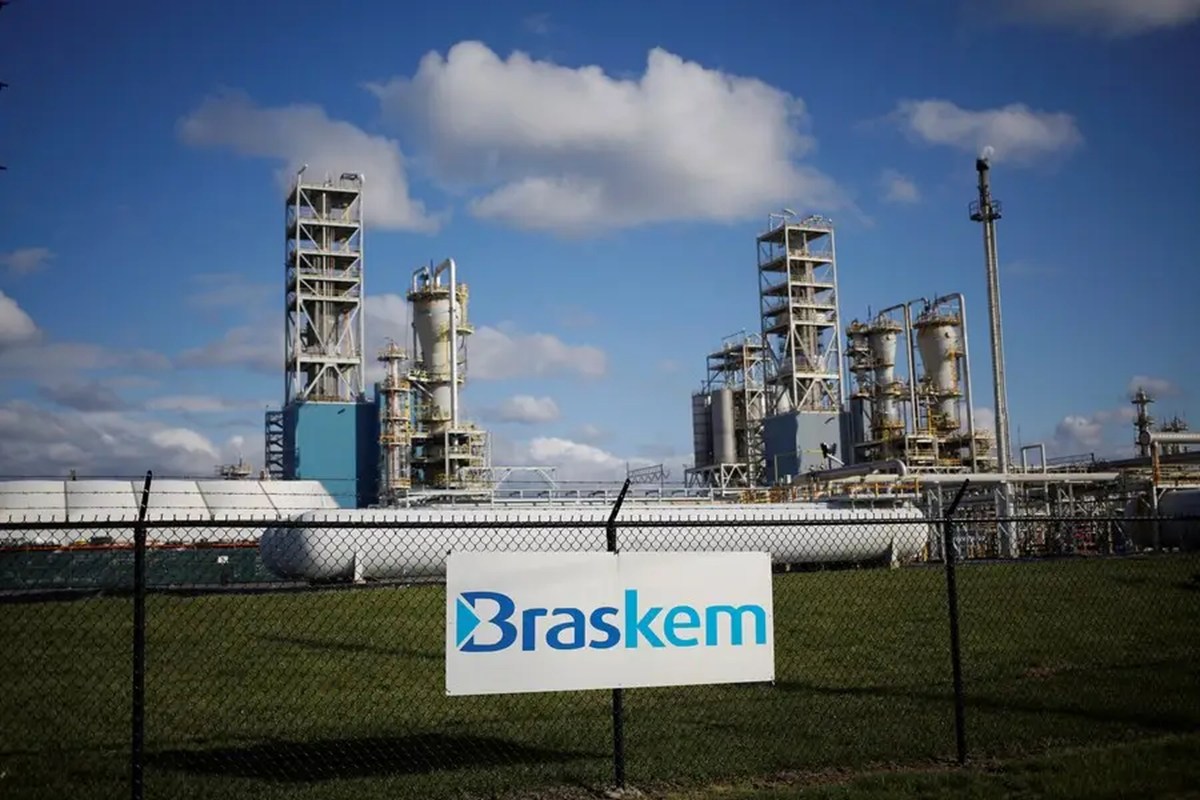
By Brazil Stock Guide — Braskem S.A. (B3: BRKM5, NYSE: BAK) remains under heavy pressure, according to a BTG Pactual report. With petrochemical spreads still falling and financial expenses eroding value, the bank notes the company may need to consider capital-raising alternatives, including a debt-to-equity swap.
BTG modeled a scenario in which 25% of Braskem’s debt ($1.7 billion) is converted into equity. In that case, Petrobras (B3: PETR3; PETR4, NYSE: PBR) would have to inject an equal amount to preserve up to 49% ownership, avoiding full consolidation of the petrochemical producer on its balance sheet. Leverage would fall from 10.6x to 2.6x net debt/EBITDA by 2026, but the move would cause about 75% dilution for existing shareholders. For Petrobras, the impact would be a 0.8 percentage-point cut in dividend yield, to roughly 8.2%.
Liquidity and Credit Risk
Braskem’s most critical maturity comes in 2028, when it will need to refinance its RCF (Revolving Credit Facility, a syndicated credit line that companies can draw, repay, and reborrow to manage short-term liquidity) amid successive rating downgrades. While its Mexican subsidiary Braskem Idesa is non-recourse, the relief is limited at the consolidated level.
The bank stressed that Braskem has already hired financial and legal advisers, a sign that alternatives such as convertibles or collateralized loans remain under consideration. For investors, the short-term equation is survival versus dilution. Without a recovery in spreads or a structured capital injection, pressure on Braskem’s balance sheet is likely to persist.