
Donald Trump and Luiz Inácio Lula da Silva have become, at least in words, “best friends forever.” Their Monday phone call — the first since Washington imposed new tariffs on Brazilian goods in August — was described as “extraordinarily good.” Yet cordiality still needs to turn into convergence. The U.S. tariff hike of up to 40% on Brazilian products remains in place, squeezing exports and raising alarms in Brasília.
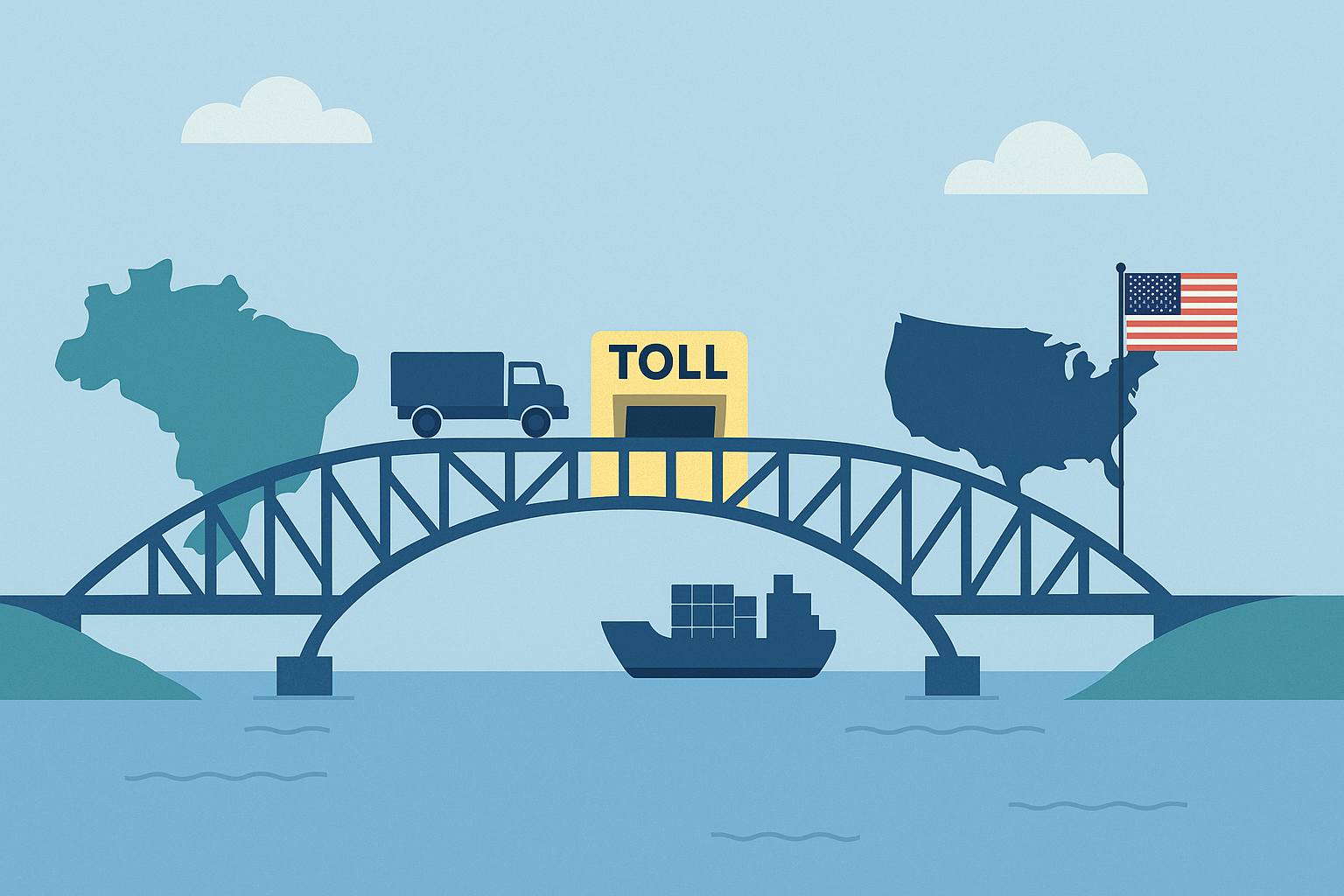
In September, Brazil’s exports to the United States fell 20%, according to the Foreign Trade Secretariat (SECEX) — the second consecutive monthly drop. At the same time, imports of U.S. goods rose 11%, driven by machinery and offshore platforms. The result: a bilateral trade deficit of about USD 5 billion so far this year.
The sharpest declines came from steel, beef and coffee, all affected by the tariff package. These sectors alone account for a large share of Brazil’s industrial and agricultural sales to the U.S., highlighting how the measures have disrupted long-standing supply chains.
Brazil has reopened political dialogue and expects a “prejudice-free” conversation to address the tariffs “around the table.” Washington, for now, maintains that the measures are part of America’s “reindustrialization policy.”
Despite the tension, the economic impact remains limited. Brazil offset part of the losses by redirecting commodities to China, India and Argentina, and is expected to close 2025 with record exports of USD 345 billion and a trade surplus of USD 60.9 billion — still robust, though 18% lower than last year.
The friendship between Trump and Lula is warming, but the trade equation remains uneven: Brazil exports commodities and imports machines and technology. For now, being “BFFs” still comes at a cost.