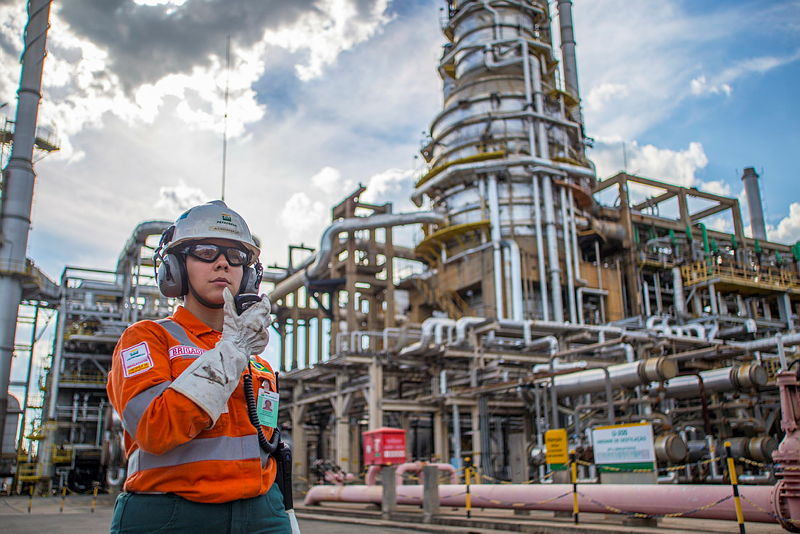
By Brazil Stock Guide – Petrobras (PETR3; PETR4) has reached a milestone in Brazil’s energy transition after obtaining international certification to produce sustainable aviation fuel (SAF) at its Duque de Caxias refinery (Reduc) near Rio de Janeiro. The ISCC CORSIA seal, granted in October, validates strict sustainability and traceability standards for the HEFA route — which converts vegetable oils and animal fats into low-carbon jet fuel — positioning Brazil among the few nations with industrial capacity ready to meet future aviation demand.
The authorization from Brazil’s oil regulator ANP, issued in May, allows Reduc to incorporate up to 1.2% renewable feedstock into production, with potential output of 50,000 cubic meters per month (10,000 barrels per day). The SAF can directly replace conventional jet fuel without changes to aircraft or fueling infrastructure — a crucial advantage for rapid decarbonization across the industry.
“The project reinforces the role of Brazilian refining in a fair and fast energy transition, with low investment and quick implementation,” said William França, Petrobras’s Executive Director for Industrial Processes and Products.
Brazil ahead of “Fuel of the Future” targets
The initiative anticipates requirements of the upcoming Fuel of the Future Law, which will mandate SAF blending in international flights starting in 2027. Petrobras’s move also aligns with the CORSIA program from the International Civil Aviation Organization (ICAO), aimed at stabilizing global aviation emissions. According to Claudio Schlosser, Petrobras’s Director of Logistics and Commercialization, coprocessed SAF “puts Brazil at the forefront of international sustainability standards and strengthens a just transition for aviation.”
The move signals Petrobras’s strategy to retain competitiveness in refining while responding to growing ESG pressures. The company is also testing similar processes at its Henrique Lage refinery (Revap) in São José dos Campos to expand low-carbon fuel output.
Decarbonization takes off
Using low-carbon-intensity feedstocks and targeting a 1% cut in domestic aviation emissions by 2027, Petrobras’s SAF project marks a strategic leap toward cleaner skies. With its large-scale refining infrastructure, the company could become a key player in the global sustainable fuel market — helping Brazil evolve from oil exporter to a supplier of the fuels that will power aviation’s next generation.