
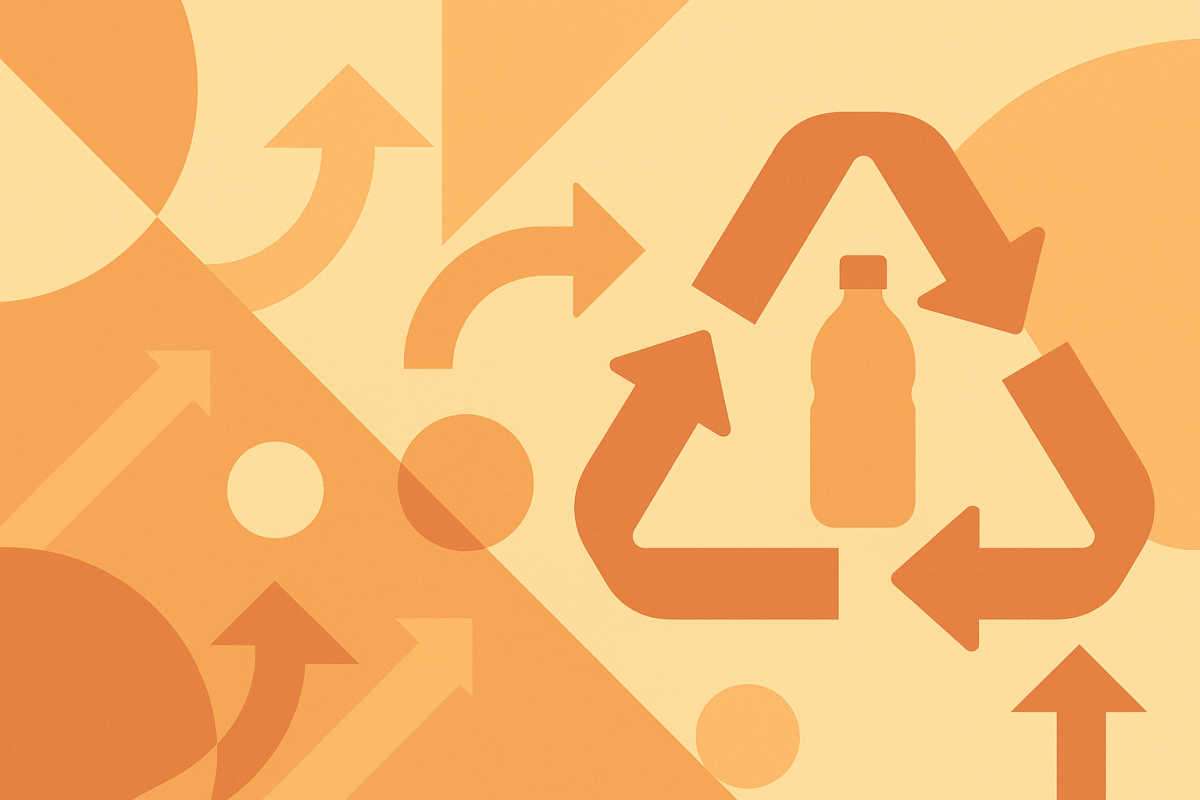
After many years of debate involving several stakeholders in the industrial supply chain and civil society, on October 21st, 2025, Decree 12,688 finally regulates the implementation of a reverse logistics system for plastic packaging in Brazil.
Plastic became a victim of its own success about a decade ago. Its versatility and low cost led to an exponential growth in its use. The lack of infrastructure and economic appeal for its recovery have made plastic packaging a major contributor to ocean pollution. Brazil followed the global trend of debating the issue, and we have now reached a historic milestone in this process.
The decree covers primary, secondary, and tertiary plastic packaging – meaning both direct packaging and those that unitize loads for transport. The entire chain is impacted: manufacturers, importers, distributors, and retailers. It also includes disposable plastic plates, cups, and cutlery. It excludes items with specific legislation, such as agrochemical and lubricating oil packaging. In the section dealing with the use of recycled content material in packaging, it also excludes food, which has specific regulations.
The relationship between companies and consumers is also properly addressed, highlighting the need to educate and increase the availability of collection points. The social aspect is a highlight: several articles call for prioritizing waste-pickers cooperatives and associations in the sorting and separation of waste.
If everything works as the government intends, by 2030, Brazil will recover 37% of its plastic packaging, which will have 30% of recycled content incorporated. A decade later, these numbers should reach 45% and 40%, respectively. Today, the recovery of all plastics is close to 20%, with a clear advantage for PET resin, primarily used in water and soda bottles, and increasingly replacing other resins in new applications.
Implementation of a decree like this is complex. It involves the entire value chain, and it is impossible to regulate everything at the outset. There are, at least, three sets of challenges that need to be addressed over time.
The first challenge involves the detailed elaboration of a series of rules. For example, there are targets for manufacturers, distributors, and retailers, who handle the same product. How will this division of responsibilities along the chain be made? How will collective models address this accountability issue?
The second is the difficulty of understanding certain details of the decree, that seem more like complications than added value. There is a regionalization of targets, for instance, which does not seem to consider the economic differences in a country of continental dimensions. How will a company with national reach regionally track its contribution and calculate indicators that are already imprecise on national level, let alone when segmented?
Finally – and perhaps the most sensitive -, how to mitigate the impact of those who seek to circumvent the system? To illustrate, the decree provides that the recovery and recycled content indexes to measure the performance of actors be based on invoices and shipping documents. But what if post-consumer waste is “enriched” with post-industrial waste or even virgin resins to meet the target? It may sound absurd, but we have similar cases in other chains.
For now, let us enjoy the good news. The Ministry of the Environment has made its ambition clear. It is possible that the benefits and challenges may not be evenly distributed along the chain. I believe PET resin will have an initial advantage over other resins such as PE, PP and PS, given the greater maturity of its recycling process (when pigments are not used, to be fair).
But everyone will benefit from the success of the model – starting with the plastic packaging conversion chain, the most threatened by the backslash against plastics. After all, brand owners and supermarkets have a range of other materials at their disposal if the plastic industry does not cooperate. And if the cost becomes higher with alternatives, consumers will pay.
If there is a willingness from the government to listen and legitimate cooperation from those impacted by the new decree, we have a great opportunity here. We would move forward in solving a current environmental problem and help ensure the value of waste being definitively reincorporated into the economy. We should not waste plastic! We should not waste time!
Edison Terra is a Senior Executive, Board Member and Advisor. During the last decade, he has led several initiatives in circular economy in the plastics industry.
(The opinions expressed in this article are the sole responsibility of the author and do not necessarily reflect the position of Brazil Stock Guide)