
By Brazil Stock Guide – TIM S.A. (B3: TIMS3; NYSE: TIMB) said its slight slowdown in mobile service revenue growth during the third quarter was expected and seasonal, not a sign of renewed price pressure. In a Q&A that centered on pricing, competition, and capital allocation, CEO Alberto Griselli and CFO Andrea Viegas sought to reassure investors that fundamentals remain solid — with margins above 50%, expanding cash generation, and a cautious stance on industry consolidation that signals more discipline than ambition.
Revenue normalization, not pressure
XP analyst Bernardo Guttmann opened the session questioning whether slower mobile revenue reflected fiercer competition. Griselli replied that the trend was consistent with historical cycles: growth tends to peak after price adjustments and then gradually normalize. “It’s less about competition, which remains rational, and more about our own seasonal pattern,” he said. Postpaid remains the company’s main growth engine, expanding at double-digit rates, while prepaid is “decelerating less,” aided by steady migration and churn control at 0.8%.
Back-book completed; front-book next year
Pressed on pricing strategy, Griselli explained that TIM completed a back-book increase earlier this year for both control (hybrid) and pure postpaid plans — though not for the entire base, to avoid churn. A front-book adjustment in midyear applied only to new control customers, with pure postpaid left untouched. With the holiday promotions under way, new postpaid hikes will likely come in early 2026, maintaining the “more-for-more” model — charging more while adding benefits — as the key driver of ARPU. The delay also reflects a pragmatic choice: protecting retention during Brazil’s most competitive quarter rather than pressing prices too hard.
Efficiency and margin expansion
CFO Andrea Viegas said cost growth was held to just 1.8%, well below inflation, and that the company remains “focused on sustainable growth and shareholder value creation.” EBITDA rose 7.2%, margin reached 51.7%, and net income hit R$1.2 billion, with gains credited to industrial cost optimization, contract renegotiations, and a recently expanded RAN-sharing agreement with Vivo, approved by Cade. “These initiatives let us stabilize lease costs even as we densify the 5G network,” she said. Operational cash flow (EBITDA after leases minus capex) rose 8% year-over-year to R$1.7 billion, supported by strong balance-sheet discipline.
B2B trade-offs and capital prudence
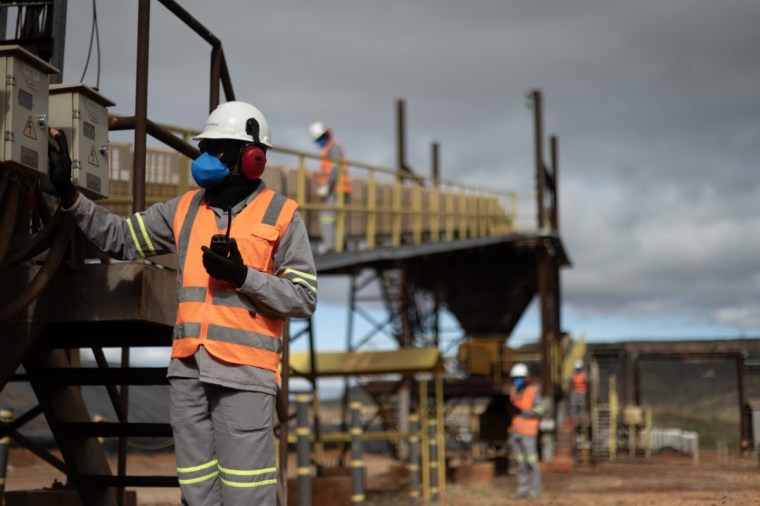
Griselli highlighted that B2B and IoT are becoming stronger growth pillars — covering 23.5 million hectares with 4G and NB-IoT, over 7,600 km of highways, and nearly 400,000 smart-lighting points, generating R$435 million in contracted revenues since 2024. The Smart Mining partnership with Vale was a highlight, reinforcing TIM’s diversification into industrial connectivity. Yet the CEO acknowledged a trade-off: B2B margins sit below the company’s 50%-plus consolidated average, even though they are cash-flow accretive. “It’s dilutive on EBITDA, but accretive on the bottom line,” he said — an unusually candid admission for a Brazilian telecom executive.
Avoiding fiber M&A frenzy
The most delicate topic came when analysts asked about fiber consolidation. Griselli dismissed the idea of near-term acquisitions, calling the broadband market “hyper-fragmented and under pressure.” The message was clear: TIM prefers to protect its return metrics rather than chase scale in a low-ARPU, high-churn segment. In a market where smaller ISPs face financial stress, TIM’s restraint signals a more defensive posture — effectively leaving the merger race to others.
Shareholder returns and guidance intact
TIM distributed R$1.8 billion in interest on capital and repurchased R$369 million in shares, aligning with its shareholder-return policy. Griselli reaffirmed that the company remains on track to meet 2025 guidance on service revenue, EBITDA, capex, and distributions. “We’re closing the year with strong momentum, executing with discipline and consistency,” he said. “Our focus remains sustainable growth.”