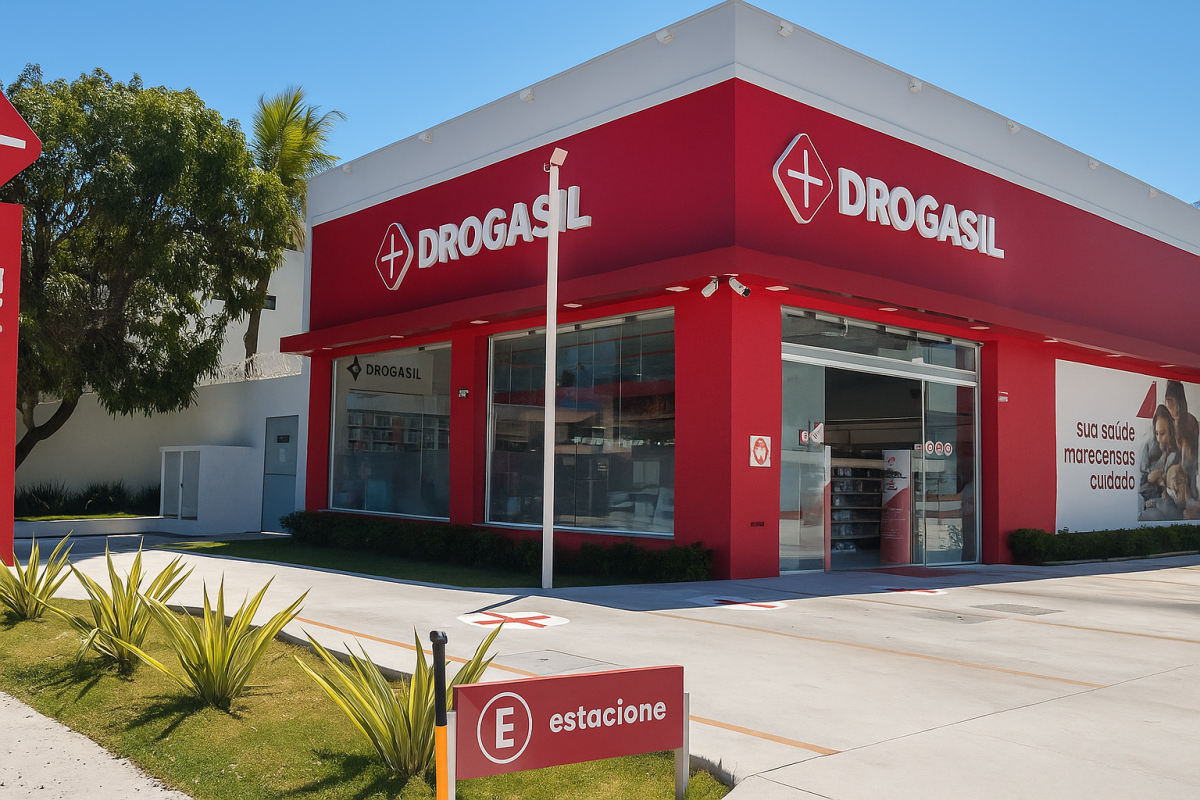

By Brazil Stock Guide – The GLP-1 drug class, used for weight loss and diabetes treatment, has become the cornerstone of RD Saúde’s growth — the company behind Brazil’s largest pharmacy chains, Drogasil and Droga Raia. In the third quarter, these high-value medications sustained sales momentum, offset inflationary pressure, and reinforced the retailer’s dominance in the pharmacy sector.
CEO Renato Raduan told analysts the category already represents a high-single-digit share of total sales and could soon reach double digits, turning into a standalone business within the company’s portfolio.
From Trend to Structural Growth
During the Q&A, Luiz Guanais of BTG Pactual pressed executives for details on GLP-1’s financial weight and its effect on working capital. Raduan said the drugs’ penetration reached around 9%, up from 5% a year earlier. “Once supply is normalized, it should exceed 10%. The potential is enormous,” he said.
The CEO added that RD now allows six-month installment payments for GLP-1 purchases, partly financed by pharmaceutical suppliers eager to expand access. “We’re expanding with responsibility — this isn’t a speculative cycle, it’s structural demand,” he said. He noted that a six-to-seven-day reduction in inventory coverage has offset any short-term cash impact, improving rotation and freeing capital.
One-Third of Brazil’s GLP-1 Sales Flow Through RD
Investor Relations Director Flávio Correia emphasized the retailer’s market leadership: roughly one-third of Brazil’s GLP-1 sales already flow through RD’s network, serving one million customers per month. “That’s still far below the market’s potential,” he said, expecting volumes to rise as new generics increase supply and affordability.
Raduan added that GLP-1 could become “a category of its own, like hygiene or over-the-counter drugs,” arguing that RD’s scale, logistics, and digital integration give it a long-term competitive moat as consumer demand shifts toward metabolic health.
Digital Scale and Operational Efficiency
Behind the pharmaceutical surge, RD is quietly building a technology-driven moat — merging logistics precision with digital reach. The company now completes 97% of deliveries within one hour, with 27% of total sales coming from online channels.
Executives also confirmed the opening of a new distribution center in Espírito Santo, aimed at restoring the performance of Forbio, RD’s wholesale unit, after a temporary loss of a major lab client. “We may have leaned too far toward protecting margins at any cost; now we’re rebalancing,” Raduan said.
He credited logistics teams for achieving the lowest product-out-of-stock rate in five years while trimming inventory days. “It’s a cycle of efficiency — better service, less capital tied up, fewer losses,” he said.
AI-Driven Productivity and Cost Discipline
Analysts questioned whether RD’s corporate cost restructuring had limited its digital execution. Raduan pushed back, noting that the company recorded the highest volume of digital releases in its history over the past six months. He revealed that RD now uses generative AI to support code development, speeding up innovation and productivity.
He also highlighted improved customer metrics: higher app satisfaction (NPS) and 66% of digital sales from recurring customers. “Efficiency can’t come at the expense of innovation,” he said. “Our goal is ambidexterity — operating efficiently while building the future.”
Raduan confirmed that RD improved its loss and tax-on-sales ratio by 10 basis points year-over-year, thanks to lower theft and better inventory control. “We reduced costs and simplified structures without compromising service or innovation,” he said.
With a 7.5% EBITDA margin — the strongest third-quarter margin since the pandemic — RD proved it can grow in complexity without losing financial discipline, reassuring investors that its performance extends beyond the GLP-1 cycle.
Outlook: Scale, Data, and Discipline
Looking ahead, Correia said RD entered 2025 “under pressure” but will exit “at a normalized and stable level,” ready for the next cycle. The company, he added, is combining cash discipline with selective expansion, maintaining a steady hand in a volatile market.