
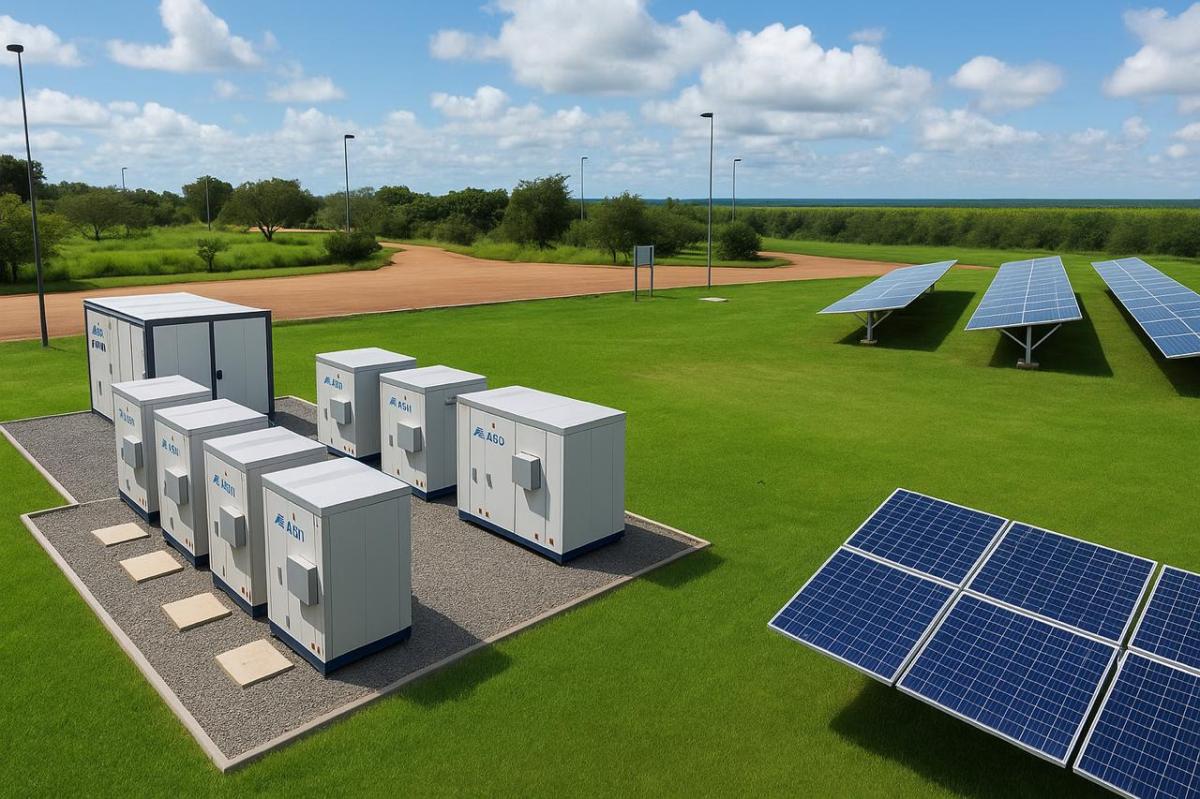
By Brazil Stock Guide – Brazil’s Ministry of Mines and Energy (MME) has opened a public consultation for the country’s first auction to buy electric capacity from battery energy storage systems (BESS). The tender, called LRCAP-2026, aims to make the national power grid more reliable and flexible as renewable generation expands. The consultation will stay open for 20 days after its publication in the Official Gazette on November 10, 2025.
What the auction is about
The government plans to pay companies that install large battery systems to store electricity and deliver power back to the grid when needed. Each project must be able to provide four hours of continuous power every day and fully recharge within six hours. The batteries will operate under instructions from the National System Operator (ONS) to help balance the grid during peak demand or excess generation from renewables.
How the contracts will work
Winning projects will sign 10-year contracts with a fixed annual payment in Brazilian reais. This payment rewards the project for being available to supply power when called by the system operator. If the project fails to deliver, it faces financial penalties. The revenue must cover all investment, maintenance, insurance, taxes and equipment replacement costs. Prices will be adjusted each year by Brazil’s inflation index (IPCA).
Battery storage is becoming crucial as Brazil adds more solar and wind power, which depend on weather and can fluctuate throughout the day. With batteries, the grid can store excess renewable energy during low demand and release it during peak hours. The government wants to reduce the need for fossil-fuel “backup” plants and strengthen energy security as the country moves toward a lower-carbon system.
Who wins and who doesn’t
Companies that develop or finance large-scale battery projects stand to gain from this new market. The system operator and transmission utilities will benefit from more flexibility and stability in the grid. On the other hand, thermal power producers that depend on peak-hour dispatches may face more competition for capacity payments. Only projects with at least 30 megawatts (MW) of power and 85% round-trip efficiency will qualify.
Timeline and next steps
The Ministry expects the auction to take place around April 2026, with energy delivery beginning in August 2028. After the consultation, the energy regulator (ANEEL) will publish the final rules, including technical requirements and the total capacity to be contracted. Developers must register their projects with the Energy Research Company (EPE) and can later obtain environmental licenses before construction begins.
Big picture
The initiative marks a turning point for Brazil’s electricity sector. By paying for available capacity instead of only for generated energy, the government recognizes storage as an essential infrastructure service—on par with generation and transmission. If successful, the model could pave the way for more storage auctions in the coming years and help Brazil integrate higher shares of clean energy while keeping the lights on.