
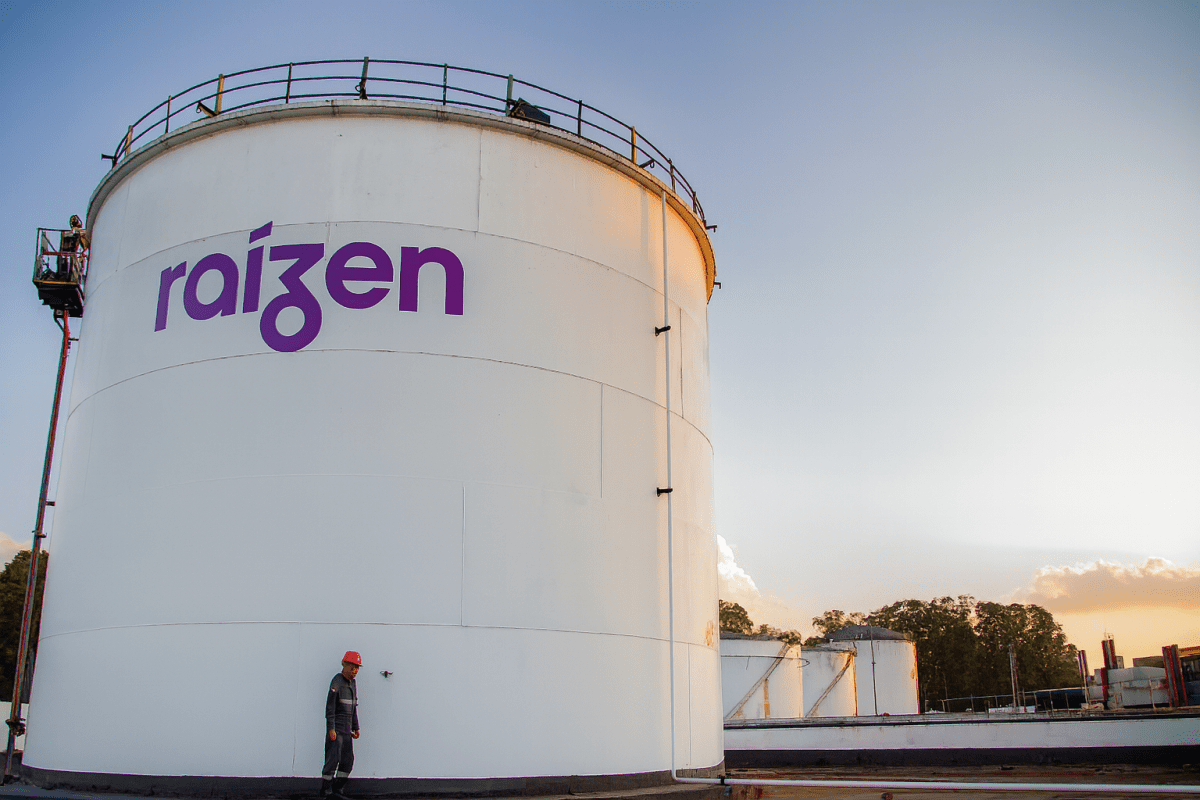
By Brazil Stock Guide – Raízen S.A. (B3: RAIZ4) reported a consolidated net loss of R$2.31 billion (US$434 million) for the third quarter of 2025 (3Q25), a sharp reversal from the net profit of R$158 million in 3Q24. The performance was significantly below market expectations, driven by substantial financial expenses and negative impacts from derivative instruments, marking a challenging start to the earnings season for the Brazilian energy and biofuels sector.
The company posted net operating revenue of R$59.91 billion (US$11.26 billion) for the quarter, down 17.8% from R$72.91 billion in 3Q24. For the first six months of the fiscal year (April-September 2025), the net loss reached R$4.16 billion, compared to a profit of R$907.6 million in the same period last year. The gross margin narrowed, and the financial result was heavily negative at R$2.72 billion in 3Q25, primarily due to a R$2.16 billion net loss on derivatives, reflecting high volatility in commodity and currency hedging operations.
“During the quarter, we advanced in our portfolio recycling initiatives, focusing on capital structure optimization in the Ethanol, Sugar, and Bioenergy (EAB) segment, despite a complex scenario of commodity price oscillations and macroeconomic volatility,” the company’s management stated in the earnings release, highlighting asset sales including the Leme, Santa Elisa, and Rio Brilhante plants.
The results underscore the intense pressure on global sugar and ethanol producers, with Raízen’s performance impacted by unfavorable mark-to-market on its extensive hedge book and high financial leverage. The company’s aggressive portfolio restructuring, including the partial spin-off of assets to Raízen Energia S.A. (RESA) and the exit from the Paraguayan fuel distribution market, aims to streamline operations but has yet to offset operational and financial headwinds. Competitors in the bioenergy space will be closely watched for similar trends.
Looking ahead, market consensus projects a gradual recovery in 2026, contingent on more stable commodity prices and successful execution of the company’s asset divestment program. Analysts from BTG Pactual and XP Investimentos have recently revised their ratings to ‘Neutral’, citing concerns over near-term earnings visibility and the company’s exposure to volatile sugar and ethanol markets.