By Rodrigo Uchoa, special for Brazil Stock Guide

When William of Orange, a Dutch prince, became King William III of England in the Glorious Revolution, he effectively shifted a Dutch-leaning court into London—and with it came Dutch drinking habits and genever’s juniper spirit. In the decades that followed, England’s own version of the drink fuelled the delirium of the 1730s.
Gin was blamed for every social ill from pauperism to infant neglect—the infamous “Gin Craze” that inspired moral panic, pamphlets, and eventually prohibition. As Patrick Dillon recounts in Gin: The Much Lamented Death of Madame Geneva, politicians debated whether the drink itself was wicked or merely the mirror of a desperate age. Two centuries later, Madame Geneva has shed her sins and found redemption in the hands of connoisseurs and fashion editors alike.
The Spirit’s Reinvention
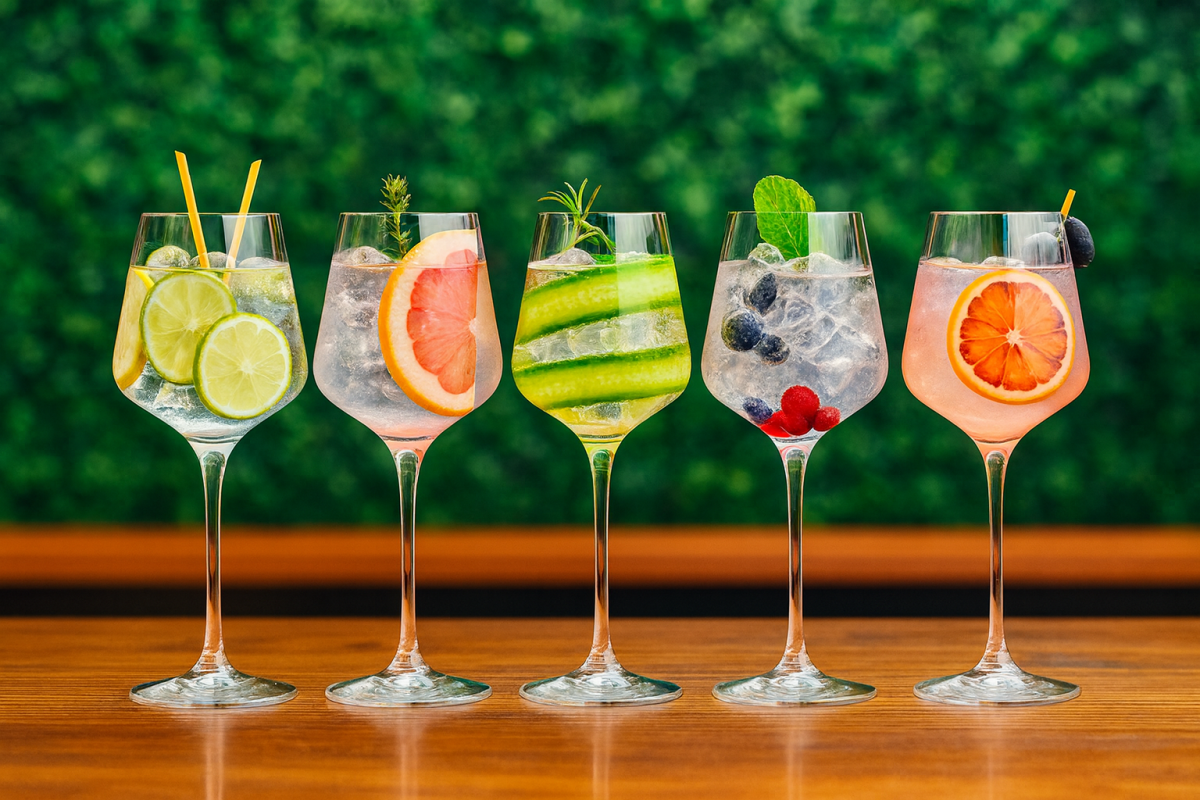
From speakeasy martinis to Bond’s immortal “shaken, not stirred,” gin has become shorthand for urbane taste. The spirit’s chemistry remains deceptively simple: neutral alcohol redistilled with juniper berries and other botanicals—citrus peel, coriander seed, angelica root—each distiller composing a secret chord of aromas. Classic styles include London Dry, crisp and juniper-forward; Old Tom, sweeter and rounder; and the Navy Strengths beloved of sailors and mixologists alike.
A Global Market Awash in Gin
The global market is hardly ascetic. In 2024, gin sales surpassed US $17 billion, with annual output of more than 400 million litres. Britain still leads consumption, but the craft-gin wave that began in the 2000s has swept from Melbourne to Mexico. Where once a handful of industrial brands ruled, today thousands of micro-distilleries cater to regional palates and local botanicals.
Brazil Joins the Fever
Brazil, unsurprisingly, has caught the fever. The country’s first artisanal gins appeared barely a decade ago; now more than 150 labels vie for space on back-bars and boutique shelves. Industry groups estimate sales of R$ 1.2 billion in 2024—still modest beside cachaça but growing at double-digit rates. The spirit’s rise owes as much to aspirational drinking as to technical finesse: bartenders from São Paulo to Belo Horizonte treat gin as a canvas for Brazilian biodiversity.
Four Schools of Brazilian Gin
Within this new landscape, four schools stand out:
Champions of the medal table – BEG (São Paulo) and Kalvelage (Santa Catarina) have both taken Double Gold honours at London and San Francisco competitions, proving that Brazilian distillers can match global benchmarks. Their success stories hinge on meticulous small-batch production and export ambition.
Founding fathers – Amázzoni, distilled in a restored Rio de Janeiro farm, and Virga, from São Paulo’s interior, gave the category its early prestige. They married British technique to local sugar-cane alcohol and Amazonian botanicals, legitimising the idea of a “gin brasileiro.”
Design-driven innovators – Minas Gerais’s YVY and Paraná’s Ivaí built cult followings through sleek bottles, sustainable packaging, and daring flavours such as hibiscus-and-lychee. For a generation attuned to Instagram as much as palate, aesthetics matter.
Multiproduct distilleries – Lamas (also Minas Gerais) exemplifies a maturing industry: a family-run house acclaimed for whiskies and gins alike. Its Íris Dry Gin earned Gold at the World Gin Awards 2023, while the firm invests in visitor centres and exports—a model more Scotch than start-up.
From Imitation to Identity
Together they map a journey from imitation to identity. Brazil’s gins no longer mimic London Dry; they reinterpret it with pink-peppercorn, pacová, or jabuticaba. The results are fragrant, sometimes flamboyant, but increasingly serious.
A Long Journey from ‘Gin Lane’
Three centuries on from the alleyways of London, gin has travelled far—from moral scandal to lifestyle accessory, from Hogarth’s “Gin Lane” to glossy spreads in Vogue Brasil. Yet the old caution remains worth heeding. The botanicals may be local, the medals global, but moderation is still the best mixer. Drink responsibly.