
Special Issue
By Brazil Stock Guide – Few economies in the world move volumes of oil, grains and minerals on the scale Brazil does. In the 2025 ranking of the country’s largest companies, this reality stops being a statistic and becomes an explanation. Growth today is less about manufacturing complex products and more about managing massive physical flows.
An analysis of the ranking, compiled by Brazil Stock Guide using public data and company financial statements, shows that the best-positioned sectors are not necessarily the most innovative. They are the ones that command scale, logistics and international integration. Oil, agribusiness and mining have come to function as the true infrastructure of Brazilian profits.
The oil and fuels chain offers the clearest illustration of this shift. Petrobras, which already led the ranking in 2000 with net revenue of R$49.1 billion, now towers over the corporate landscape with nearly R$491 billion in 2025—almost ten times its size in nominal terms. The company’s transformation reflects not only higher oil prices over the cycle, but a structural repositioning. Petrobras evolved from a predominantly domestic, integrated energy supplier into a globally relevant upstream producer, anchored in large-scale pre-salt fields and export-oriented crude flows. Its growth is less about diversification and more about volume, capital intensity and integration with global oil markets.
Around Petrobras, a second layer of scale-driven companies emerged. Fuel distribution and energy logistics—represented in 2025 by groups such as Vibra, Raízen and Cosan—now generate revenues that rival those of industrial champions from earlier decades. What were once perceived as low-margin downstream businesses became strategic platforms, monetizing Brazil’s continental scale, road dependency and fuel consumption intensity. Distributing energy across long distances is no longer ancillary to growth; it is growth.
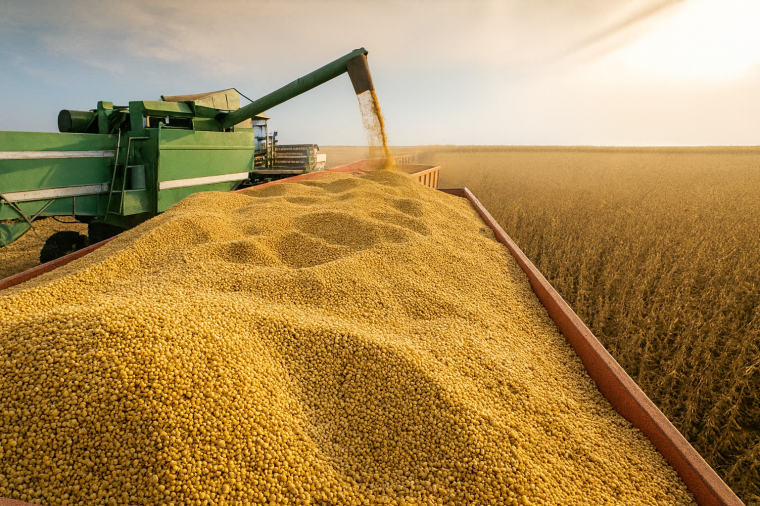
Agribusiness followed a parallel trajectory, but with even greater internationalization. JBS, now the second-largest company in the country by revenue, exemplifies this shift. From a regional meatpacker, JBS turned into a global protein platform, coordinating beef, poultry and pork flows across continents. Its R$417 billion in net revenue in 2025 reflects scale more than product complexity: slaughter volumes, feed logistics, export corridors and currency management matter more than brand or industrial sophistication.
The same logic applies to other agribusiness players in the ranking, such as Cargill, Bunge, COFCO and Copersucar. These companies increasingly operate as integrators of global commodity systems—connecting Brazilian land, infrastructure and biological output to international demand. Financing, hedging and logistics are as central to their business models as production itself. Agribusiness, in this sense, has become less industrial and more infrastructural.
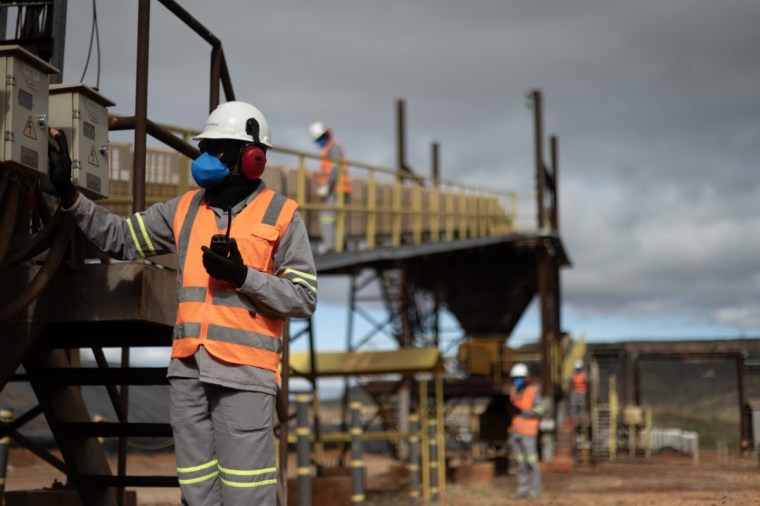
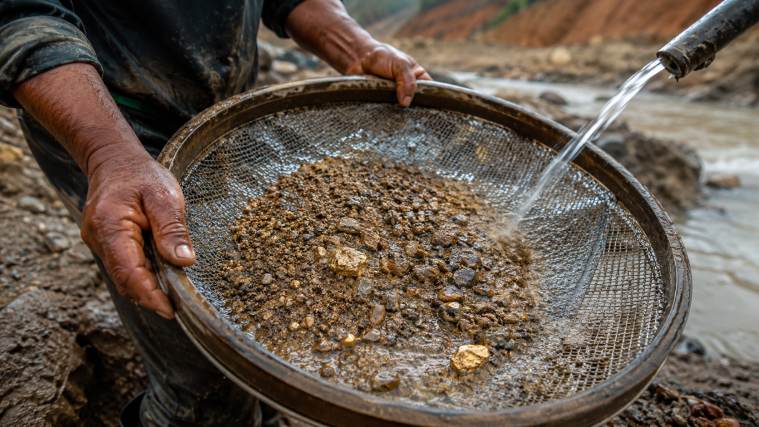
Mining completes this triad of scale. Vale, which ranked 15th in 2000 with R$6.4 billion in revenue, now appears fourth in 2025 with roughly R$200 billion. The jump underscores how a limited number of world-class assets can generate extraordinary revenue when combined with export-oriented logistics and sustained external demand. Vale’s business is defined by concentration—few products, few regions, massive volumes—and tight linkage to global steelmaking cycles.
Across energy, agribusiness and mining, the ranking reveals a common denominator: success is increasingly tied to the ability to move, finance and export large physical volumes. Companies that mastered logistics, accessed global capital and diluted costs through scale rose to the top. Those dependent on domestic consumption growth, industrial diversification or higher value-added manufacturing lost relative relevance.
The ranking, in this sense, is not merely a league table of Brazil’s largest companies. It maps an economy reorganized around throughput rather than transformation—one that grows in barrels, tons and shipments, efficient and globally connected, yet increasingly exposed to commodity cycles and structurally constrained in industrial diversification.

Brazil’s 25 Largest Companies
Comparison: 2000 vs 2025 – Net Revenue (R$ billions)
| Rank | 2000 – Company | Revenue 2000 | Sector (2000) | 2025 – Company | Revenue 2025 | Sector (2025) |
| 1 | Petrobras | 49.1 | Oil & Gas | Petrobras | 490.8 | Oil & Gas |
| 2 | Petrobras Distribuidoraᵃ | 16.1 | Oil Derivatives | JBS | 417.0 | Food & Protein |
| 3 | Volkswagen | 10.2 | Vehicles & Parts | Raízen | 255.2 | Oil & Gas |
| 4 | Furnas | 9.3 | Electric Power | Vale | 200.0 | Mining |
| 5 | Telefônica SP | 9.0 | Telecom | Vibraᵃ | 172.3 | Oil Derivatives |
| 6 | Ipirangaᵇ | 8.9 | Oil Derivatives | Cosan | 169.3 | Oil & Gas |
| 7 | Shell | 8.9 | Oil Derivatives | Marfrig | 148.9 | Food & Protein |
| 8 | Telemarᶜ | 8.5 | Telecom | Ultraparᵇᵍ | 133.5 | Oil Derivatives |
| 9 | Embratelᵈ | 7.3 | Telecom | Grupo Carrefour Brasil | 115.6 | Retail |
| 10 | Pão de Açúcarᵉ | 7.2 | Retail | Cargill | 109.2 | Agribusiness |
| 11 | Carrefour | 7.1 | Retail | Ambev | 89.5 | Food & Beverages |
| 12 | General Motors | 7.0 | Vehicles & Parts | Stellantisᶠ | 79.2 | Vehicles & Parts |
| 13 | Embraer | 6.7 | Vehicles & Parts | Braskem | 77.4 | Oil & Gas |
| 14 | Fiat Automóveisᶠ | 6.4 | Vehicles & Parts | Assaí Atacadistaᵉ | 73.8 | Retail |
| 15 | CVRD (Vale) | 6.4 | Mining | Bunge Alimentos | 69.8 | Agribusiness |
| 16 | Texacoᵍ | 6.2 | Oil Derivatives | Gerdau | 67.0 | Metals & Steel |
| 17 | Brasil Telecomʰ | 6.2 | Telecom | ArcelorMittal Brasil | 66.6 | Metals & Steel |
| 18 | Eletropaulo Metropolitanaᶦ | 5.9 | Electric Power | Copersucar | 62.3 | Bioenergy |
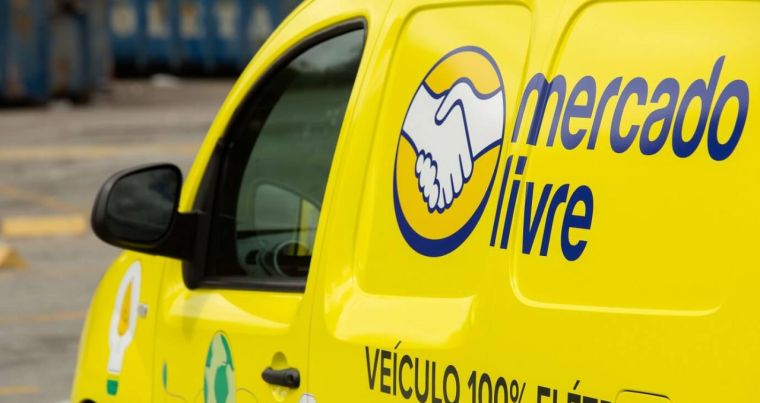
| 19 | Itaipu Binacional | 5.8 | Electric Power | Mercado Livre | 61.5 | Retail |
| 20 | Bunge Alimentos | 5.4 | Food | BRF | 61.4 | Food & Protein |
| 21 | Varigʲ | 5.3 | Air Transport | Telefônica Brasil | 55.8 | Telecom |
| 22 | Essoᵏ | 5.2 | Oil Derivatives | Shell Brasil | 55.0 | Oil & Gas |
| 23 | Correios | 4.5 | Services | COFCO International | 53.3 | Agribusiness |
| 24 | Cemig | 4.5 | Electric Power | Rede D’Or | 50.6 | Healthcare Services |
| 25 | Cargill | 4.2 | Food | Neoenergia | 49.0 | Electric Power |
Sources: Audited company financial statements and disclosures, CVM regulatory filings, historical nominal company-reported financial series.
Notes – consolidation and corporate transformations (2000–2025)
- Petrobras Distribuidora was privatized and rebranded as Vibra.
b) Ipiranga was acquired and incorporated by Ultrapar.
c) Telemar’s assets were consolidated into Oi.
d) Embratel was privatized and later acquired by Claro.
e) GPA (Grupo Pão de Açúcar) completed a spin-off, creating Assaí Atacadista as a standalone company.
f) Fiat Automobiles became part of Stellantis following the FCA–PSA merger.
g) Texaco’s assets were incorporated by Ultrapar.
h) Brasil Telecom’s assets were incorporated into Oi.
i) Eletropaulo’s assets were acquired by Enel São Paulo (Enel-SP).
j) Varig filed for bankruptcy and ceased operations.
k) Esso sold its Brazilian assets to Raízen.

Tomorrow: How consolidation erased some of Brazil’s most iconic corporate brands