
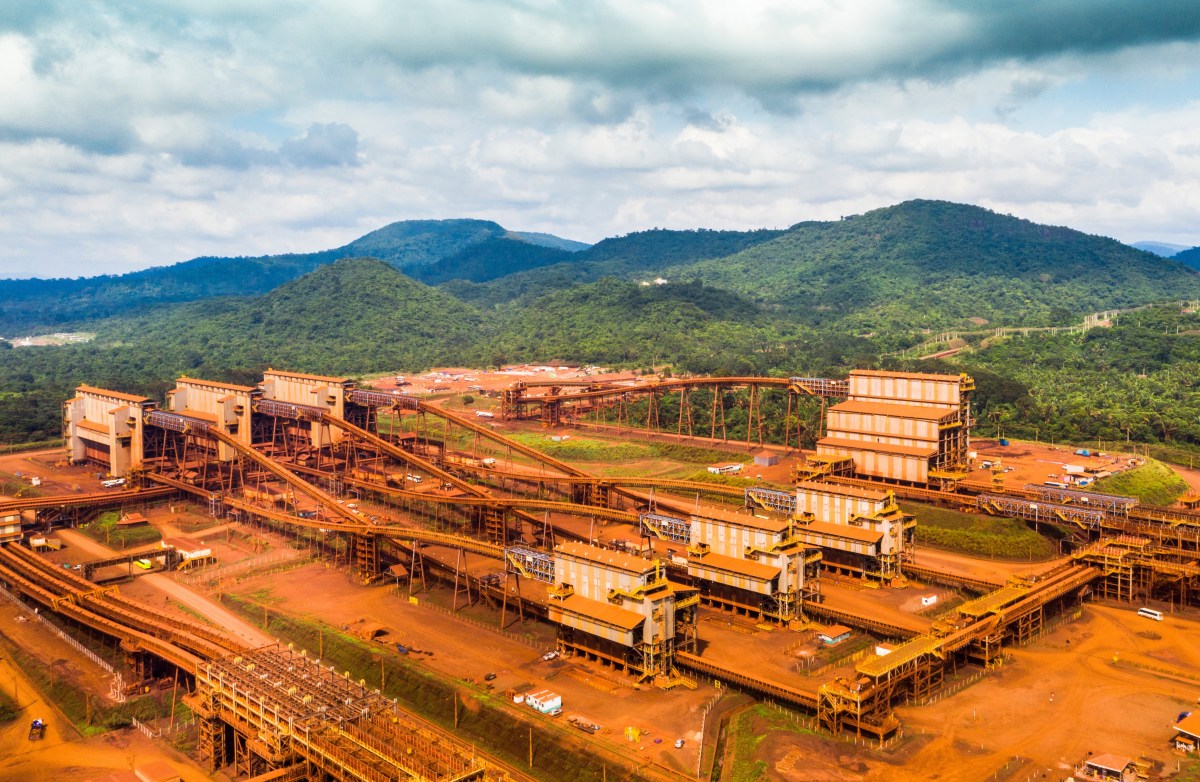
By Brazil Stock Guide – Vale (B3: VALE3; NYSE: VALE) delivered stronger-than-expected operational results in 2025, pushing iron ore and copper production to their highest levels since 2018 as ramp-ups and operational stability outweighed deliberate cuts in pellets. Iron ore output reached 336.1 million metric tons, above the company’s original guidance range, while copper climbed to 382.4 thousand tons, underscoring a recovery in core assets after years of volatility.
The fourth quarter set the tone. Vale produced 90.4 million tons of iron ore, up 6% from a year earlier, driven by Brucutu and continued ramp-ups at Capanema and Vargem Grande. Iron ore sales rose 4.5% to 84.9 million tons, tracking higher output. Copper production hit 108.1 thousand tons, the strongest quarterly level since 2018, helped by a record at Salobo. Nickel reached 46.2 thousand tons, supported by the second furnace at Onça Puma and underground ramp-ups at Voisey’s Bay.
“Our focus remains reliability and value over pure volume,” the company said in its production report, pointing to portfolio flexibility as market conditions shifted.
Iron Ore Engines
For the full year, iron ore output rose 2.6% from 2024, with gains concentrated in the Southeast and South systems. S11D closed 2025 with a record 86.0 million tons, reflecting incremental efficiency gains, even as the Northern System faced maintenance and run-of-mine constraints late in the year. Pellet production fell 15% to 31.4 million tons after Vale curtailed output and redirected pellet feed to fines, responding to softer premiums and keeping the São Luís plant idle.
Base Metals Momentum
Base metals carried the upside surprise. Copper output advanced 9.8% year on year, while nickel jumped 10.8% to 177.2 thousand tons, the highest since 2022. Vale cited steadier operations in Brazil and Canada and the commissioning of new capacity as key drivers, while noting reporting changes related to its Indonesian operations that affect comparability.
Prices, however, told a mixed story. In the fourth quarter, Vale realized US$95.4 per ton for iron ore fines and US$131.4 for pellets. The all-in iron ore premium slid to US$0.9 per ton, from US$4.6 a year earlier, reflecting weaker contribution from higher-grade products.
Looking ahead, Vale guided for 335–345 million tons of iron ore in 2026, with agglomerates at 30–34 million tons, copper at 350–380 thousand tons, and nickel at 175–200 thousand tons. The message is pragmatic: protect margins, complete scheduled maintenance, and lean on metals tied to electrification. For investors, the trade-off is clear. Volume momentum has returned, but pricing power will hinge on market premiums rather than tonnage alone.





