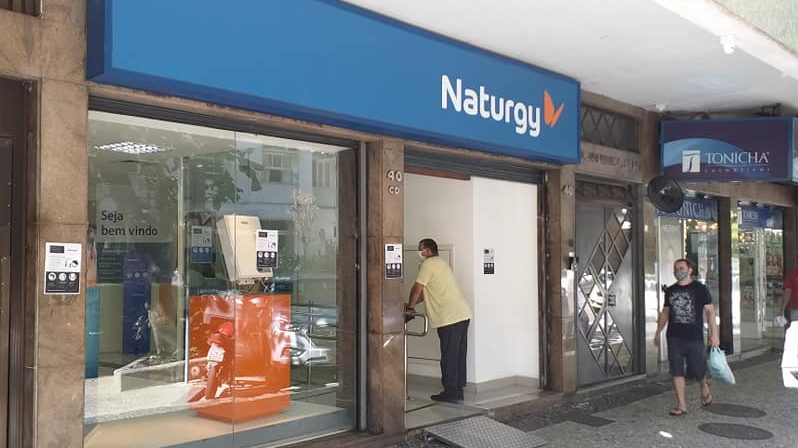
By Brazil Stock Guide – The government of the state of Rio de Janeiro has decided to launch a new auction for its natural gas distribution concessions rather than renew contracts that expire in July 2027. The assets are currently operated by Naturgy, which controls the Ceg distributor in the metropolitan region and Ceg Rio in the state’s interior. The new bidding model is expected to be finalized within seven to twelve months.
At stake are non-amortized assets worth about R$ 7.2 billion, roughly $1.4 billion. The process may also generate an upfront concession payment at a time when the state projects a R$ 19 billion deficit this year, equivalent to approximately $3.7 billion.
The existing contracts were awarded in 1997 for a 30-year term, during Brazil’s state-led privatization wave. In 2024, the Rio government hired Fundação Getulio Vargas, a leading Brazilian academic institution, to evaluate two options: renew the concessions for 20 years or open a new competitive tender. Civil House Secretary Nicola Miccione said the study pointed — by a narrow margin — to greater advantages in holding a new auction.
Naturgy says it has invested more than R$ 11 billion, about $2.1 billion, over 28 years and expanded the distribution network to more than 6,000 kilometers, roughly 3,730 miles. Miccione said the auction design will aim to maximize concession revenue without triggering meaningful tariff increases for industrial and residential consumers.
Political and regulatory scrutiny
The issue has gained political traction. The Assembleia Legislativa do Estado do Rio de Janeiro, the state’s legislative assembly, has set up a parliamentary inquiry commission to examine the gas distribution service and the administrative acts linked to the renewal debate.
At the same time, the technical staff of the Tribunal de Contas do Estado do Rio de Janeiro — the state audit court responsible for overseeing public spending and assessing the legality of government contracts — previously opposed an automatic renewal and questioned the legal assumptions used in the extension analysis. While the court does not act as a criminal tribunal, it can influence or suspend administrative decisions if it identifies irregularities.
According to the FGV study, rejecting renewal could require compensation of up to R$ 9.4 billion, about $1.8 billion, depending on regulatory decisions by Agenersa, Rio’s energy regulator. The state government currently works with the lower estimate of R$ 7.2 billion, tied to non-amortized assets. Additional amounts would depend on the ongoing tariff review.
Governor Cláudio Castro had initially considered extending the contract to secure faster revenue and ease fiscal pressure. That approach faced political resistance. Officials deny electoral motivations. Even so, the state’s budget shortfall frames the debate.
For investors, the concession mechanics are clear. Any new operator must indemnify Naturgy for remaining investments. The auction winner may also pay an additional concession fee. In renewal simulations, that fee ranged from zero — if tariff moderation were prioritized — to nearly R$ 2 billion, or roughly $390 million.
Naturgy said it is monitoring developments and remains available to cooperate with authorities. The company argues that its request for a 30-year extension is supported by State Law 1.481/1989, in force when the contracts were signed. It maintains that continuity would preserve technical expertise in a capital-intensive infrastructure sector.