
By Brazil Stock Guide – Marcopolo (B3: POMO3; POMO4), one of the world’s largest bus body manufacturers and Brazil’s market leader in passenger transport solutions, posted net income of R$ 341.7 million in 4Q25, up 7.2% year over year, even as net revenue declined 3.6% to R$ 2.57 billion.
The company designs and manufactures bus bodies for urban transit, long-distance coaches, microbuses and electric vehicles, with production in Brazil and operations in Australia, Mexico, South Africa, China and Argentina. Its diversified industrial footprint helps soften the impact of Brazil’s credit cycles.
Gross profit reached R$ 668.1 million, with margin expanding to 26.0% from 24.7% a year earlier. EBITDA totaled R$ 426.0 million, with a margin of 16.6%, below the 17.3% recorded in 4Q24 due to a non-recurring R$ 62 million negative impact related to its Canadian associate NFI. Excluding that effect, adjusted EBITDA would have reached R$ 488.0 million, implying a margin close to 19%.
Production totaled 3,803 units in the quarter, down 1.7% year over year. The decline was concentrated in the Brazilian domestic market, where high financing costs have dampened demand for new buses. Exports from Brazil and international operations partially offset the slowdown, with foreign markets representing nearly 30% of quarterly revenue — reinforcing geographic diversification as a strategic pillar.
Financial results swung to a positive R$ 32.8 million from a loss in the prior year, supported by favorable currency effects as the Brazilian real appreciated against the U.S. dollar. The company systematically hedges export orders, protecting operating margins while capturing FX variations through financial income.
Marcopolo ended December with R$ 2.22 billion in cash. Net debt stood at R$ 1.48 billion, but only R$ 281.9 million was tied to the industrial segment — equivalent to just 0.2 times trailing 12-month EBITDA — signaling conservative leverage.
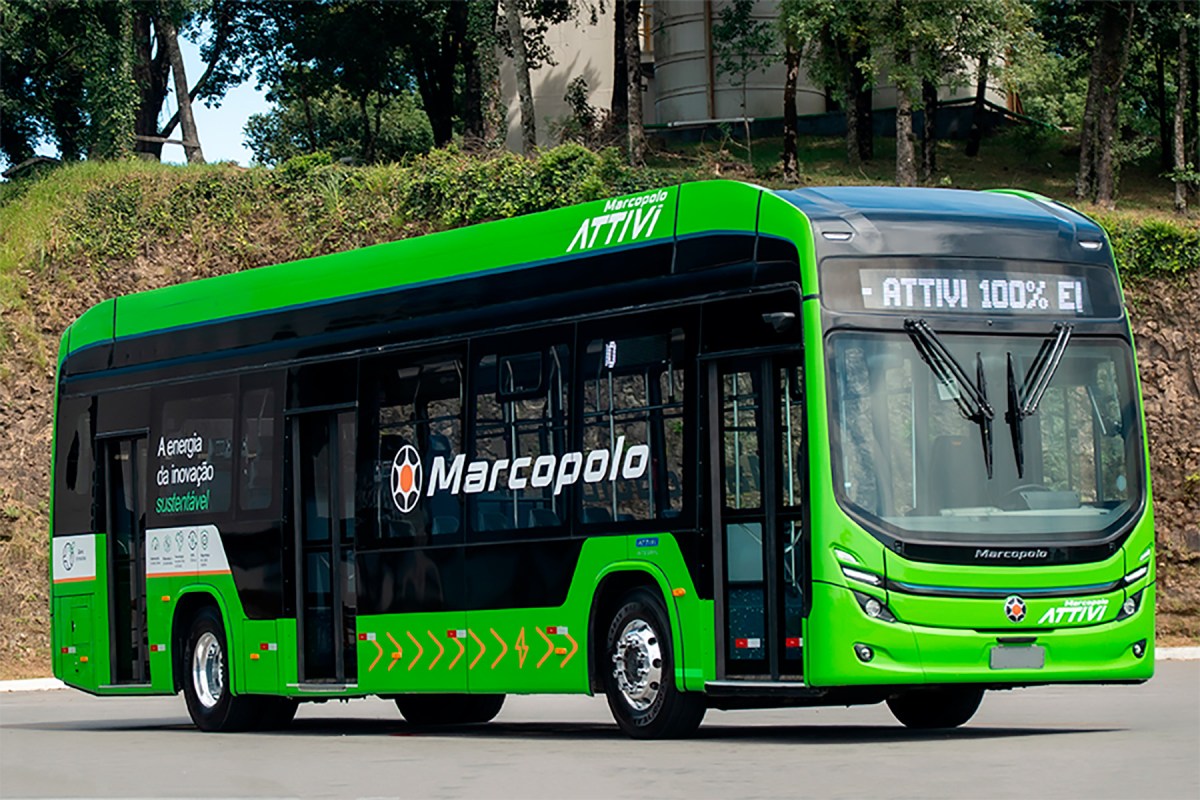
Looking ahead to 2026, management expects a seasonally weaker first quarter but anticipates improved volumes in the second half if Brazilian interest rates decline. Electric buses remain a structural growth driver: the company delivered 151 electric Attivi units in 2025 versus just eight in 2024, reflecting accelerating demand for alternative propulsion systems.