By Brazil Stock Guide – Brazil’s trade authority issued a preliminary finding of dumping on imports of carbon steel tinplate from Germany, Japan and the Netherlands, concluding there is evidence of injury to the domestic industry — but declining, for now, to impose provisional anti-dumping duties.
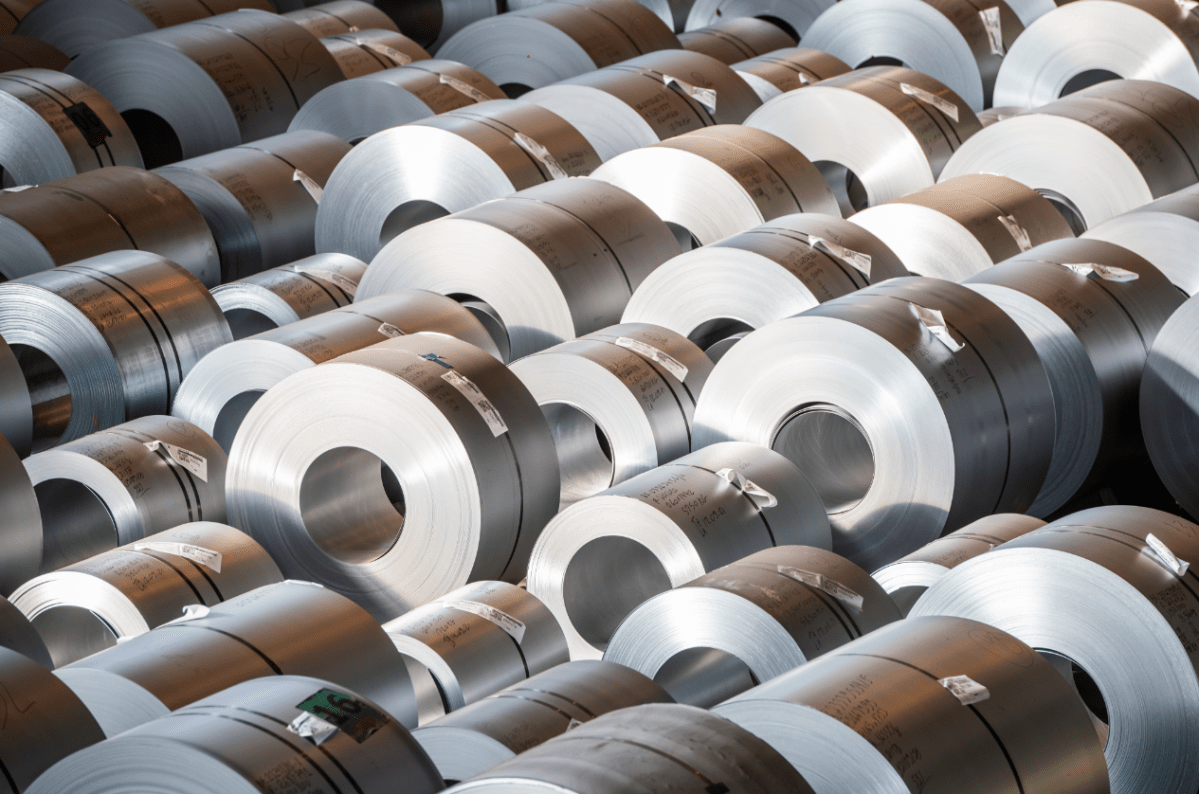
The decision covers carbon steel sheets thinner than 0.5 mm, widely used in food cans, aerosols and industrial packaging. The investigation was triggered by a petition from Companhia Siderúrgica Nacional (CSN), which authorities recognize as the sole domestic producer of the product in Brazil. The probe spans specific Mercosur tariff codes and examines whether exporters sold into Brazil below fair value.
No Immediate Tariff Impact
Despite the preliminary affirmative finding, the government opted not to apply provisional measures at this stage. That limits the immediate commercial disruption but leaves legal and pricing uncertainty hanging over foreign suppliers and Brazilian importers.
In the Japanese case, authorities calculated a preliminary dumping margin of 78.3%, equivalent to roughly US$871 per metric ton — a striking number that signals the potential scale of duties if confirmed in a final ruling. European exporters are also under scrutiny, with Germany and the Netherlands included in the scope of the case.
The process now moves into the evidentiary and hearing phase, with a final technical determination expected in the second half of 2026.
Upstream Protection, Downstream Pressure
Tinplate is strategically relevant to Brazil’s packaging chain, supplying food, beverage, chemical and aerosol manufacturers. Trade defense in this segment often pits upstream steel producers against downstream can-makers and packaging companies concerned about higher input costs.
Brazil has in recent years alternated between tariff reductions and stronger trade-defense enforcement. The case follows definitive anti-dumping duties imposed in 2025 on similar products from China, reinforcing a broader pattern of tighter scrutiny on flat steel imports.
For now, there is no new tariff barrier. But the preliminary findings — especially the margin calculated for Japan — suggest the final outcome could materially alter import dynamics in a market where domestic production is concentrated in a single player.