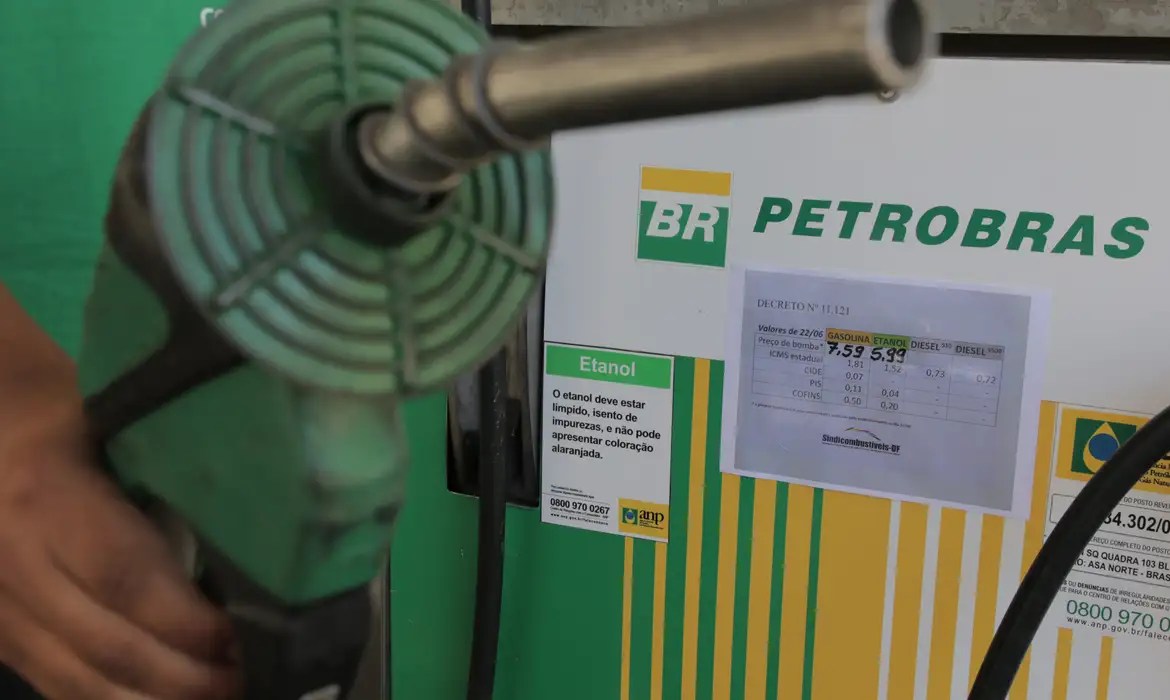
By Brazil Stock Guide – Brazil’s private refining industry is urging Petrobras (B3: PETR4, NYSE: PBR) to raise domestic fuel prices as global crude markets climb, arguing that keeping gasoline and diesel below international parity threatens the financial viability of independent refiners and risks distorting competition in Latin America’s largest fuel market, according to Poder360.
The call came Tuesday from Refina Brasil, the association representing private refiners in Brazil, whose president Evaristo Pinheiro said the recent rise in oil prices should translate into higher domestic fuel prices. According to the group, maintaining artificially low prices relative to international benchmarks can impose losses on refiners that rely on imported crude or refined products, as well as discourage investment in Brazil’s downstream sector.
Brazil partially opened its refining market in recent years as Petrobras sold several assets to private operators, part of a broader effort to stimulate competition in a sector long dominated by the state-controlled company. Independent refiners now operate facilities across the country but remain sensitive to Petrobras’ pricing strategy, since the company still controls the bulk of Brazil’s refining capacity and sets the benchmark for domestic fuel prices.
Parity Debate Returns
The dispute revives a long-running debate over Brazil’s import parity pricing mechanism, which links domestic fuel prices to international oil benchmarks, exchange rates and import logistics costs. When Petrobras holds prices below that level, private refiners say they struggle to compete because imported fuel becomes economically unviable.
Refina Brasil argues that price distortions can also affect supply incentives. If domestic prices diverge too far from global levels, importers and independent refiners may scale back purchases or operations, potentially tightening supply in certain regions of the country.
Petrobras has in recent years adopted a more flexible pricing strategy, abandoning strict adherence to import parity in favor of what executives describe as a balance between international market dynamics and domestic economic conditions. The company has said the approach aims to reduce volatility for Brazilian consumers while preserving financial discipline.
Inflation Pressure
Private refiners say delaying adjustments can ultimately amplify inflationary pressures rather than contain them. According to the association, price corrections postponed during periods of rising oil prices tend to accumulate and require sharper adjustments later, feeding volatility in Brazil’s fuel market.
Fuel prices remain a politically sensitive issue in Brazil, where gasoline and diesel costs have historically influenced consumer inflation and government popularity. Changes in Petrobras’ pricing policy have often triggered disputes between the government, investors and industry participants.
With crude prices trending higher in recent weeks amid geopolitical tensions and tightening global supply expectations, the debate over Petrobras’ pricing strategy may once again move to the center of Brazil’s economic policy discussion.