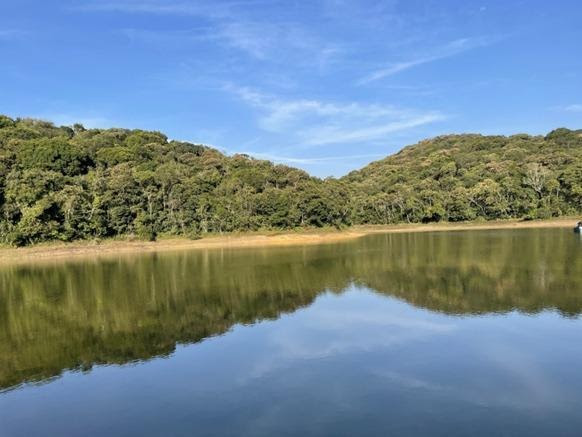
By Brazil Stock Guide – Reservoirs supplying the São Paulo metropolitan region posted a significant recovery in the first weeks of 2026, reducing the risk of water shortages that had worried authorities and consumers at the start of the year. The integrated metropolitan system was operating at around 51% of capacity on March 10, nearly double the level recorded in early January, when it stood close to 26%, according to data from Sabesp.
Despite the recent rebound, storage levels remain below those seen a year earlier. On March 10, 2025, the metropolitan system stood at about 59.8% of capacity, indicating that reservoirs entered 2026 under greater pressure than in the previous year.
The recovery was driven by summer rainfall, the period when reservoirs in southeastern Brazil typically receive their most significant recharge. Key systems such as Guarapiranga, Alto Tietê and Rio Grande recorded strong increases in stored water throughout January and February.
The Cantareira system, historically the main indicator of water stress in the city and responsible for supplying roughly half of the metropolitan population, rose from about 20% at the beginning of the year to nearly 40% in early March, reflecting the impact of the rainy season.
The improvement comes just as summer approaches its end, when reservoirs typically reach their seasonal peak before the drier autumn and winter months. With storage levels now well above critical thresholds, the likelihood of emergency measures such as rationing has declined significantly.
Still, demand-management measures remain in place. The state regulator Arsesp has decided to maintain the nighttime reduction of water pressure for roughly ten hours across the metropolitan region, a precaution aimed at preserving reservoir levels ahead of the coming dry season.
According to Sabesp, those operational restrictions have already saved about 105 billion liters of water, enough to supply major cities in the metropolitan region — including São Paulo, Guarulhos, São Bernardo and Mauá — for roughly one month.
The issue carried additional political weight because Sabesp was privatized in 2024, making the management of water security an early test of the new model. A severe supply crisis would also have posed a political challenge for São Paulo Governor Tarcísio de Freitas, who is widely expected to seek reelection in the state’s upcoming electoral cycle.
With reservoirs recovering rapidly, however, the immediate risk of a new water crisis has largely faded from the policy agenda, even though the Cantareira system remains below the ideal level for this time of year and authorities continue to operate the system with caution.