By Brazil Stock Guide — A new wave of initial public offerings is expected to return to Brazil after a nearly four-year drought, according to market participants, as a growing pipeline of companies prepares to test investor appetite on B3. The movement signals a potential turning point for the country’s equity capital markets, which have remained largely shut since 2021.
Pipeline takes shape
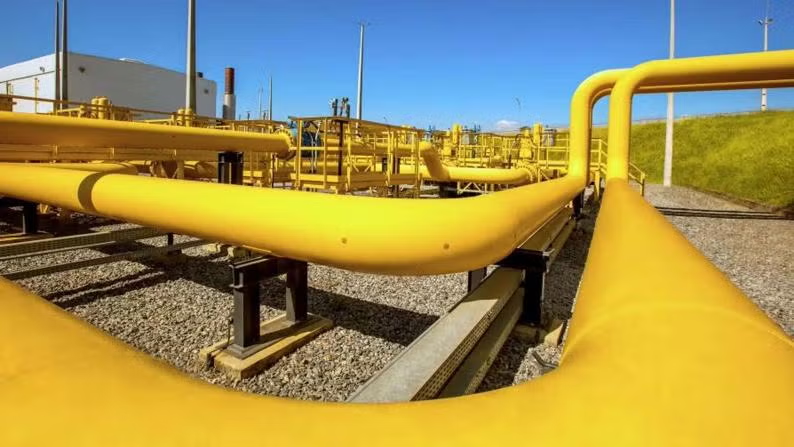
Compass Gás e Energia, the gas and energy platform controlled by Cosan (CSAN3), is expected to lead the reopening. The company operates across natural gas distribution, transportation and commercialization, positioning itself as a key player in Brazil’s energy infrastructure.
Compass has already filed for an IPO with Brazil’s securities regulator, the CVM. The deal is expected to raise around R$5 billion, according to market estimates, and is seen as a key step in Cosan’s deleveraging strategy. The transaction is widely viewed by market participants as the first real test of whether Brazil’s IPO window has effectively reopened.
External signal, domestic move
The shift comes after Brazilian companies resumed equity issuance abroad. PicPay, a digital payments and financial services platform, and Agibank, a retail-focused bank with exposure to payroll lending and mass-market credit, both completed IPOs in the United States in January. Both deals, however, were priced below initial expectations — reinforcing a more disciplined environment, in which investors demand profitability, capital strength and execution rather than growth narratives.
Aegea advances
Further down the pipeline, Aegea is preparing what could be one of the largest IPOs in recent years. The company is Brazil’s largest private sanitation operator, with concessions in water supply and sewage treatment across multiple states, supported by long-term contracts and regulated returns.
The IPO process remains active despite delays linked to global volatility. Market expectations point to a potential offering between late May and early June, likely supported by first-quarter results. “The project continues full speed ahead,” said Alfredo Setúbal, chief executive of Itaúsa (ITSA4), in comments made on Tuesday (17 Mar.), adding that the timing reflects market conditions rather than any change in strategy.
The structure is already advanced, with banks hired, roadshows conducted and investors pre-engaged — allowing the company to move quickly once market conditions stabilize. For Itaúsa, the IPO represents a key step in unlocking value and highlighting the underlying worth of Aegea within its portfolio.
Other candidates line up
Additional companies are also positioning themselves. BRK Ambiental, another major private sanitation operator in Brazil, is evaluating a potential offering, while Copasa, the state-controlled water utility of Minas Gerais, remains on investors’ radar amid ongoing privatization discussions.
The emerging pipeline suggests that Brazil’s next IPO cycle will be concentrated in regulated sectors such as sanitation, energy and utilities — where predictable cash flows and long-term contracts help mitigate macroeconomic volatility.
From boom to reset
The backdrop remains shaped by the scars of the last IPO cycle. Between 2020 and 2021, Brazil saw a surge of listings fueled by abundant liquidity, low interest rates and aggressive growth narratives. The outcome was uneven: a large share of those companies now trade below their offer prices, and the wave was followed by a prolonged shutdown of the market. Today, the macro environment remains uncertain, with geopolitical conflicts and volatile interest-rate expectations continuing to influence global risk appetite. If the IPO window is reopening, it is doing so under a different set of rules. The last cycle was defined by access to capital. This one is likely to be defined by the cost of it.