

By Rodrigo Uchoa*, special for Brazil Stock Guide
He was a clergyman’s son. His hometown was nowhere near the country’s financial centre, his surname carried no weight among the established money men, but he made up for both with an ambition large enough to fill a continent and a talent for turning it into cash — a great deal of cash, in very little time. Almost overnight, he became a name people mentioned with a mixture of awe and unease. He seemed to be everywhere at once. He built interests across insurance, credit, private pensions and fixed income, drawing in even cautious investors with returns that seemed too good to be true.
What was impressive, though, was not merely the growth. It was the web. Friendships cultivated in precisely the right places, with a generosity that went well beyond the ordinary calculus of campaign financing and expected favours. There were contributions to lawmakers. Ministers’ names surfaced. At some point, so did the name of the president’s son. The name of the federal chief of police. And at the centre of it all, the main bank of the region that houses the country’s capital — an institution that appeared, one way or another, as partner or counterparty in the widening financial tangle.
Then came the collapse and the spectacular arrest, in an operation that dominated the nation’s news cycle. The proceedings that followed were a prolonged public spectacle: daily revelations, fresh names, headlines that showed no sign of running dry. Hanging over everything, something harder to quantify and harder to recover than any item on a balance sheet — the credibility of the institutions themselves. A creeping sensation that the state was available for purchase.
We are, it should be said, a century removed from all of this. The episode in question took place in Germany, sometime in the mid-1920s. Julius Barmat was the protagonist.
An apology is in order for the opening gambit. It is old, it is convenient, and it has the considerable disadvantage of being among the most abused devices in political journalism — precisely because it works rather well. Presenting the past as a mirror of the present carries the agreeable suggestion of historical wisdom without the inconvenience of actually demonstrating it, along with the equally convenient trap of forcing analogies that do not always hold.
And it is difficult to resist invoking Karl Marx, who wrote in The Eighteenth Brumaire of Louis Bonaparte: “Hegel remarks somewhere that all great world-historic facts and personages appear, so to speak, twice. He forgot to add: the first time as tragedy, the second time as farce.” The line has become the ketchup of political commentary, squeezed over everything from coups d’état to homeowners’ association disputes. Any columnist caught short on deadline reaches for Marx. It is the universal chorus of intellectual convenience.
And yet: the coincidences between the Barmat affair, which shook the young Weimar Republic between 1924 and 1926, and the Master case, which currently occupies Brazil’s front pages, are too delicious to resist the cliché.
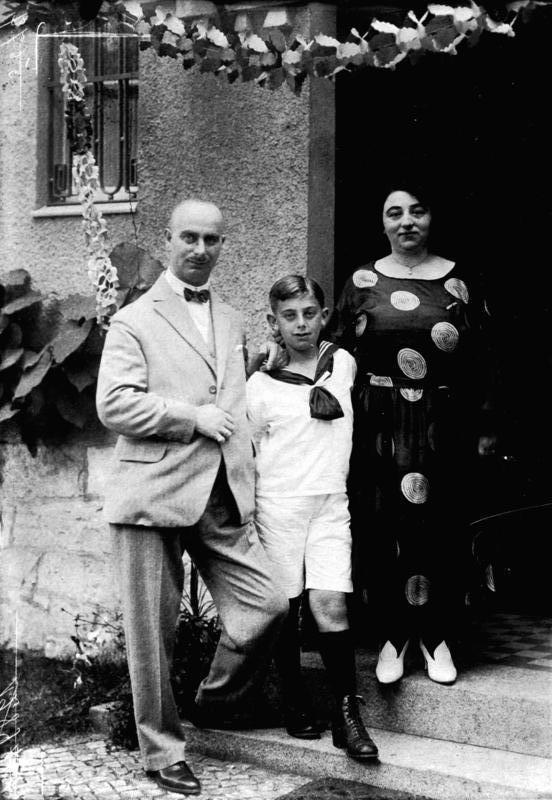
Julius Barmat was born around 1887 in Fastov, in what was then the Russian Empire’s Ukrainian territory, the son of a rabbi. He emigrated to the Netherlands as a young man and built a fortune in the food trade during the First World War, supplying Germany through the Royal Navy’s blockade. That particular line of business earned him useful connections within the Social Democratic Party, the SPD, which would go on to govern Germany after the armistice and the proclamation of the republic in November 1918.
With the peace, Julius and his brothers — Simon, Salomon and Henry — relocated to Berlin. What they built was remarkable chiefly for its speed: a conglomerate spanning banks, real estate and food companies, supported by a web of relationships that reached directly to the republic’s upper reaches. Gustav Bauer, a former SPD chancellor, received personal loans from the Barmats. Other party figures appeared as paid advisers or beneficiaries of the brothers’ generosity. The Preußische Staatsbank — the Prussian state bank, whose territory encompassed Berlin — had extended lines of credit to the group in volumes that, according to subsequent investigation, should never have been authorised.
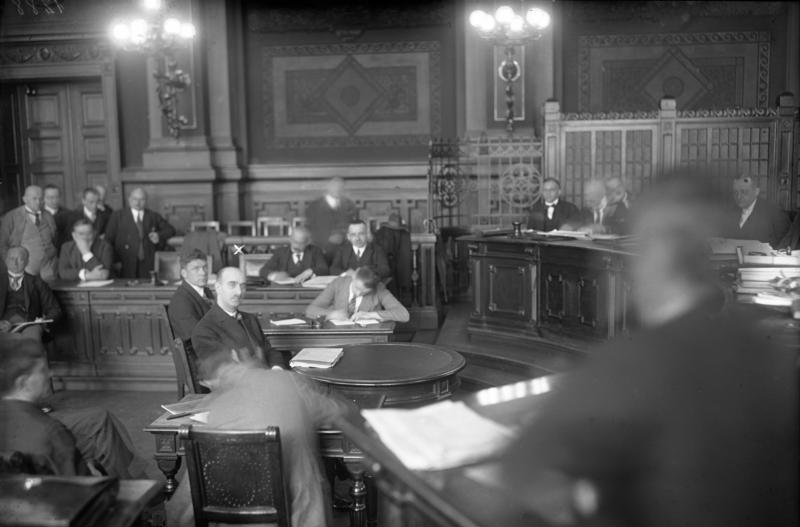
The collapse came with a credit squeeze. In December 1924, Prussian authorities arrested Julius Barmat at his Berlin residence in an early-morning operation, as he was attempting to board his motor launch. The proceedings that followed ran for months: daily hearings, new names released at serial-fiction pace, a press that alternated between genuine outrage and barely concealed relish at the prospect of destroying the reputations of the men who had founded that fragile republic.
In Before the Deluge, published in 1972, the American journalist and historian Otto Friedrich captures the mood of the German capital in those years with a precision that academic monographs rarely achieve. He describes a city in which the hyperinflation of 1923 had wiped out the savings of an entire middle class and in which the moral order had appeared to collapse alongside the economic one. Above all, a deep mistrust of institutions — that most democratic of sentiments, evenly distributed across every point on the political spectrum. Friedrich writes almost as a reporter, drawing on interviews with people who were there, while maintaining genuine analytical rigour.
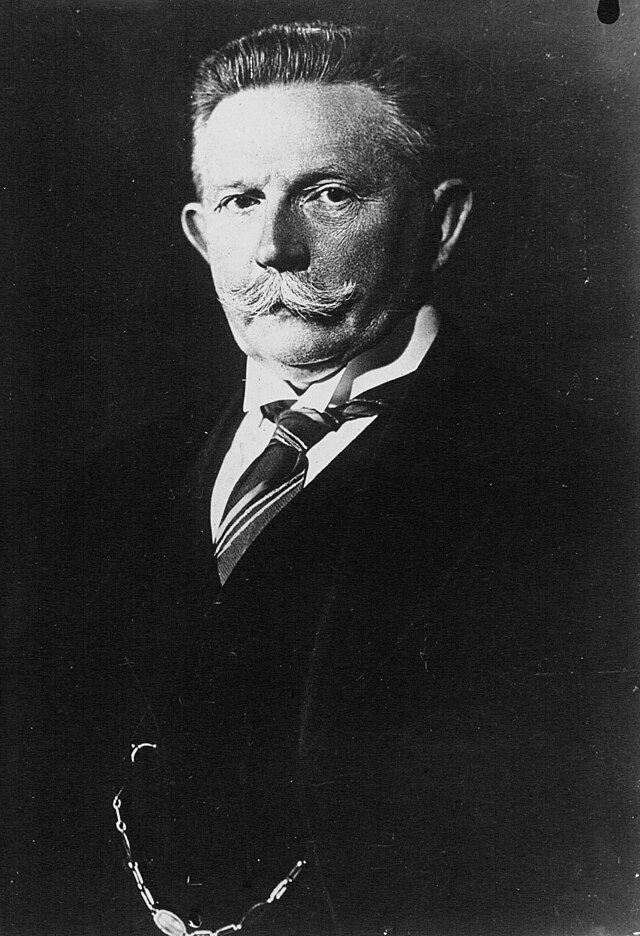
The Barmat affair was perfect fuel for that fire. The conservative press, controlled largely by the media magnate Alfred Hugenberg — who would shortly afterwards help finance the rise of the Nazi party — transformed the scandal into a symbol of the republic’s systemic rot. “The system” was not merely incompetent: it was corrupt, and it had faces, names, and foreign surnames. The historian Eric Weitz, in Weimar Germany: Promise and Tragedy (Princeton University Press, 2007), identifies the Barmat scandal as part of a broader pattern of institutional erosion that steadily hollowed out the republic’s legitimacy. Insufficient on its own to bring it down, but an essential component in the architecture of discredit that made what followed possible.
There was an additional layer of poison. The Barmat affair was not Germany’s first major financial scandal with a Jewish protagonist. Fifty years earlier, the period following Bismarck’s unification of the Empire in 1871 — the Gründerzeit, the age of the founders — had ended in a crash. The Gründerkrach of 1873 destroyed fortunes and reputations and produced its own villains, among them Bethel Henry Strousberg, the railway magnate of Jewish origin who had built one of Europe’s largest business empires before ending his days broke and forgotten in a Russian prison.
The crash of 1873 was the moment at which modern German antisemitism found its language. Adolf Stoecker, court chaplain to the Kaiser, reorganised his Christian Social movement around an openly antisemitic rhetoric. Wilhelm Marr, who coined the very term “antisemitism” in 1879, exploited post-crisis resentment to construct a narrative in which Jews were, by nature, economic predators — not political opponents to be debated, but racial contamination to be expelled. It was a hatred that dressed itself in scientific vocabulary to pass for something respectable.
In France at roughly the same moment, the Dreyfus affair performed a similar function: it did not invent French antisemitism, but it institutionalised it, gave it a uniform and a courtroom. Theodor Herzl, covering the trial for the Viennese Neue Freie Presse, was so shaken by the crowds baying in the Paris streets that he concluded assimilation was impossible — and left to found Zionism. Two countries, two distinct scandals, one identical mechanism: transforming collective failure into individual guilt, with a specific face attached.
The Barmat affair, ignited in 1924 and smouldering through the following years, arrived at a moment when Germany had accumulated enough humiliation to require scapegoats urgently. The hyperinflation, the Treaty of Versailles, the mythology of the wartime “stab in the back,” the violence between capitalists and communists on the streets — all of it prepared the ground for a re-run of the 1873 script. The Barmat brothers were Jewish, they were foreign, they had grown rich with suspicious speed, and they had bought politicians. For the Nazis — who already existed as a party, who had already attempted a coup in Munich in November 1923 — the affair was a gift. Joseph Goebbels and the party press exploited the scandal with discipline and savagery. “The Jew Barmat” became a fixture in Nazi propaganda, cited well into the 1930s as evidence that the republic had been, from its very foundation, a project of racial corruption.
Where that antisemitism led need not be elaborated here.
At this point, returning to Brazil in 2026 — to the Master case, to Daniel Vorcaro, to the Banco de Brasília, to the revelations that arrive daily — is almost a relief. Not because the scandal is smaller or less serious, but because it presents itself, perhaps, as the farce rather than the tragedy.
The differences between the two cases are enormous. Brazil has its own ghosts, its own long tradition of promiscuity between money and power — a tradition so well-established it has been named and renamed across the decades, from the “Sea of Mud” scandal that engulfed Getúlio Vargas’s second government in the 1950s, through the privatisation era’s discussions about the “limits of responsibility” under Fernando Henrique Cardoso, to the vast Petrobras kickback scheme of the Lula years. The poison that destroyed the Weimar Republic was of a different order: not merely corruption, but institutionalised hatred that used corruption as its accelerant.
What the Master case shares with the Barmat affair is the bare skeleton. Perhaps the more useful warning is this: republics do not die only from coups. They die from disrepute.
To attempt to explain one case using the other as a template would be rather like asking for precision from someone who throws a grenade into a dark room and hopes to hit something. Even so, the temptation to mix tragedy and farce proves, as always, irresistible.
Postscript: The anniversary — another cliché — that nominally justifies this article is the sentencing of Julius Barmat, handed down by a German court in 1926. It was a lenient verdict; he served his time and emigrated. No official of the Weimar Republic was ever convicted.