
Recurring blackouts, more extreme weather events and mounting connection constraints are exposing an uncomfortable reality in Brazil’s power system: reliability can no longer be taken for granted. The country still boasts one of the cleanest and most abundant energy matrices in the world, but perception at the point of delivery — where electricity must arrive without interruption — is beginning to shift.
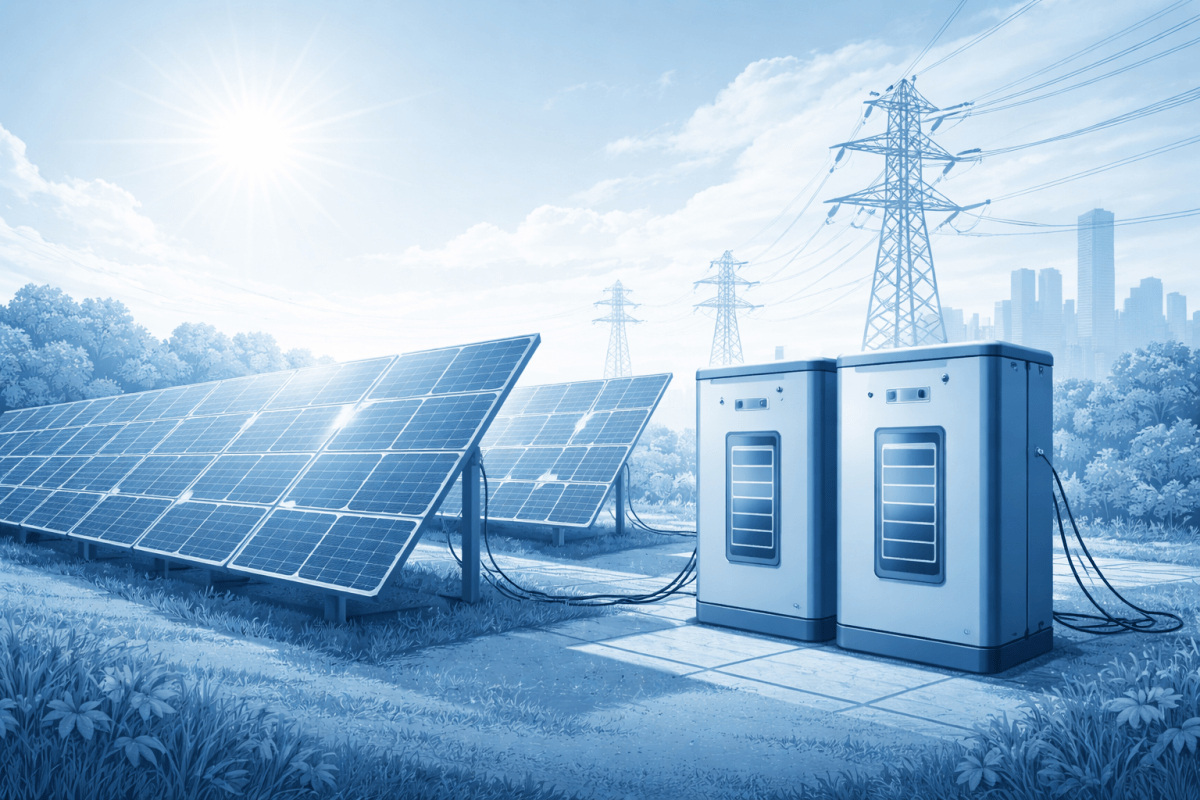
In response, an alternative is quietly taking shape. Not a visible disruption, but the gradual emergence of a parallel grid: solar systems combined with batteries, capable of operating independently or alongside the traditional network. Consumers are not leaving the grid — they are starting to treat it as a backup. A similar pattern has already played out in parts of the United States, where residential batteries expanded after wildfire-related outages in California, and in Europe, where energy volatility following the Ukraine war accelerated behind-the-meter storage adoption.
In absolute terms, it remains negligible. According to PV Magazine, Brazil has around 852 MWh of installed storage, equivalent to just a few hours of output from the Itaipu Dam. But the relevant signal is not size — it is direction. The country already has roughly 95,000 isolated systems, with strong acceleration since 2022 and about 33,000 new units added in 2025 alone .
The logic is straightforward: local generation, on-site storage and automatic backup. When the grid fails, the battery takes over. What was once implicit reliability becomes an explicit investment decision. Dependence turns into optionality.
For distributors such as Enel, Equatorial, CPFL Energia, Energisa and Neoenergia, the risk is gradual but structural. Lower dependence on the grid implies less predictable demand, higher tariff sensitivity and, ultimately, pressure on the economic model — particularly if higher-value customers move first.
The shift is most visible where economics are decisive. In diesel replacement applications — agribusiness, mining and telecom — projects can achieve payback in around two years . Pure off-grid remains niche, but hybrid systems are emerging as the dominant architecture. Storage may still be irrelevant in scale, but it already matters in behavior. And once the grid becomes the backup, the risk is no longer technical — it is economic.