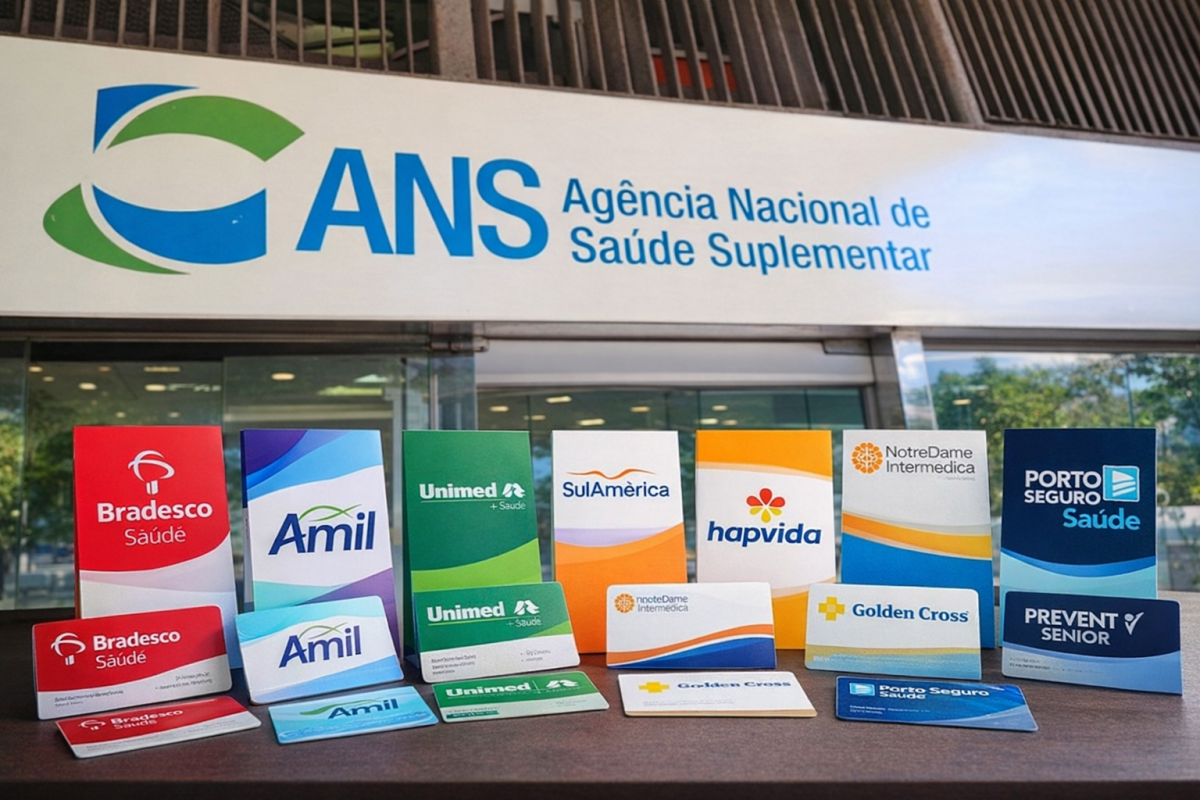
By Brazil Stock Guide – Brazil corporate health plan premiums have entered a stabilization phase in 2026, settling near 10%, according to data from the country’s health regulator, the National Supplementary Health Agency (ANS), compiled by BTG Pactual. After a strong post-pandemic repricing cycle, the sector is now showing lower volatility. Increases remain elevated, but are no longer accelerating.
More predictable cycle
Recent data show premiums moving within a relatively narrow range. Increases reached 10.8% in December, 9.5% in January and 12.9% in February, with a 10.8% average year-to-date. The stabilization of Brazil corporate health plan premiums suggests the pricing cycle has reached a new equilibrium. It continues to support revenues, but no longer provides a meaningful growth driver.
Recent history helps explain the shift. After peaking at 14.14% in 2023, during the height of post-pandemic repricing, increases remained high in 2024. They began to ease in 2025 and are now approaching 10% in 2026. The trend points to gradual normalization. Prices remain under pressure, but are stabilizing.
Corporate plans dominate
Pricing dynamics also reflect the structure of Brazil’s health insurance market. According to ANS, the country has about 53 million beneficiaries in its private healthcare system. More than 44 million are enrolled in corporate plans, mostly employer-sponsored. Individual plans represent a smaller share, making corporate contracts the main driver of pricing and revenues.
According to the compiled data, Hapvida (HAPV3) — Brazil’s largest private health insurer — stood out on the upside. The company applied average price increases of 18% in its corporate portfolio, well above the industry average. In February, increases reached 23%, with some large contracts repriced by as much as 50%, according to BTG. The move reflects a more aggressive effort to restore margins amid operational challenges.
Among other players, there is greater convergence. Porto (PSSA3) posted average increases of 14.6%, while Amil (13.2%) and SulAmérica (12.7%) also remained above the industry average, but without sharp moves. Bradesco Saúde (BBDC4) was broadly in line with the sector at 11%. Unimed Nacional lagged at 7.5%, suggesting weaker pricing power or a stronger focus on client retention.
Individual plans lag
While corporate plans are freely negotiated, individual plans — whose price increases are regulated by ANS — are expected to see smaller adjustments, in the 5% to 7% range in the next cycle. This gap highlights a key feature of Brazil’s market, where the regulated segment tends to respond more slowly to rising healthcare costs.
With pricing now more anchored, the competitive focus is shifting. The ability to pass through costs is no longer enough to sustain the investment case. With Brazil corporate health plan premiums now more anchored, execution becomes the key differentiator. That includes managing medical loss ratios, maintaining commercial discipline and improving operational efficiency, particularly in vertically integrated models.
Read more: Hapvida Faces Reality in the South