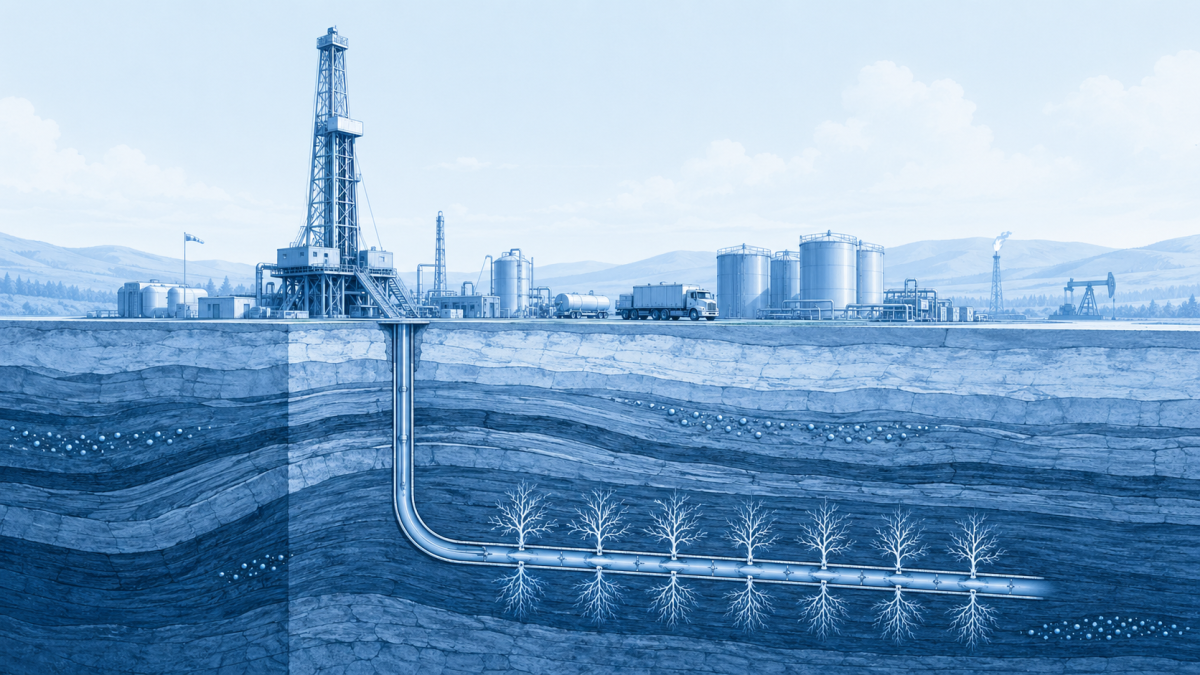
Vaca Muerta — Spanish for “dead cow” — is very much alive. In the middle of Argentina’s harsh economic adjustment, oil and gas are moving in the opposite direction. The country’s O&G production has reached about 1.8 million boe/d, and shale now accounts for roughly two-thirds of the total. The joke is irresistible: the cow is not dead. It is producing.
The numbers show a basin moving from promise to scale. YPF produced 568,000 boe/d in 1Q26, with its unconventional core reaching 422,000 boe/d, up 30% in one year and already equivalent to 74% of the company’s production. Vista reached 133,800 boe/d, a 66% increase. Pampa Energía advanced at Rincón de Aranda, which rose from about 1,000 boe/d to nearly 20,000 boe/d in a year. Conventional production is losing ground. Vaca Muerta has become Argentina’s real energy engine — and one of the few sectors capable of generating the dollars the country chronically lacks.
That success changes the question. For years, Argentina tried to prove that Vaca Muerta could produce at scale. Now it must prove that this production can actually move. The bottleneck is no longer mainly geological. It is logistical, financial and institutional. Shale without pipelines, processing capacity, ports and contracts is not a macroeconomic rescue plan. It is oil and gas waiting for an exit.
That is why VMOS, the Vaca Muerta Oil Sur project, matters. The 437-kilometer pipeline was designed to carry crude from Vaca Muerta to an Atlantic port in the province of Río Negro. Backed by YPF, Vista, Pampa Energía, Pan American Sur and other companies, the project has already secured $2 billion in financing and is expected to start moving about 180,000 barrels per day by the end of this year, with planned capacity of 550,000 barrels per day in 2027. If delivered, it could turn Vaca Muerta from a fast-growing domestic basin into a relevant export platform.
But infrastructure is exactly where Argentine optimism often meets Argentine reality. YPF chief executive Horacio Marín has said the pipeline works are more than halfway complete, while the port, buoys and offshore section still need to be finished. That detail matters. In oil and gas, a pipeline under construction is not cash flow. A port in a PowerPoint presentation is not exports. The market can price the promise before the oil reaches the ship, but barrels only count when they move.
Vaca Muerta has advanced enough to acquire a harder problem. The basin may be geologically competitive, but it still depends on stable rules, a functioning currency regime, access to financing, respected contracts and infrastructure delivered on time. Well productivity can improve while the Argentine country discount keeps charging its toll. The story of Argentine shale, then, is no longer about whether the cow can produce. It can. The question now is whether Argentina can build, quickly and credibly, the system around it. The cow is moving. But in oil and gas, volume without an exit does not become growth. It becomes inventory.