
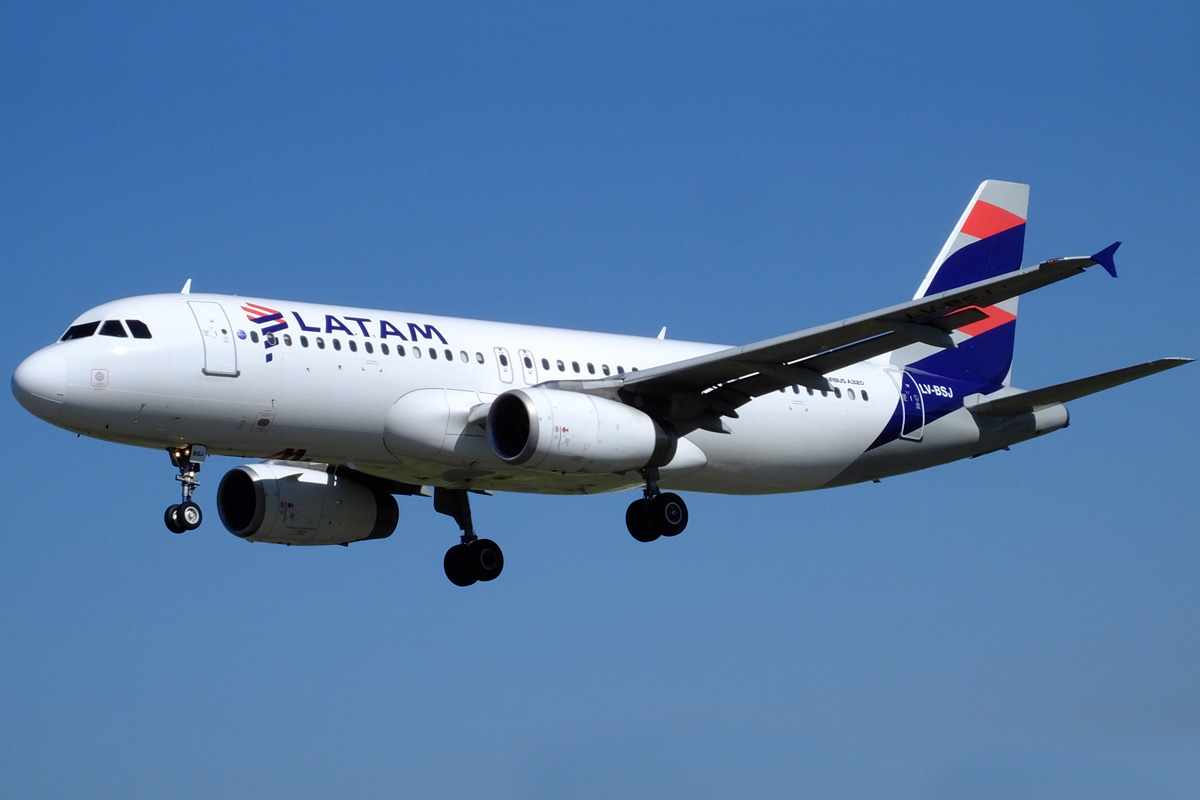
By Brazil Stock Guide – LATAM Airlines Group SA (NYSE: LTM) warned that soaring jet fuel prices may add more than $700 million to its costs in the second quarter, forcing Latin America’s largest airline group to revise its 2026 assumptions even after posting the strongest quarterly result in its history.
The carrier said the estimate reflects a new jet fuel price assumption of $170 a barrel for the second and third quarters, compared with a $90-a-barrel reference used late last year. The company expects the price to ease to $150 a barrel in the fourth quarter, executives said on a call with Brazilian reporters.
The comments came as LATAM reported a record first quarter, with Ebitda of $1.3 billion, up almost 37% from a year earlier, and net income of $576 million. Capacity rose 10.4%, and the group carried nearly 23 million passengers in the period. It ended March with a fleet of 375 aircraft after receiving four Airbus A320-family jets.
Chief Executive Officer Jerome Cadier said the airline is entering the rest of the year with “caution and confidence” as it weighs strong operating performance against a sharp increase in fuel costs.
“The only thing I can guarantee is that we will continue with profitable and consistent growth throughout the year,” Cadier said. “But adjustments will obviously be necessary as we face this fuel crisis.”
LATAM now expects full-year Ebitda of $3.8 billion to $4.2 billion. It also projects leverage below 1.8 times and liquidity above $4.5 billion by the end of 2026.
Chief Financial Officer Ricardo Bottas said the fuel shock had a limited impact of about $40 million in the first quarter, partly because of inventories, supply contracts and timing effects. The burden is expected to rise sharply in the second quarter.
“Our fuel consumption for the second quarter, considering not $90 but $170, may represent additional fuel costs for the LATAM group of more than $700 million in only three months,” Bottas said.
In Brazil, Cadier said LATAM Brasil is paying twice as much for aviation fuel as it did in February. He said the issue is not one of liquidity but of costs, adding that a payment-installment proposal from Petrobras (NYSE: PBR; B3: PETR3, PETR4) would have increased the airline’s financial burden.
“Today, here in Brazil, LATAM Brasil is paying double for each liter of aviation fuel compared with February this year,” Cadier said. “Our problem is facing this cost crisis. It is not a financing crisis.”
The company said it currently sees no risk of fuel shortages at the domestic or international bases where it operates. Even so, it has already made limited adjustments to its schedule. Cadier said LATAM’s June operation is almost 3% smaller than originally planned, with further decisions for the third and fourth quarters still pending.
“If you look at June, what we expected to fly and what we will actually fly, June is almost 3% lower,” Cadier said. “That is the size of the June adjustment.”
The airline stopped providing a capacity guidance number for Brazil or other markets, replacing a broader set of about 15 guidance items with four key metrics: Ebitda, leverage, liquidity and ex-fuel unit costs. Executives said demand resilience, fuel prices and fare elasticity will determine future capacity decisions.
LATAM also said the first destinations for Embraer SA’s E2 aircraft (NYSE: ERJ; B3: EMBR3) will be announced in the second half of June, with sales likely to open the same month. The aircraft are expected to begin operating in the fourth quarter of 2026 and will initially serve Brazil’s domestic market.
Cadier said the Embraer jets will complement LATAM’s network by opening smaller airports, strengthening hubs such as São Paulo’s Guarulhos and Brasília, and increasing frequencies on existing routes.
“It does not radically change LATAM’s network strategy, but it complements our main operation very well,” Cadier said.
Premium revenue remained a key driver of the group’s performance. Bottas said premium cabin revenue now accounts for 27% of passenger revenue. LATAM Pass has reached 55 million members, including 2.6 million elite-status customers, with loyalty members generating more than 60% of passenger revenue.
The company also highlighted investments in premium cabins, airport lounges and onboard connectivity. LATAM said one widebody aircraft is already flying with Wi-Fi, and installation across the international widebody fleet will proceed gradually over the next two years during scheduled maintenance checks.





