
By Brazil Stock Guide – Atvos plans to invest more than R$1 billion in its first corn ethanol unit, marking a strategic push to reduce its dependence on the seasonal sugarcane cycle and expand its role in Brazil’s energy transition. The project will be integrated into the company’s Santa Luzia unit, in Nova Alvorada do Sul, in the state of Mato Grosso do Sul.
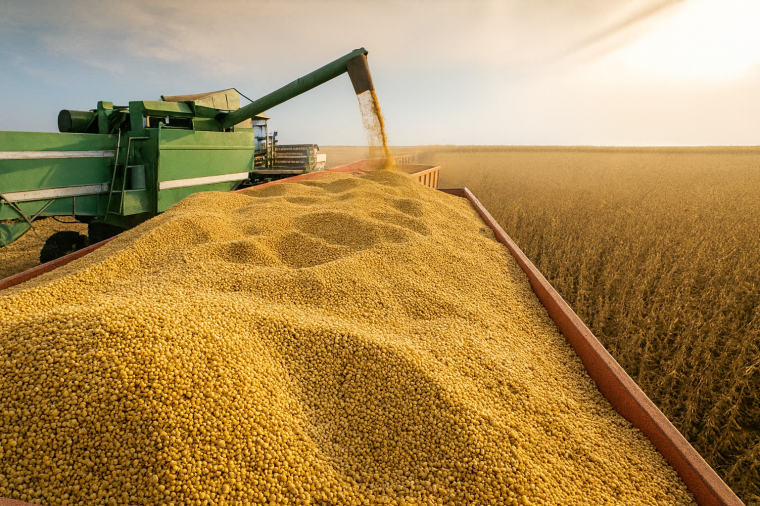
The new plant will have capacity to process 642,000 tons of corn per year. Annual output is expected to reach 273 million liters of ethanol, alongside 183,000 tons of DDG, a high-protein byproduct used in animal nutrition, and 13,000 tons of corn oil. Atvos did not disclose the investment amount in its official statement, but sector publication NovaCana, citing CEO Bruno Serapião, reported that the project will require more than R$1 billion and will be financed with the company’s own cash.
Year-round ethanol
The core logic of the project is operational. By combining corn and sugarcane within the same industrial structure, Atvos aims to produce ethanol more continuously throughout the year, reducing exposure to the sugarcane off-season and improving asset utilization.
For a bioenergy company, that matters. A less seasonal production base can improve cost dilution, increase predictability and give the company more flexibility to respond to market conditions. The plant is expected to start operations in 2028 and will use sugarcane biomass already available at the unit as an energy source for corn ethanol production.
“This investment is aligned with our long-term vision and Atvos’s sustainable growth strategy,” Serapião said in the company’s statement. “Corn ethanol expands our production capacity and strengthens our role as an integrated biofuels platform, contributing to Brazil’s energy security and to a more robust supply of renewable energy for the world.”
Corn gains ground
The move is important because Brazilian ethanol is no longer only a sugarcane story. Corn has become one of the sector’s main growth vectors, especially in regions with abundant grain supply, strong agricultural logistics and industrial integration opportunities.
For Atvos, the new route adds another layer of growth without replacing its traditional sugarcane base. It also fits into a circular-economy model: sugarcane bagasse can help power the corn ethanol process, while DDG and corn oil create additional revenue streams beyond ethanol itself.
That diversification is useful in a sector exposed to agricultural prices, fuel demand, logistics costs and energy market volatility. The more integrated the platform, the more room the company has to protect margins across different cycles.
Scale and transition
Atvos already has significant scale in Brazilian bioenergy. The company says it has capacity to produce about 3.3 billion liters of ethanol, 750,000 tons of VHP sugar and around 4,200 GWh of electricity from sugarcane biomass. It operates eight agroindustrial units across Goiás, Mato Grosso, Mato Grosso do Sul and São Paulo, employs more than 11,000 people and has an economic presence in 23 municipalities.
The investment also reinforces Mato Grosso do Sul as a strategic hub for Brazil’s bioenergy industry. Atvos expects the project to generate about 2,000 jobs during the construction phase, supporting local economic activity and regional suppliers.
Execution is the test
The industrial thesis is clear: more feedstock, more months of production and better use of fixed assets. But corn ethanol also brings its own risks. Margins depend on disciplined grain procurement, logistics efficiency and the relationship between corn prices, ethanol prices and energy costs.
Still, the move broadens Atvos’s profile. The company is no longer positioning itself only as a sugarcane ethanol and sugar producer. It is building a more diversified renewable energy platform, combining sugarcane, corn, biomass, biomethane and international sustainability certifications.
The investment does not replace one biofuel route with another. It tries to make Atvos less seasonal, more integrated and better prepared for a global market increasingly focused on lower-carbon fuels.