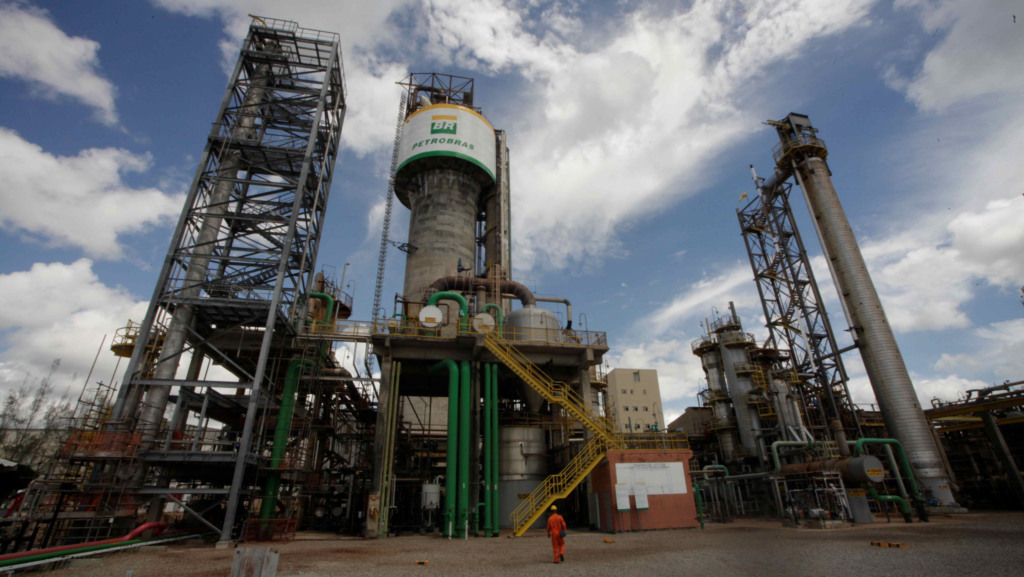
By Brazil Stock Guide – Petrobras (PETR3, PETR4; PBR) restarted fertilizer production at its Fafen BA plant in Camaçari, Bahia, marking a step in Brazil’s effort to reduce dependence on imported urea and rebuild domestic capacity in a key input for agriculture.
The information was originally reported by Brasil 247. The state-controlled oil producer detailed the restart on Wednesday (13) during a press briefing in Salvador. President Lula is scheduled to visit the facility on Thursday (14), accompanied by Petrobras Chief Executive Officer Magda Chambriard and other officials.
The plant has resumed urea output and is expected to produce about 1,300 tons per day, equivalent to roughly 5% of Brazil’s demand for nitrogen fertilizers, according to Petrobras. The restart is part of the company’s 2026-2030 strategic plan and reflects its renewed push into fertilizer production.
Chambriard said the company was fulfilling a commitment made in Bahia alongside Lula.
“In October of last year I was in Bahia with President Lula and there in Bahia, before the people of Bahia, before the Petrobras president and myself, we made a commitment to resume fertilizer production there in Camaçari. And tomorrow we will be back in Bahia, telling the people of Bahia: look, a promise is a debt, we delivered, and the Bahia fertilizer plant is already operating,” she said.
The facility had been idled since 2019. It was later leased to the private sector, but the operation was not sustained and the plant was halted again in 2023, according to Chambriard.
“Many people doubted that it would operate again,” she said.
Petrobras invested about 100 million reais in the restart, which mobilized roughly 3,600 direct and indirect jobs. The company said the move was made possible by lower natural gas costs, a central input in fertilizer production.
Chambriard said the decline in costs was not the result of a single administrative decision, but of investment, scale and industrial planning.
“What lowers the price of natural gas, what lowers the price of fertilizer, is producing at scale with solid investments and determination to invest,” she said.
The executive linked the return to fertilizers to Petrobras’ broader gas strategy. The company now sees the sector as a natural outlet for gas associated with oil production.
“We began to see the fertilizer sector as a destination, a natural market for the natural gas associated with the oil produced by Petrobras,” she said.
Urea is widely used in Brazilian agriculture, including in corn, sugarcane, coffee, wheat and cotton. It is also used in livestock as a supplement for ruminants.
“Urea is today the most demanded nitrogen fertilizer in Brazil,” Chambriard said.
The Bahia restart is one part of a broader fertilizer plan. Petrobras also cited the reopening of Fafen Sergipe and Fafen Ansa, as well as the resumption of work on UFN3, a nitrogen fertilizer unit in Mato Grosso do Sul.
With the four units operating by 2028, Petrobras expects to meet about 35% of Brazil’s demand for nitrogen fertilizers. The move is aimed at reducing the country’s exposure to imports of a strategic input for agribusiness.
“Before our plants resumed operations in the Northeast, Brazil imported 100% of the urea it consumed, and that is now changing,” Chambriard said.
The CEO also emphasized Petrobras’ historic presence in Bahia, citing the state’s role in the development of Brazil’s oil industry since the discovery at Lobato.
Petrobras’ business plan foresees $3.5 billion in exploration and production investment in Bahia over the next five years. The plan includes more than 100 wells and interventions in the Recôncavo Baiano, both in new areas and existing assets, with the goal of more than doubling oil and gas production in the state.
That program is expected to generate about 6,500 direct and indirect jobs. Petrobras also plans to invest 115 million reais in the Candeias biodiesel plant and launch an approximately 5 million-real notice aimed at cooperatives that collect used oil, which can be reused as an input for biodiesel production.
“I am saying all this to tell you the following: Petrobras never left Bahia. Bahia is important to Petrobras and we are absolutely happy to return to the state, delivering more fertilizers, resuming more aggressive exploration and production in the state of Bahia, to deliver what we promised: more oil, more gas, more fertilizers, more biofuels,” Chambriard said.