
By Brazil Stock Guide – Banco do Brasil S.A. (B3: BBAS3) reported first-quarter net income of R$3.1 billion, down from R$4.2 billion a year earlier, exposing the cost of being Brazil’s dominant agribusiness lender at a time of rising stress in the countryside. On an adjusted basis, net income reached R$3.4 billion, while return on equity fell to 7.3%.
The quarter tells two stories at once. Banco do Brasil is still generating revenue. Gross financial margin rose 14.8% from a year earlier to R$27.4 billion, supported by lending and treasury results. Fee income increased 5.5% to R$8.8 billion, helped by asset management, insurance, pension products and consortium fees. The franchise, in other words, has not lost commercial traction.
The problem is credit quality. Expected credit losses reflected mainly higher delinquency in loans to rural producers, according to the management report. The bank said it responded by reviewing collection flows, improving guarantees and prioritizing disbursements according to a resilience matrix. In investor language, Banco do Brasil is trying to separate rural clients that need refinancing from those that may become actual losses.
Guidance Cut
That pressure showed up in guidance. Banco do Brasil cut its 2026 adjusted net income forecast to a range of R$18 billion to R$22 billion, from R$22 billion to R$26 billion previously. It also raised its expected cost of credit to R$65 billion to R$70 billion, from R$53 billion to R$58 billion. At the same time, the bank lifted its gross financial margin outlook to growth of 7% to 11%, from 4% to 8%.
Cost of credit reached R$18.9 billion in the quarter, up 5% from the previous quarter, while the non-performing loan ratio over 90 days ended March at 5.05%. For a bank with an expanded loan book above R$1.3 trillion, the discussion shifts from growth to return: how much of that balance-sheet scale can still translate into earnings.
Scale Meets Stress
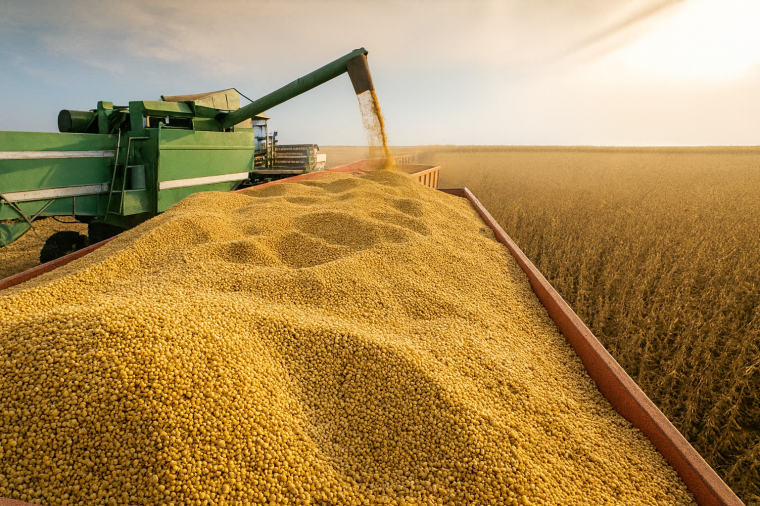
Banco do Brasil’s expanded loan portfolio grew 2.2% over 12 months. Loans to individuals reached R$361.8 billion, up 7.8%, supported by payroll lending and the Crédito do Trabalhador program, which reached R$15.1 billion. Corporate lending totaled R$449 billion, down 2.4%, while agribusiness lending rose 3% to R$418.4 billion.
That mix explains the bank’s ambiguity. Banco do Brasil has scale, distribution and a relationship with farmers, cooperatives, companies and households that would be difficult for competitors to replicate. But the same footprint also makes it more exposed when the agricultural cycle deteriorates. Its BB Regulariza Agro program reached R$37.9 billion in rural debt renegotiations, covering more than 73,300 operations and benefiting 25,500 producers.
Capital Cushion
The balance sheet still offers protection. Common equity tier 1 ended March at 11.59%, while the Basel ratio stood at 14.23%, levels the bank described as adequate to preserve medium- and long-term growth capacity. Total assets reached R$2.6 trillion, the loan portfolio exceeded R$1.1 trillion and client resources totaled R$935 billion.
There were also signs of resilience outside rural credit. Fee and commission income rose 5.6% year-on-year, supported by asset management and commissions. Banco do Brasil reported 35.6 million active digital clients, with digital channels accounting for 94.1% of total transactions in the quarter.
Lower Payout
The bank also approved an additional R$465.7 million in interest on equity, equivalent to R$0.08157785203 per share, to be paid on June 11. Together with the R$400.4 million advance payment made in March, shareholder remuneration for the quarter reached about R$866 million, in line with the 30% payout approved for 2026.