
By Brazil Stock Guide – Compass Gás e Energia reported a 9% drop in first-quarter profit, as higher debt costs and depreciation from new projects offset stronger results in its core gas distribution business.
The Brazilian gas platform posted net income of R$382 million in the first quarter of 2026, down from R$420 million a year earlier. EBITDA rose 2% to R$1.33 billion, while net revenue fell 25% to R$3.16 billion.
On a normalized basis, EBITDA rose 12% to R$1.20 billion, reflecting higher volumes, a better mix in distribution and expansion at Edge, the company’s marketing and services unit.
Market Debut
The results were released just after Compass completed its stock market debut, giving investors an early look at the operating profile behind one of Brazil’s most relevant gas infrastructure platforms.
The secondary offering was settled in May, after the end of the first quarter, with shares priced at R$28 and the company beginning to trade under the ticker PASS3. Because the transaction occurred after the quarter closed, it did not affect Compass’ 1Q26 earnings, but it helps frame the company’s first public test: resilient regulated distribution, expanding gas and LNG operations, and a balance sheet still exposed to Brazil’s high-rate environment.
Debt Costs
Compass said the weaker bottom line was mainly due to higher financial expenses and depreciation tied to projects that recently came online.
Net financial expenses rose 15% to R$425 million, driven by higher debt costs and increased net debt. Net debt ended the quarter at R$11.1 billion, up 6% from the previous quarter, while leverage rose to 2.2 times net debt to last-12-month EBITDA from 2.1 times at the end of 2025.
The company said 90% of its debt matures in the long term and that most of its debt portfolio is hedged to Brazil’s CDI benchmark rate. Its consolidated debt cost stood at 100.7% of CDI, with an average maturity of 5.5 years.
Distribution Holds
Compass’ gas distribution segment, which includes Comgás, Sulgás, Compagas and Necta, remained the main earnings driver.
Distribution EBITDA rose 10% year over year to R$1.06 billion, helped by higher volumes and a better mix. Distributed volume reached 13.9 million cubic meters per day, up 1%, while the customer base expanded 7% to 3.1 million clients. The distribution network reached about 28,000 kilometers.
Residential volumes rose 5%, supported by customer additions and milder weather. Industrial volumes increased 1%, with gains in cogeneration, food and glass. Mobility remained under pressure from fuel competition in light fleets, although Compass said natural gas use in heavy transport is beginning to show positive results.
Edge Expands
Compass’ Marketing & Services division, operated through Edge, showed stronger commercial momentum but weaker reported EBITDA.
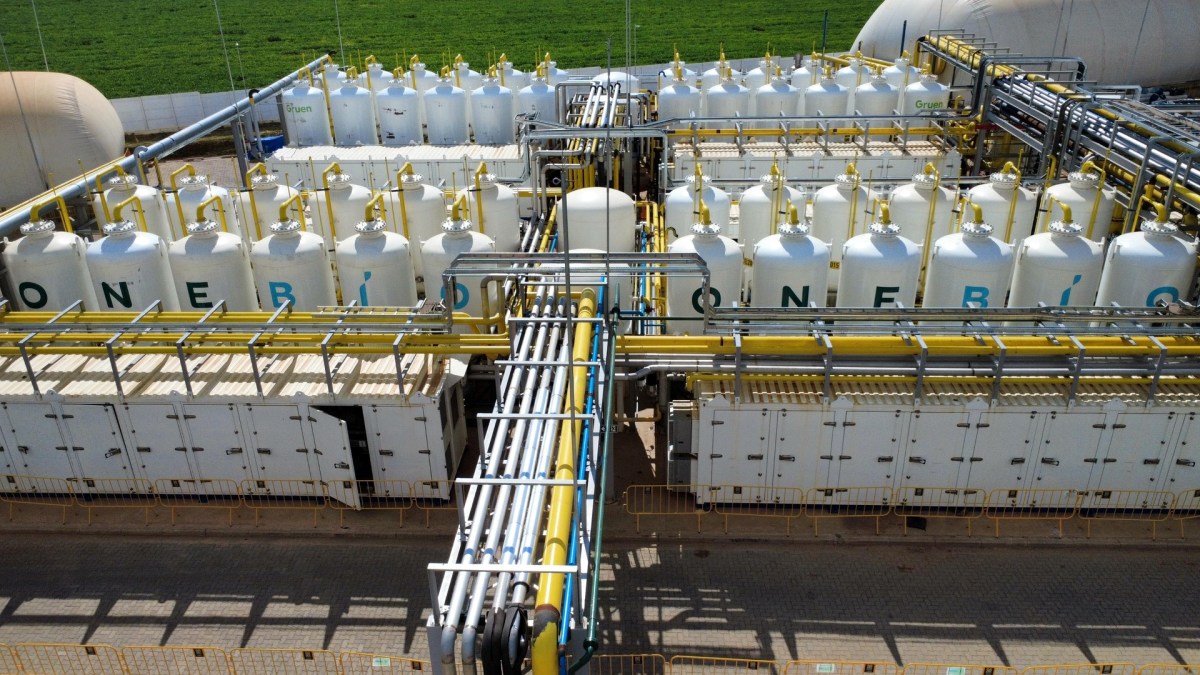
Edge sold 416 million cubic meters of gas in Brazil’s domestic market in the quarter, up 27% from a year earlier, driven by expansion in the free gas market, the start of off-grid B2B LNG operations and the ramp-up of Onebio, described by Compass as Brazil’s largest biomethane plant managed by Edge.
Reported EBITDA in Marketing & Services fell 14% to R$312 million. On a normalized basis, however, EBITDA rose 36% to R$187 million, reflecting higher on-grid volumes, new operations and cargo optimization gains.
Compass also began supplying LNG to customers outside the pipeline grid, with immediate delivery capacity of up to 400,000 cubic meters per day. The logistics model transports LNG from the São Paulo Regasification Terminal in Santos to customers within a radius of up to 1,200 kilometers.
Capital Discipline
Investments totaled R$400 million in the quarter, up 9% from a year earlier, mostly directed to expansion of gas distribution operations under regulatory plans.





