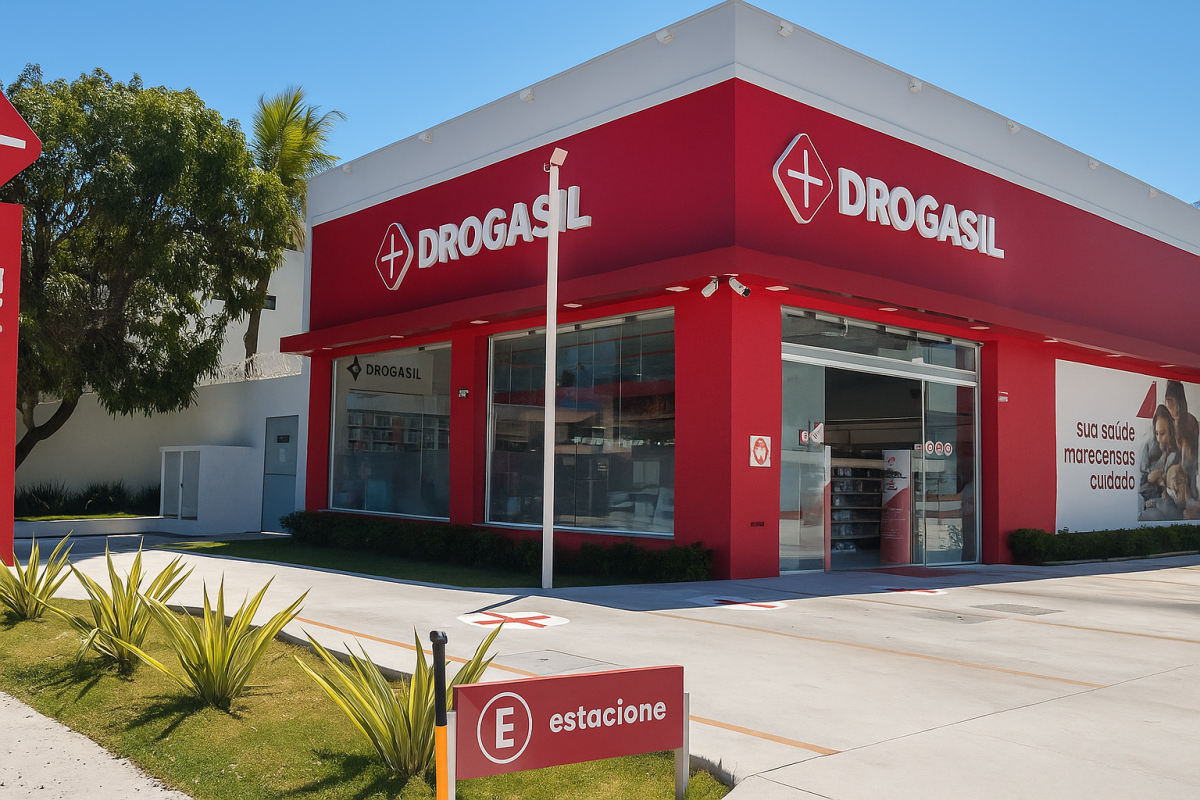
By Brazil Stock Guide – A court ruling against Raia Drogasil has opened a new front in Brazil’s debate over privacy, consumer rights and retail pricing. The company was ordered to pay R$10 million in collective damages and stop conditioning regular discounts on customers providing their CPF, Brazil’s taxpayer identification number.
The ruling is subject to appeal, but its significance extends far beyond the size of the fine. At stake is a business practice that has become deeply embedded in Brazil’s pharmacy industry—and increasingly common across the broader retail sector: exchanging discounts for personal data.
For years, pharmacy chains have encouraged customers to identify themselves at checkout in exchange for lower prices. The arrangement became so commonplace that many consumers stopped viewing it as a transaction. The Maranhão court saw it differently, arguing that customers are not paying solely with money—they are also paying with information. The case was first reported by Poder360.
Judge Douglas de Melo Martins ruled that requiring personal data to access ordinary discounts may amount to economic coercion, particularly in a sector where consumers are often purchasing essential medicines. Under that interpretation, consent cannot be considered genuinely free if declining to provide personal information results in a higher price.
Importantly, the ruling does not prohibit loyalty programs or the collection of CPF numbers. Instead, it draws a distinction between voluntary participation in customer programs and making standard discounts contingent on the disclosure of personal information. Consumers who choose not to provide their data, the court said, should not lose access to regular promotional prices.
That distinction could prove significant well beyond the pharmacy industry.
While the immediate financial impact on RD Saúde appears limited, the legal theory underpinning the case raises broader questions about how companies collect, use and monetize consumer information. Pharmacy chains rely heavily on customer data to build loyalty programs, tailor promotions and better understand purchasing behavior. In healthcare retail, that information can be particularly valuable because it often reveals sensitive details about treatments, chronic conditions and recurring medical needs.
Raia Drogasil denied any wrongdoing, arguing that providing a CPF is optional and linked to benefit programs. The company also pointed to proceedings before Brazil’s National Data Protection Authority (ANPD), which it said were closed following compliance measures. The court dismissed that argument, holding that administrative proceedings do not preclude civil liability or judicial scrutiny of consumer practices.
The case is likely to move through higher courts, where its ultimate outcome remains uncertain. Brazil’s General Data Protection Law (LGPD) allows personal data to be processed under several legal bases, not solely consent, giving retailers multiple avenues to defend their practices.
Yet the broader issue extends beyond pharmacies. Supermarkets, airlines, fuel retailers, financial institutions and digital platforms increasingly treat customer information as a strategic asset. The implicit bargain is familiar: consumers receive lower prices, rewards or convenience in exchange for their data.
The Maranhão ruling challenges whether that bargain is truly voluntary when opting out carries an immediate financial penalty.
The R$10 million fine is unlikely to reshape the sector on its own.
The more consequential question is whether Brazilian courts will continue to allow personal data to function as an invisible currency in the consumer economy—or whether companies will eventually be required to place a clearer price tag on the information they collect.