By Brazil Stock Guide — Brazil’s equity capital market is showing signs of life again, but the rebound is far more selective than the headline number suggests.
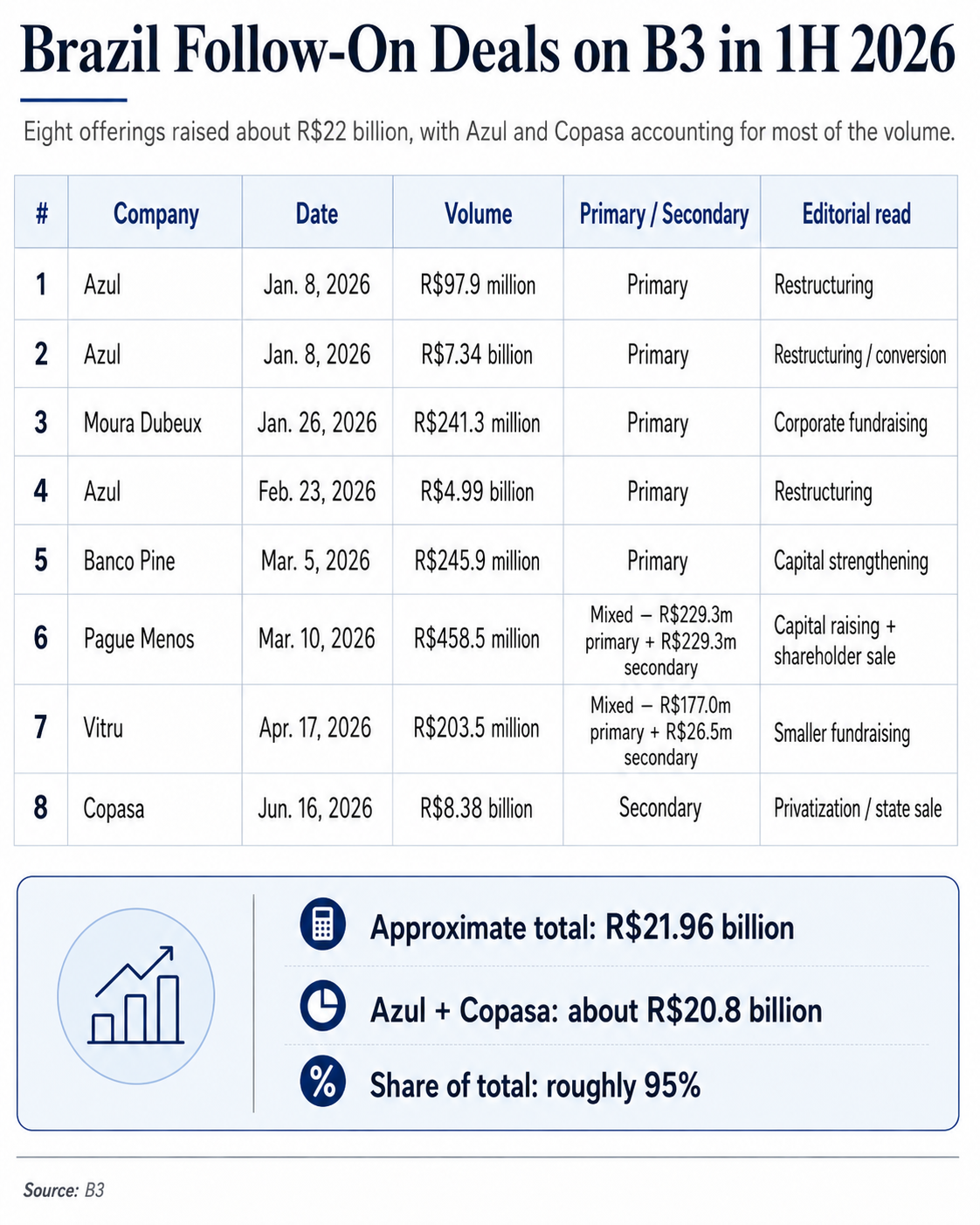
Companies already listed on B3 raised about R$ 22 billion through eight follow-on share offerings in the first half of 2026, the Brazilian exchange said on Thursday. The amount was more than five times the R$4 billion raised in the same period last year, when five offerings were completed.
For a market that spent much of the past few years with a nearly closed equity window, the figure is a clear improvement. But it does not yet point to a broad reopening of risk appetite for Brazilian equities.
Most of the volume came from two exceptional stories: Azul’s financial restructuring and the privatization of Copasa, the water and sewage utility controlled by the state of Minas Gerais.
Azul’s offerings were tied to its balance-sheet overhaul, including capital increases and debt-conversion mechanisms as part of a broader restructuring process. The airline’s transactions were less a conventional growth-capital story than a financial repair operation, aimed at giving the company room to move through a severe debt cycle.
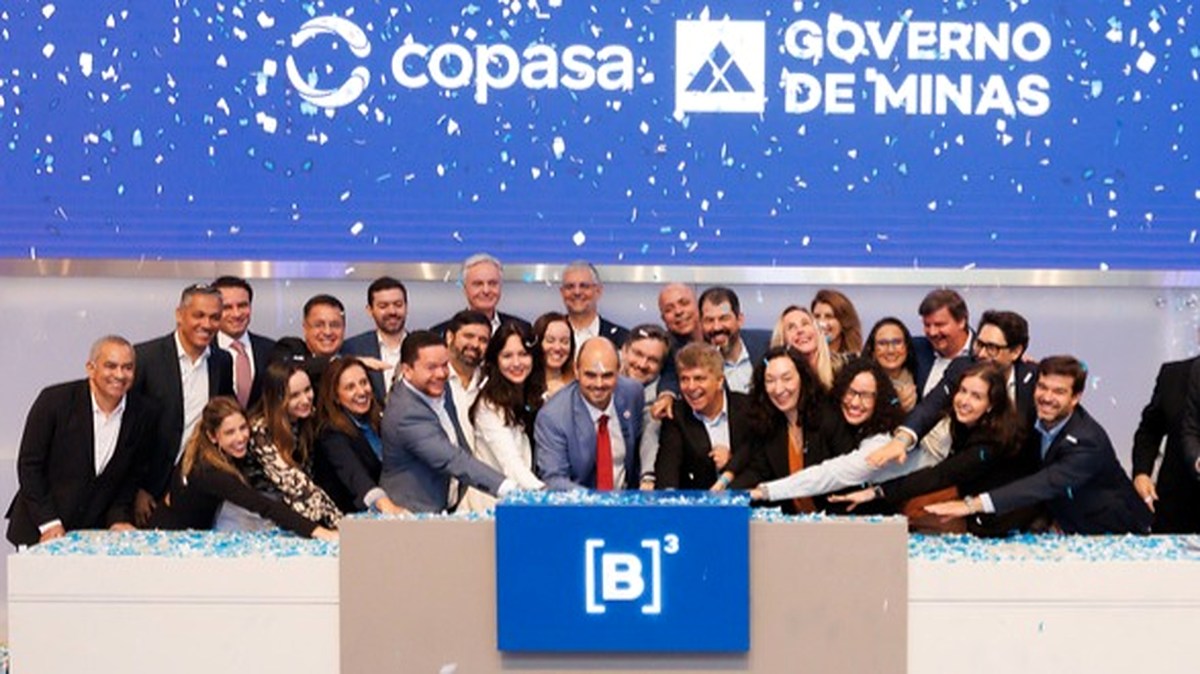
Copasa was a different kind of event. Its offering was part of the Minas Gerais government’s privatization process, bringing Equatorial Energia in as a reference shareholder and reducing the state’s role in one of Brazil’s largest sanitation companies.
Together, the two deals did most of the heavy lifting behind the first-half number.
That distinction matters. A market that can absorb a restructuring and a privatization is not the same as a market broadly open to any company seeking fresh equity. Investors are still demanding a clear reason to buy: a balance-sheet fix, a change of control, a privatization, a liquidity event or a visible use of proceeds.
B3 presented the data as evidence that follow-ons have become an important financing alternative for listed companies. Follow-ons are new public share offerings by companies that have already completed an IPO. They can be primary, when the company issues new shares and receives the proceeds, or secondary, when existing shareholders sell part of their stakes.
In theory, the mechanism can help companies finance projects, increase liquidity and raise their market visibility. In practice, the first half of 2026 shows that investors are being much more discriminating.
Brazil has not returned to the equity boom of earlier cycles. Interest rates remain high by historical standards, domestic political risk is rising ahead of the 2026 election, and global investors remain selective toward emerging markets. That has kept initial public offerings scarce and pushed companies toward more targeted transactions.
Follow-ons are easier to price than IPOs. The companies are already listed, have a trading history and can offer discounts to existing market prices. That makes them a natural first step in any recovery of Brazil’s equity capital markets.
Still, the rebound has limits. Smaller transactions during the semester showed that demand was not restricted to billion-dollar deals, but the bulk of the money was concentrated in special situations. That is why the R$ 22 billion figure should be read less as a sign of exuberance and more as evidence of a market willing to fund corporate events it understands.
For bankers, that is progress. For companies hoping for a full reopening of the equity window, it is also a warning. Brazil’s stock market has reopened for transactions. It has not reopened for everyone.