By Brazil Stock Guide – FS Bio reported higher revenue and earnings in the fourth quarter of its 2025/26 crop year, supported by stronger ethanol prices, a richer sales mix and industrial gains, according to a report by XP Research, part of XP Inc. (Nasdaq: XP).
The Brazilian corn-ethanol producer, which is not publicly traded, posted net revenue of 3.13 billion reais in the quarter, up 2.3% from a year earlier. EBITDA rose 12.7% to 909.8 million reais, while the EBITDA margin widened 2.7 percentage points to 29.0%, XP said.
The results were driven mainly by ethanol. Revenue from the fuel rose 9.3%, reflecting an 11.4% increase in the average net price and a larger share of anhydrous ethanol in the sales mix. Anhydrous ethanol accounted for 73.1% of ethanol sales in the quarter, compared with 55.5% a year earlier.
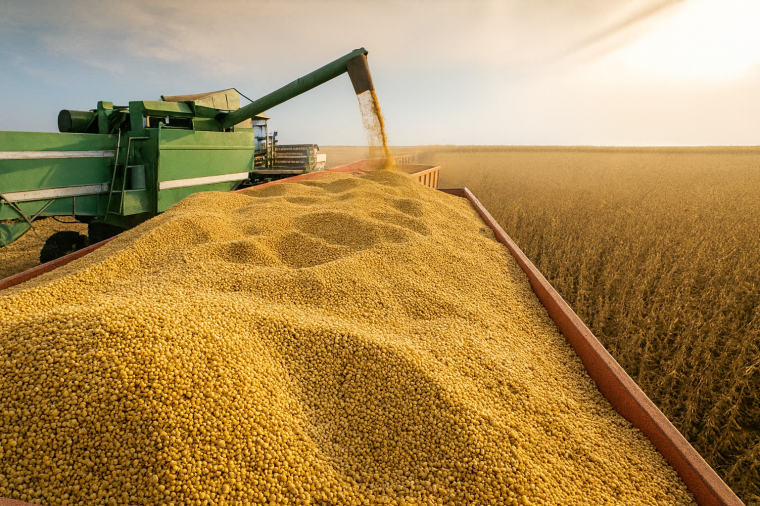
Production also increased. Corn crushing rose 7.8% year on year to 1.50 million tons, while ethanol output advanced 7.4% to 654,800 cubic meters. Ethanol sales volumes fell 1.9%, but the decline was offset by better pricing and product mix.
XP said FS Bio’s average net ethanol selling price in the quarter was 0.286 reais per liter above the ESALQ hydrous ethanol benchmark. For the full 2025/26 crop year, the premium averaged 0.197 reais per liter.
Animal nutrition also supported the quarter. Revenue in the segment increased 9.4%, helped by higher prices and a stronger contribution from corn oil. Corn oil output rose 25.1% year on year in the quarter.
For the full crop year, FS Bio’s EBITDA reached 3.55 billion reais, up 31.4%, with a margin of 27.4%. Industrial gross margin rose to 45.3%, a gain of 4.1 percentage points from the previous year.
Still, XP struck a more cautious tone on the next crop year. The report said market ethanol prices fell about 25% between April and mid-June 2026, after the crop year ended in March, signaling possible margin pressure in the coming periods.
Corn costs offer some near-term protection. FS Bio has bought about 80% of its corn needs for the current crop year at an average price of 43.4 reais per bag, 5% below the corn cost consumed in fiscal 2026. For the 2026/27 and 2027/28 crop years, however, hedging is still at an early stage, with references near 48 reais per bag and a coverage ratio of 45%.
The company indicated potential margin compression of 0.30 reais to 0.35 reais per liter in the next crop year, according to XP.
Capital spending is another source of pressure. FS Bio generated 1.53 billion reais in operating cash flow in the quarter, helped by strong EBITDA and a positive working-capital dynamic. Even after capex, operating cash flow remained positive at 866 million reais.
Investments, however, climbed sharply. Capex reached 739.7 million reais in the quarter, compared with 86.2 million reais a year earlier. For the full 2025/26 crop year, investments totaled 2.09 billion reais, up from 387 million reais in 2024/25.
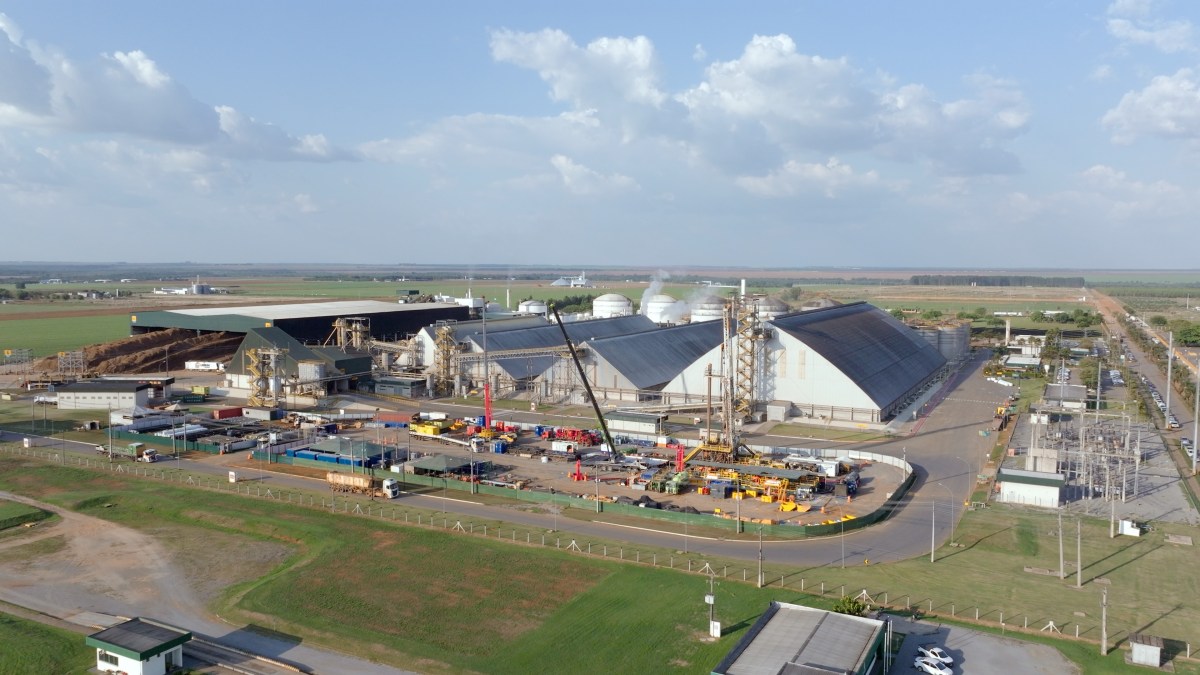
The spending reflects the construction of FS Bio’s fourth plant in Campo Novo do Parecis and the start of development of its fifth plant in Querência, both in Mato Grosso. It also includes low-carbon projects and efficiency initiatives at existing facilities.
The Campo Novo do Parecis plant remains on schedule and on budget, with expected capacity of about 580 million liters per year and startup planned for December 2026. The Querência plant is expected to follow a similar design, with estimated capacity of about 580 million liters per year, total investment of 2.0 billion reais and startup planned for July 2027.
Once both plants are operating, FS Bio’s installed annual capacity is expected to rise to about 3.8 billion liters from 2.6 billion liters, an increase of roughly 45%. XP said each new plant could add about 650 million reais in annual EBITDA, based on the company’s historical 10-year margin of 1.12 reais per liter.
FS Bio’s net debt ended the quarter at 9.0 billion reais, up 31.9% from a year earlier. Leverage remained nearly stable at 2.53 times last-12-month EBITDA, supported by earnings growth. The company had 4.4 billion reais in cash, an average debt duration of 5.6 years and what XP described as a manageable amortization schedule.
The company also had about 1.3 billion reais in inventories at the end of the crop year, up 30% from a year earlier. XP described those inventories as liquid assets, mostly raw materials, with about 100 million reais in finished products.
During the 2025/26 crop year, FS Bio worked to extend maturities, diversify funding sources and reduce the average cost of debt. Transactions included a $500 million Green Bond due 2036, a partial repurchase of its 2031 bond, a 500 million-real infrastructure debenture issuance and, as a subsequent event, a $360 million offshore syndicated loan.
FS Bio also received approval for a new 500 million-real BNDES/Fundo Clima credit line with a 15-year tenor to support construction of the Campo Novo do Parecis plant.
XP said the main concern is not immediate liquidity, but the path of leverage during the investment cycle. Management indicated on the earnings call that leverage could peak near 4.5 times, reflecting working-capital seasonality and spending on new plants. FS Bio expects leverage to decline gradually to about 4.0 times in the 2026/27 crop year and 3.0 times in 2027/28 as new assets begin contributing to cash generation.
FS Bio has a leverage covenant of up to 3.0 times. XP said breaching that level does not trigger default or early maturity, but it restricts new borrowing and dividend distribution.
The report also highlighted the planned entry of Amaggi as a 40% minority shareholder. Amaggi, which is not publicly traded, is expected to strengthen FS Bio’s credit profile and add strategic support in origination, logistics, trading and exports.
XP said the transaction does not change FS Bio’s control or management, but may improve access to funding and lower average borrowing costs. The deal has already been approved by Brazil’s antitrust authority Cade and remains subject to other closing conditions, with completion expected in July 2026.