
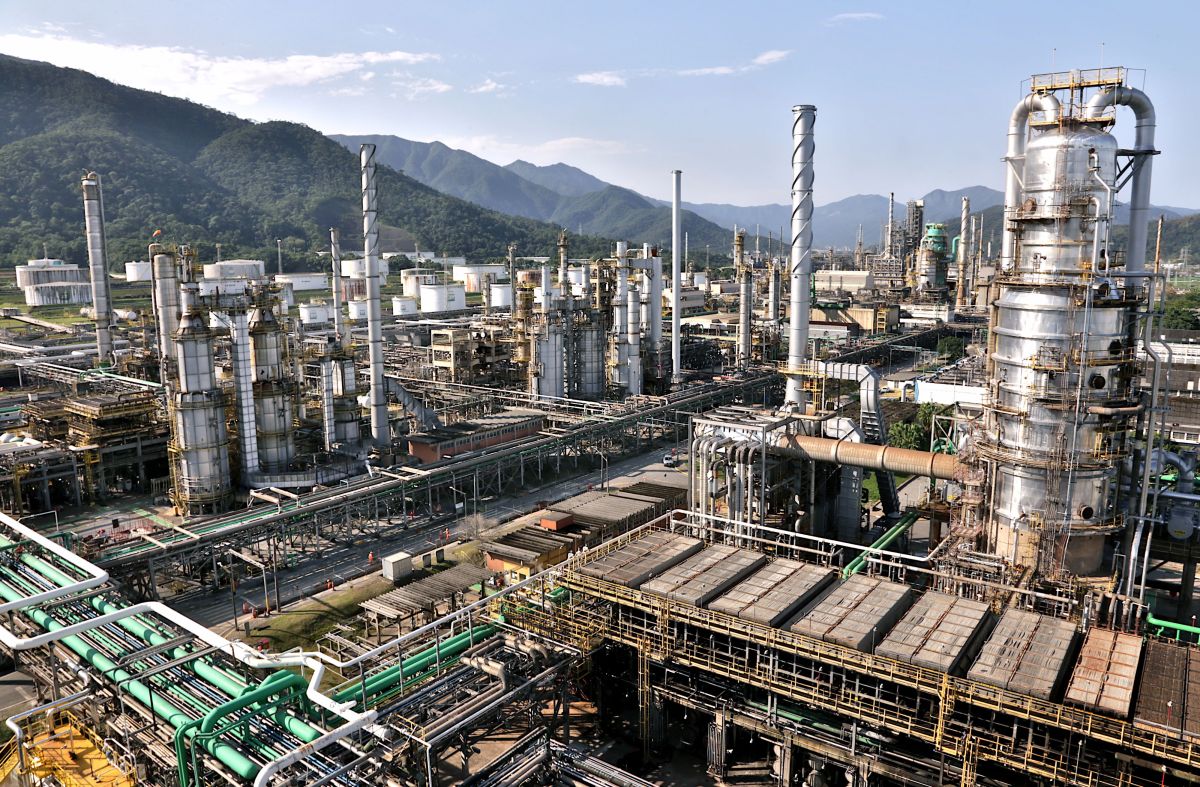
Brazil Stock Guide — Petrobras (NYSE: PBR; B3: PETR4) has approved a final investment decision for a $1.2 billion biorefining project at its Presidente Bernardes refinery in Cubatão, São Paulo state, the Brazilian state-controlled oil company said on Friday.
The project will add a dedicated unit to produce biojet fuel, known in Brazil as BioQAV, and renewable diesel, with capacity of up to 15,000 barrels per day, Petrobras said.
Construction is expected to begin by the end of 2026, after the final contracting phase, with operations scheduled to start in 2030.
The project is part of Petrobras’ 2026-2030 business plan and has been included in the company’s base implementation portfolio, it said.
The investment marks one of Petrobras’ most concrete moves into lower-carbon fuels, as Brazil prepares to implement its Fuel of the Future law and the global aviation industry faces rising pressure to reduce emissions under frameworks such as CORSIA.
Sustainable aviation fuel, or SAF, is seen as one of the few near-term alternatives to cut emissions from commercial aviation without replacing aircraft fleets or airport infrastructure. But the market remains at an early stage, with demand dependent on regulation, certification, airline adoption and pricing.
Petrobras said the project is aligned with its strategy to support a “just energy transition” in Brazil and with global aviation commitments to reduce carbon emissions.
The choice of Cubatão is strategic. The refinery is located near Brazil’s largest consumer market, close to the port of Santos and connected to key fuel distribution infrastructure.
For Petrobras, the project expands the role of its refining system in the energy transition. Rather than relying only on wind, solar or hydrogen projects, the company is also seeking to use existing industrial assets, logistics and engineering capabilities to enter renewable fuels.
The scale is still modest compared with Petrobras’ broader refining system, but significant for Brazil’s emerging renewable fuels market.
Returns will depend on the cost and availability of feedstock, SAF premiums, airline demand, tax rules and Petrobras’ ability to deliver the project on time and within budget.
The approval comes as oil majors globally weigh how much capital to allocate to energy-transition projects amid investor pressure for returns, dividends and capital discipline.
For Brazil, the plant could become a test of whether the country can turn its biofuels advantage into certified, exportable products for global aviation and fuel markets. Petrobras said the unit is expected to begin operations in 2030.





