By Brazil Stock Guide — Brazil enters the second half of 2026 with El Niño already confirmed, a high probability that the phenomenon will gain strength toward the end of the year, and a significant chance that it will remain active at least until early 2027.
The good news is that the country is not starting from a situation of widespread water stress. The bad news is that El Niño is likely to increase pressure on regions already sensitive to heat, drought, wildfires and agricultural stress.
Brazil’s main reservoirs are still in comfortable shape, part of the Northeast is arriving in better condition than at the start of the year, and there is, for now, no sign of an immediate energy crisis. But the country’s water cushion does not eliminate the risk.
The first El Niño 2026-2027 Panel, prepared by Brazil’s national weather institute, space research institute, water agency, disaster-monitoring center, geological survey and civil defense authority, shows that the phenomenon is already in place, has a probability above 90% of persisting at least until early 2027, and could become very strong between spring and summer in the Southern Hemisphere, starting in September.
The report’s reading is less dramatic than preventive: Brazil begins the cycle with some margin of safety, but it is facing an event capable of putting pressure on crops, pastures, rivers, reservoirs, power transmission lines, logistics and local water-supply systems.
The risk is not an immediate collapse. It lies in the combination of above-average heat, irregular rainfall and the advance of the dry season in regions that concentrate a significant share of Brazil’s agricultural production, hydropower generation and wildfires.
Reservoirs Offer Comfort, But Do Not Shield the System
From a water-resource perspective, Brazil enters El Niño in a relatively favorable position. As of June 25, reservoirs connected to the National Interconnected System, Brazil’s main power grid, were at 77.5% of usable capacity.
In the São Francisco River basin, two strategic reservoirs also showed high levels: Três Marias, at 96.2%, and Sobradinho, at 87.5% of usable capacity.
This snapshot reduces the perception of immediate energy risk. At this moment, the bulletin does not support a narrative of blackouts, rationing or generalized stress in reservoirs.
But a comfortable starting point is not a guarantee for the coming months. El Niño often changes the regional distribution of rainfall, and the panel reinforces the need for continuous monitoring of meteorological and hydrological conditions.
In the Tocantins basin, the Serra da Mesa hydropower reservoir was at 60.5% of usable capacity, while Tucuruí stored 92.9%. On the Madeira River, the Jirau and Santo Antônio hydropower plants were operating close to their maximum operating levels, with river flows above the minimum required for navigation.
On the Xingu River, linked to the Belo Monte complex, water levels remained within operating limits, although flows were already following the seasonal downward movement.
Energy: The Risk Is Regional, Not Systemic
For energy companies, the message is two-sided. Reservoirs give the system a margin of safety, but El Niño could increase hydrological volatility in specific basins.
Southern Brazil deserves attention because much of the region’s hydropower capacity operates as run-of-river generation, with limited storage capacity. Reservoirs in the South with regulation capacity represent only 7% of the stored energy in Brazil’s national power system.
That means above-average rainfall may help generation, but it also requires more careful flow management, especially in a scenario of extreme weather events.
In the North, attention turns to the Amazon dry season. The Madeira, Tocantins and Xingu rivers still appear manageable, but a strong El Niño could put pressure on flows during the second half of the year and create operational noise for assets such as Santo Antônio, Jirau, Tucuruí and Belo Monte.
One of the risks, therefore, is a regional hydrological risk, with potential impact on run-of-river generation, thermal power dispatch, reservoir operations and monitoring by Brazil’s national grid operator if conditions worsen later on.
Agriculture: Weather May Help the Harvest, But Disrupt the Next Crop
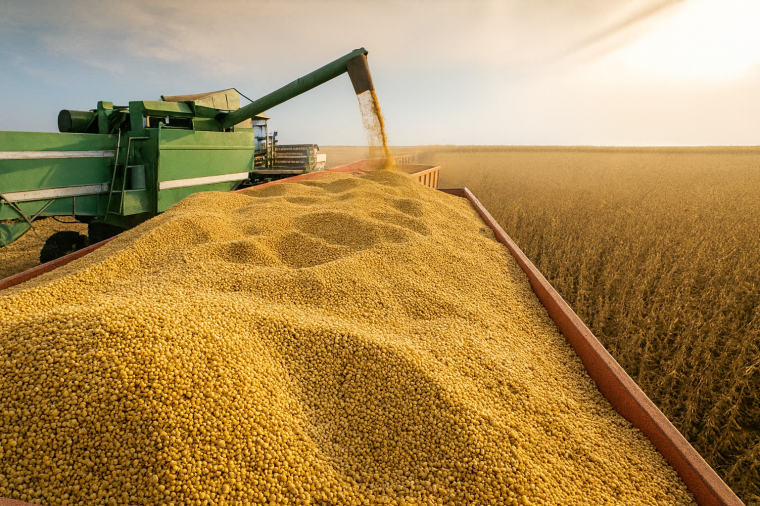
In agribusiness, El Niño does not bring a single reading. In Brazil’s Center-West, drier weather may favor the harvest of second-crop corn, cotton and sugarcane. For producers and companies exposed to those chains, this could mean a better operating window, with fewer interruptions caused by rain.
The problem comes next.
Higher temperatures may intensify water deficits toward the end of the dry season, affecting pastures, water availability for livestock and preparation for the next crop cycle. In other words: the weather may help finish the current crop, but make the start of the next one more difficult.
In the North, the panel forecasts below-average rainfall and above-normal temperatures. That combination tends to increase evaporation, reduce soil moisture and raise the risk of water deficits, with possible impacts on pastures, perennial crops and small-scale farming.
In the Northeast, lower rainfall and above-average temperatures may favor the harvest of third-crop beans in more advanced areas. At the same time, they may harm crops still in development and reduce water availability for pastures and livestock.
In the Southeast, rainfall close to average tends to benefit winter crops. For coffee, the scenario may favor the harvest and future flowering, provided rains return adequately after the dry season. The risk lies in higher temperatures, which may accelerate crop cycles and increase the incidence of diseases.
In the South, above-average rainfall may benefit winter crops, but it also raises the risk of fungal diseases. Greater cloud cover and higher temperatures, on the other hand, reduce the risk of late frosts.
Livestock Comes Into Focus Through Pastures
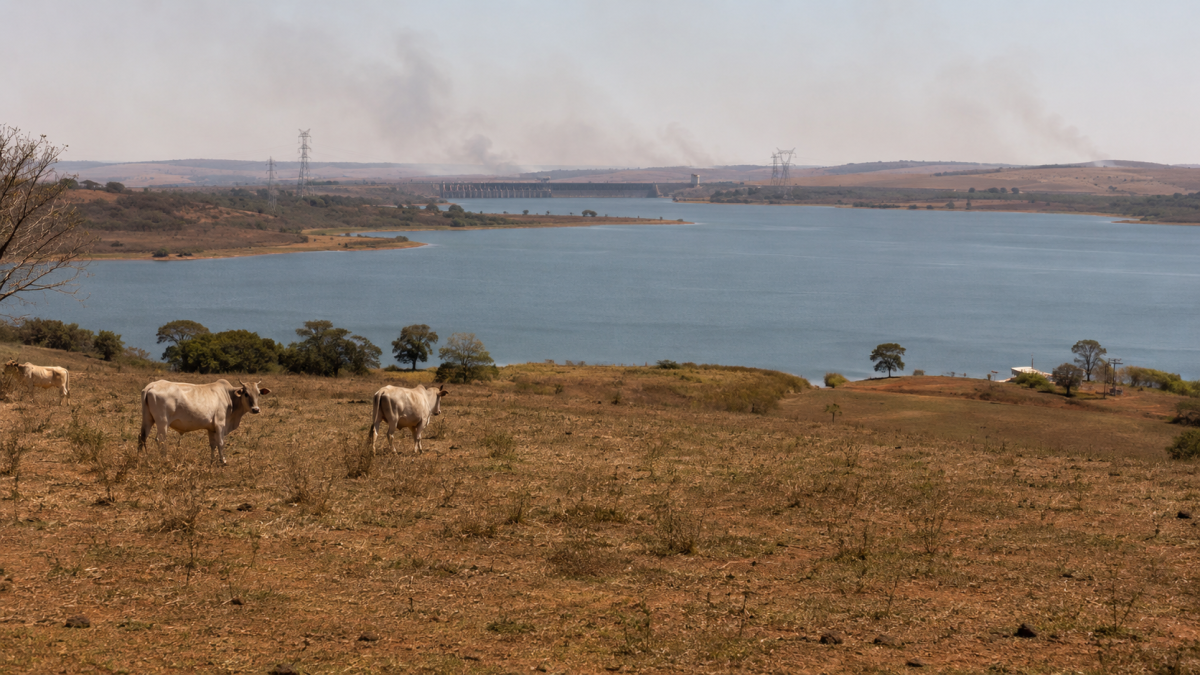
One of the most important effects of El Niño may appear outside crop fields: in pastures. The panel cites the risk of pasture deterioration in the North and Northeast and warns of water stress in the Center-West toward the end of the dry season. For livestock, this may mean lower pasture quality, greater need for feed supplementation, pressure on animal weight gain and changes in the pace of cattle supply.
This is not yet a shock scenario for the meat industry. But it is a relevant point for meatpackers, producers and companies exposed to the animal-protein chain.
If pastures deteriorate and management costs rise, the effect may appear later in margins, regional cattle supply and even food inflation.
Fire Is the Clearest Warning
The clearest risk in the panel is wildfires. For the July-August-September quarter, the document points to greater pressure over the Center-West and the southern arc of the Amazon. The most susceptible areas include Mato Grosso, Rondônia, Acre, southern Amazonas, southern Pará and parts of MATOPIBA, the agricultural frontier that includes areas of Maranhão, Tocantins, Piauí and Bahia.
In these areas, the combination of a prolonged dry season, high temperatures and the use of fire may create a more favorable environment for severe wildfires.
The economic impact may go beyond the field. Wildfires affect crops, pastures, planted forests, power transmission lines, highways, air quality, insurance costs and logistics operations.
Agribusiness, pulp and paper, electric power, toll-road operators, insurance and health companies may be directly or indirectly affected by more intense heat and smoke events.
The Northeast Has Improved, But Still Requires Caution
The Northeast enters El Niño in better condition than at the beginning of the year. According to the panel, the region stopped recording severe drought in May and had 38% of its area free of drought, the highest level since July 2024.
That is good news because the region is not entering the phenomenon from the worst possible position.
But the situation still requires attention. More than one-third of the Northeast remained under moderate drought, a condition associated with reduced pastures, weight loss or slower cattle finishing, and lower water availability in rural communities.
The São Francisco River also requires monitoring. Although Três Marias and Sobradinho are in comfortable condition, levels observed at Bom Jesus da Lapa are in the lower part of the normal range. If rainfall remains below average in the second half of the year, recovery may become more difficult.
The Amazon Is Still Normal, But the Dry Season Is a Concern
In the Amazon, the initial picture is also not one of crisis. The Negro River in Manaus remained within the normal range and close to the expected behavior for this time of year.
The concern is what may happen next. A stronger El Niño could worsen the Amazon dry season in the second half of the year. The panel itself notes that the North is not influenced only by the Pacific; Atlantic temperatures also affect rainfall patterns in the region.
Even so, a strong El Niño tends to increase monitoring of rivers, navigation, riverine communities, hydropower generation and forest fires. For sectors such as river logistics, mining, energy and consumer-goods distribution in the Amazon, a sharper drop in river levels could become an operational risk.
Logistics, Sanitation, Insurance and Health May Also Feel the Impact
El Niño is not an event restricted to agriculture and energy. In logistics, lower river flows may affect waterway transportation, especially in the Amazon. The panel highlights the importance of minimum flows on the Madeira River for navigation. On highways, wildfires and smoke may cause localized disruptions and increase operational risks.
In sanitation, below-average rainfall and lower water availability may put pressure on local water-supply systems, especially in smaller municipalities and rural areas. In insurance and reinsurance, the risk appears in wildfires, agricultural losses, infrastructure damage, extreme events and claims related to heavy rainfall in the South. In health care, heat waves and wildfire smoke may increase demand for treatment related to respiratory and cardiovascular conditions, especially among children, the elderly and vulnerable populations.