
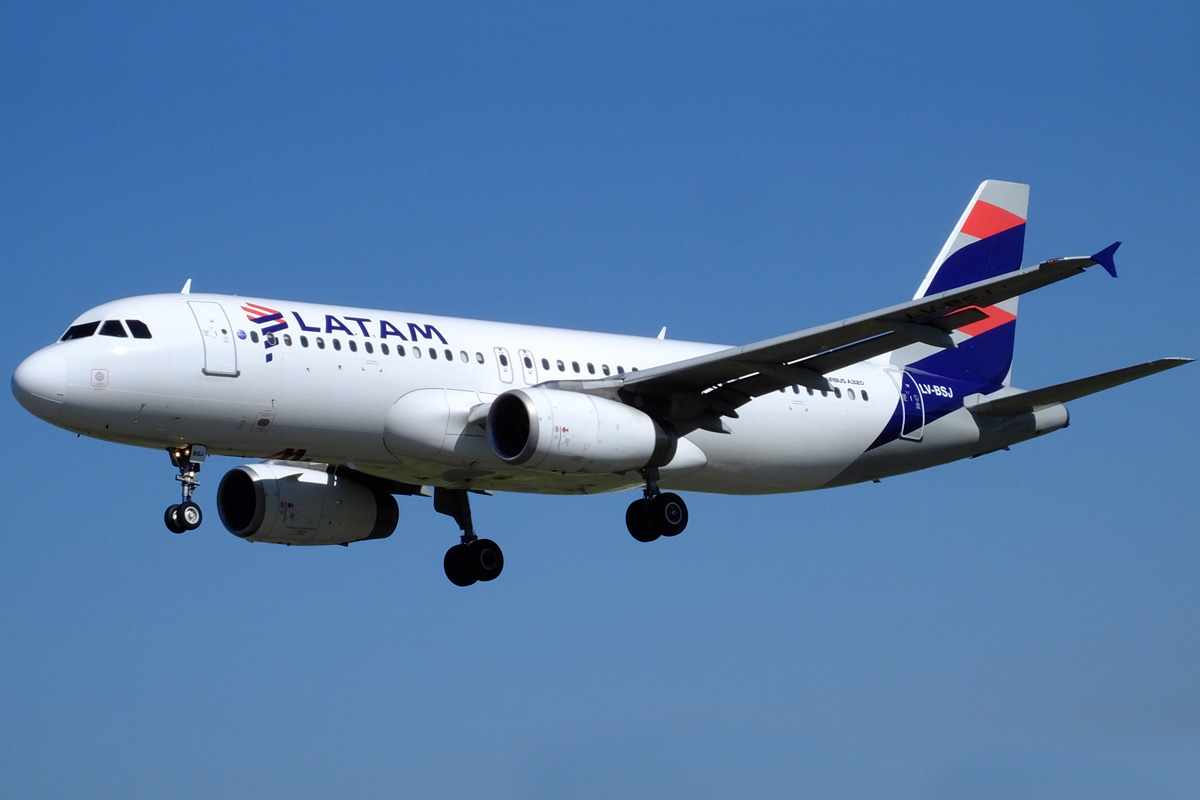
By Brazil Stock Guide — LATAM Airlines Group (LTM) plans to add more than 40 next-generation aircraft in 2026, bringing its total fleet to 410 aircraft by year-end and reinforcing its position as one of the largest airline groups in the world.
The company received 13 new-generation aircraft in the first half of the year: seven Airbus A320neo jets, four Airbus A321neo aircraft and two Boeing 787-9 Dreamliners. Of that total, nine were assigned to its Brazilian operation — five A320neos and four A321neos. LATAM expects to receive another 28 aircraft before the end of 2026.
The expansion underscores Brazil’s growing importance within LATAM’s regional strategy. In the second half, the group will continue to receive Airbus A320neo, Airbus A321neo and Boeing 787-9 aircraft. It will also take delivery, for the first time, of Embraer E190-E2 jets, which are expected to strengthen its domestic network in Brazil and give the company greater operational flexibility to serve different types of markets.
“Fleet renewal is one of the most important investments we are driving as a group, because it allows us to grow more efficiently and better respond to the region’s connectivity needs,” said Sebastián Acuto, vice president of Fleet and Projects at LATAM Airlines Group.
According to Acuto, South America still has domestic markets with significant room for development. A more flexible and diversified fleet gives LATAM the ability to match aircraft size, range and frequency to different demand profiles across the region.
The plan also positions LATAM to expand its medium-haul network. In 2027, the group expects to incorporate its first Airbus A321XLR, a longer-range narrow-body aircraft that can operate nonstop routes that would otherwise be harder to serve economically. For a South America-based carrier, the model could open new opportunities between regional capitals, the Caribbean, North America and other medium-distance international markets.
By the end of the decade, LATAM plans to incorporate up to 130 additional aircraft from different manufacturers. As a result, more than half of its fleet is expected to consist of next-generation models by 2030.
The company said these aircraft can reduce CO₂ emissions by 20% to 25% compared with previous-generation models, based on manufacturer data, while also improving fuel efficiency and lowering operating costs. The fleet renewal is part of LATAM’s broader commitment to reach net-zero emissions by 2050.