Brazil has created a parallel economy around lawsuits. It shows up in banks’ multibillion-real provisions, in airline ticket prices, in the cost of health insurance plans and in the risk calculations of any company that deals directly with consumers. Litigation in Brazil is no longer just a tool for redress. In many sectors, it has become an operating expense.
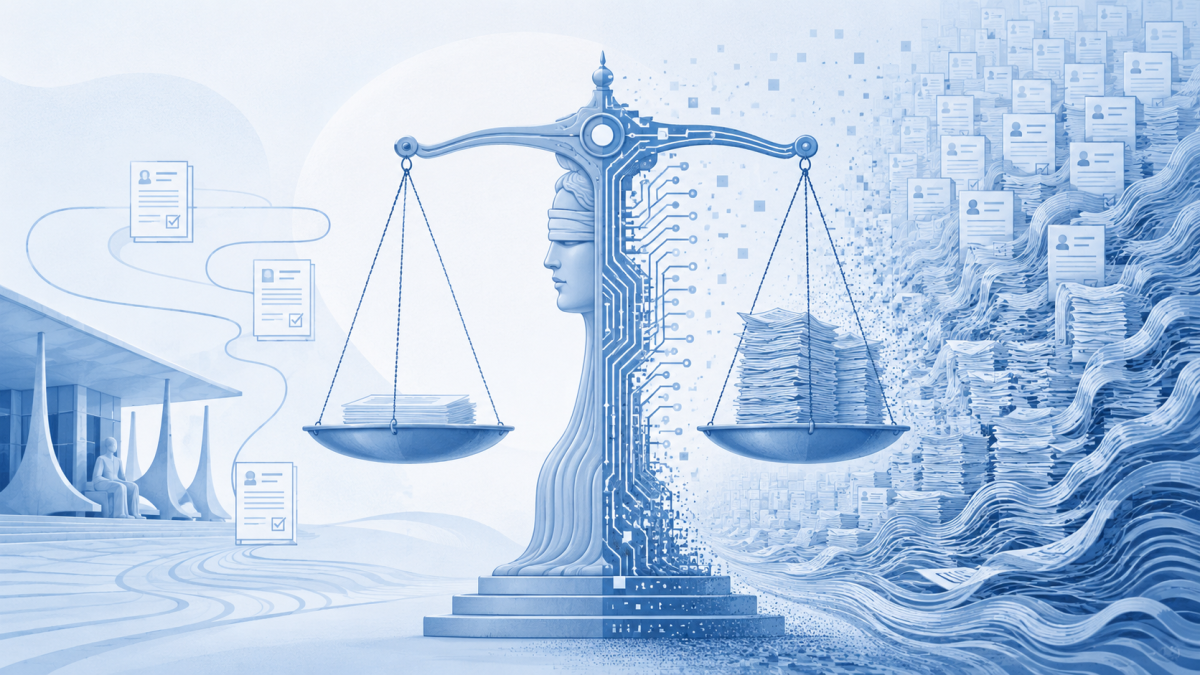
That is the backdrop for the launch by Brazil’s National Justice Council, or CNJ, of the National System for Abusive Litigation, known as Atalaia. The artificial-intelligence tool was designed to identify unusual patterns in lawsuits. Its promise is ambitious: to help judges separate genuine claims from fabricated, repetitive or predatory litigation.
Few issues combine two Brazilian obsessions quite as neatly: judicialization and technology as salvation. Brazil’s court system often operates like a machine clogged by low-value disputes, mass claims, replicated legal theories and professional networks specialized in turning consumer frictions into serial litigation. The result is slower justice for those who truly need it, higher costs for companies and an entire industry dedicated to exploiting the system’s loopholes.
Atalaia is trying to attack the problem through patterns, not through the merits of individual cases. The tool should not determine whether an airline passenger has a valid claim, whether a bank charged an improper fee or whether a health plan wrongly denied a procedure. Its role, at least in theory, is to detect statistically suspicious behavior: cloned petitions, recurring plaintiffs, unusual combinations of lawyers, standardized claims and artificial surges in lawsuits.
That is the best version of the tool. The worst version is more troubling: an opaque system, fed by incomplete data, used to label claims as abusive simply because they look repetitive — even when corporate misconduct may also be repetitive.
Predatory litigation does exist in Brazil. But so do companies that treat litigation as part of normal customer service. There are opportunistic lawsuits, but there are also mass failures. Some lawyers exploit loopholes, but some sectors only change behavior after being sued thousands of times. An AI system trained to detect patterns will have to distinguish the lawsuit industry from the industry of noncompliance.
The health-care sector is the perfect laboratory for this ambiguity. For health insurers and hospitals, litigation raises costs, pressures premium adjustments and makes the system harder to predict. The argument has merit. If an insurer has to price monthly premiums not only on the basis of claims ratios, an aging customer base and medical costs, but also on structural litigation risk, the bill inevitably reaches consumers.
But health care is a highly sensitive service. Denied coverage, delays in authorizations, contractual exclusions, steep premium increases and poor service can turn the courts into a patient’s last resort. An excessive number of lawsuits may be a symptom of opportunism. It may also be a symptom of systemic failures, regulatory gaps and low trust in administrative channels.
If Atalaia works, it could improve the allocation of resources within the judiciary and reduce bad incentives outside it. Legitimate claims would move faster. Artificial claims would be identified earlier. Companies could see some relief in provisions. The system would become more rational. But artificial intelligence in the judiciary requires more than efficiency. It requires governance, transparency, the ability to challenge classifications and a clear understanding that the algorithm flags risk; it does not replace judicial reasoning.
AI will be useful if it helps judges investigate whether a case reflects procedural fraud or repeated corporate failure. It will be dangerous if it presumes the answer.