
Brazilian pulp producers are at the heart of a commodity that rarely makes headlines: toilet paper. In April, Donald Trump imposed a 10% tariff on imported pulp, sending brazilian exports down 20% in just one month and freezing negotiations. By early September, however, Washington reversed course, lifting duties on three categories that account for more than 90% of Brazilian shipments.
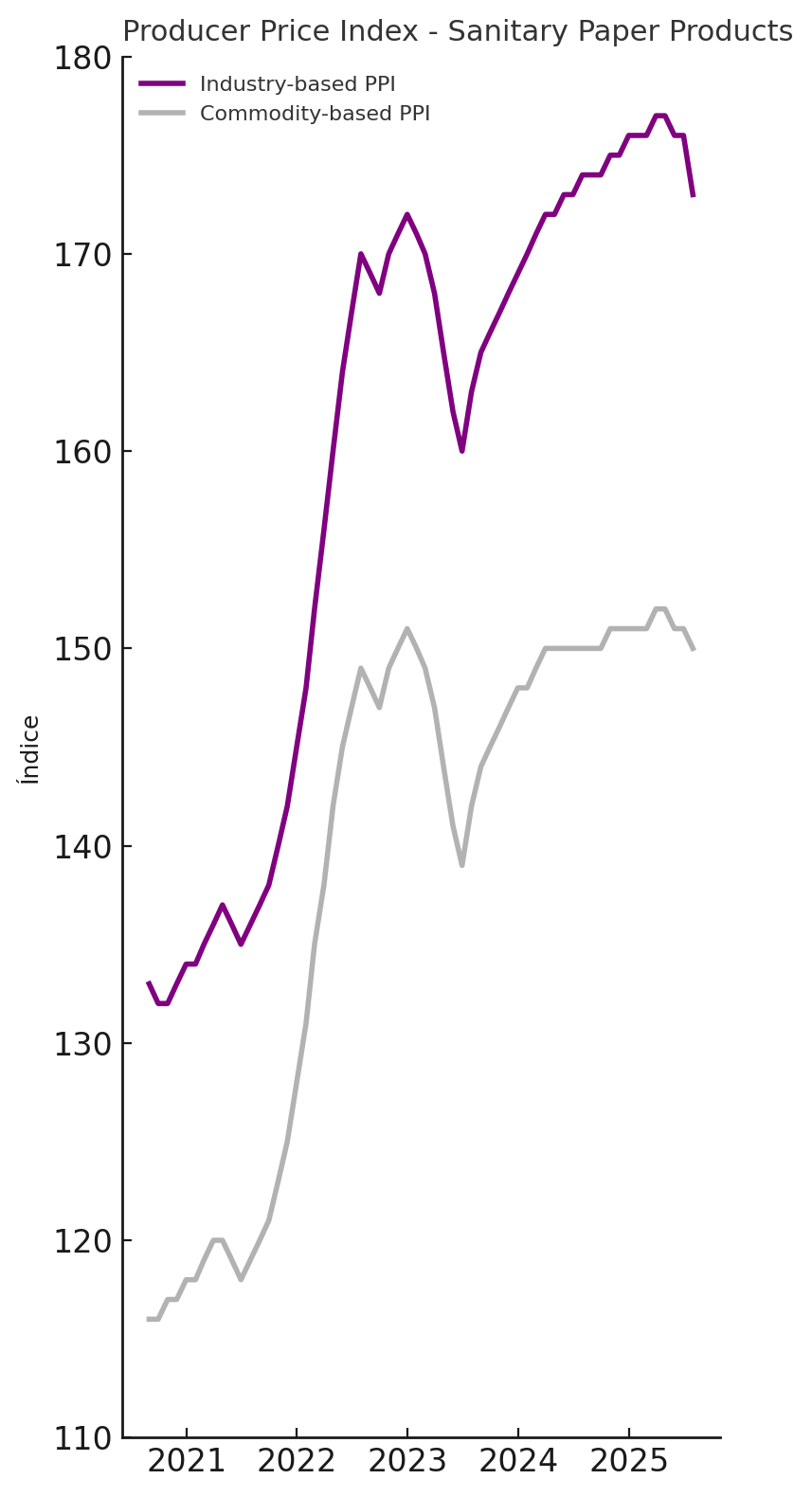
The pressure goes beyond tariffs. US paper prices climbed to new levels in the post-pandemic period while wages lagged. Producer price indexes confirm the squeeze: the commodities gauge, reflecting pulp costs, spiked in 2022 and has stayed high; the industry index, tracking finished goods, mirrored the surge at even higher levels. With tariffs, inflation in US paper products jumped to 4.5% in August, from under 0.5% in May.
American consumers are feeling it. Wholesale clubs like Costco and Sam’s are crowded with shoppers chasing cheaper rolls. In this environment, diplomacy carried little weight: the White House’s reversal owed more to local producers, squeezed by increasingly price-sensitive buyers, than to foreign lobbying.
Brazilian Pulp
For Suzano, the world’s largest short-fiber pulp producer, volatility has become routine. The company cut output by 3.5% in 2025 — about 450,000 tons — to adjust to uncertainty. The US accounts for 15% to 20% of its net sales.
Brazil remains a commodity exporter, and will likely stay that way. Its advantages over the US are hard to beat: abundant land, water and fast-growing eucalyptus geared to tissue production. Higher capital costs are a hurdle, but Washington has kept tariffs on finished products, protecting its local mills, which now buy cheaper pulp while keeping the value-added business at home.
Tariffs may be decreed in Washington, but American consumers set the direction. When trade policy threatens supermarket toilet paper, it is voters — not diplomats — who ultimately force Trump to clean up the mess.