
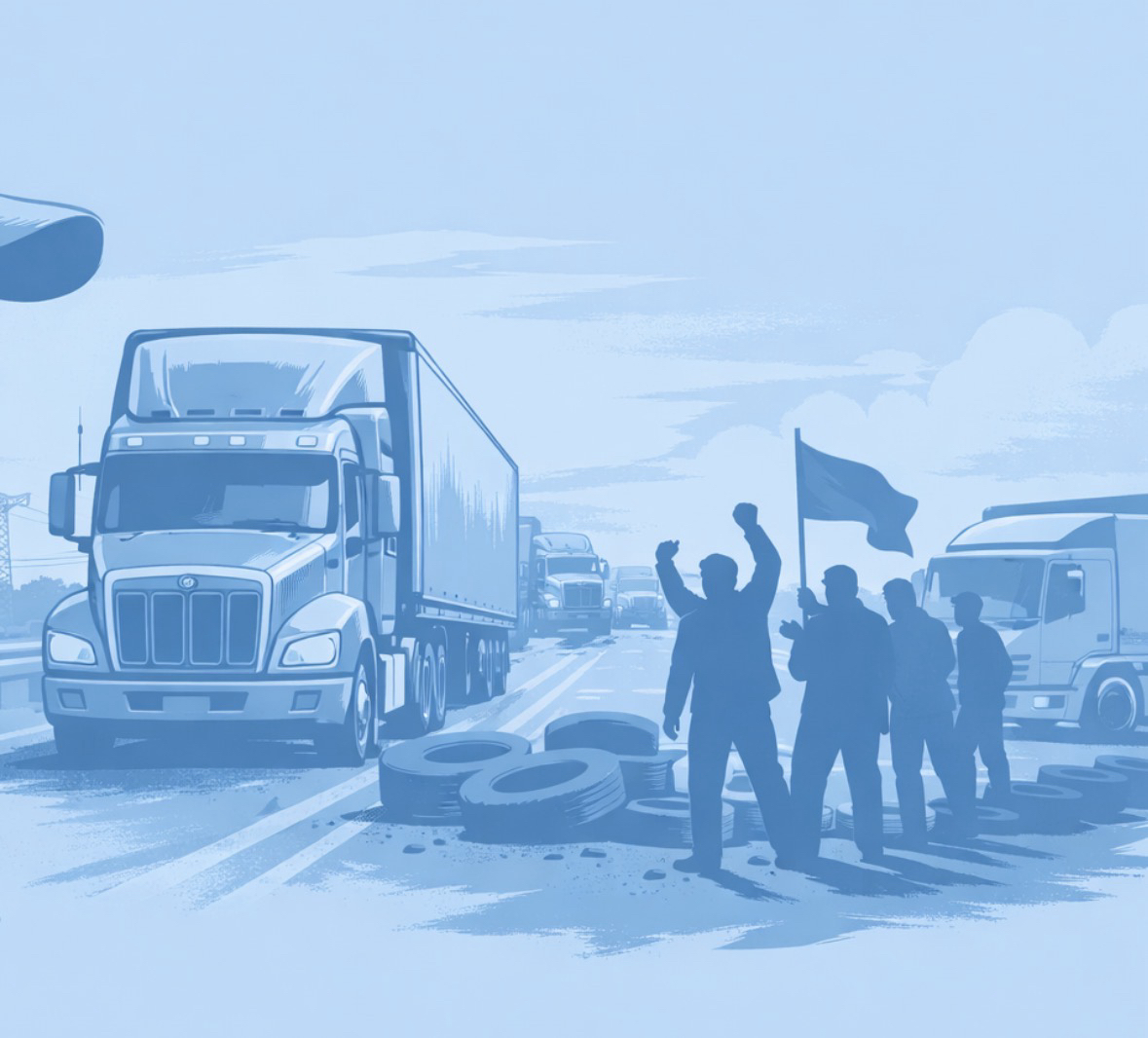
Brazil’s truckers remain one of the most sensitive — and unpredictable — links in the economy. Fragmented, yet capable of blocking highways and eroding political approval, they are back at the center of the agenda as oil prices rise. With diesel under pressure and the risk of a strike in an election year, Brasília has responded in familiar fashion: intervention. The provisional measure tightening freight floor enforcement and the decree recalibrating diesel pricing are not isolated moves. They are containment.
There is history here. The sector has long been treated as strategic, not just economically but politically, including past subsidized financing programs for truck purchases. Yet the freight floor, created after the 2018 strike, was never fully internalized by the market. Large shippers have continued to operate below the mandated rates — particularly in sectors such as food, fuel distribution and agribusiness — with companies like BRF, Vibra, Raízen, Ambev and Cargill frequently cited among those fined. The rule existed. Enforcement did not.
Now it does — and it runs through the CIOT. The code acts as a mandatory digital registration for every freight operation: before a truck can move, the contracting party must generate a record including origin, destination, payment terms and the applicable minimum freight rate. Without it, the shipment cannot proceed. Under the new rules, if the declared price falls below the floor, the system blocks the transaction altogether. In effect, freight pricing is no longer just negotiated — it is pre-cleared by the regulator, with real-time monitoring based on fiscal data.
This mechanism changes the game. Multimillion-real fines and the risk of suspension now fall directly on shippers and corporate groups, while even freight advertisements are within scope. It marks a shift from tolerated non-compliance to automatic enforcement. At the same time, the government is attempting to smooth input costs through diesel policy, creating a regulatory buffer. Price and freight are now partially coordinated — albeit imperfectly.
Calling this intervention is accurate — but incomplete. Doing nothing also carries a cost, historically paid in strikes. The trade-off is familiar: between market efficiency and political stability, Brazil has once again chosen the latter. The freight floor does not resolve the sector’s fragmentation — which would require scale, contracts and lower volatility — it merely manages its consequences. On Monday, we examine what a structural solution would look like — and why it remains elusive