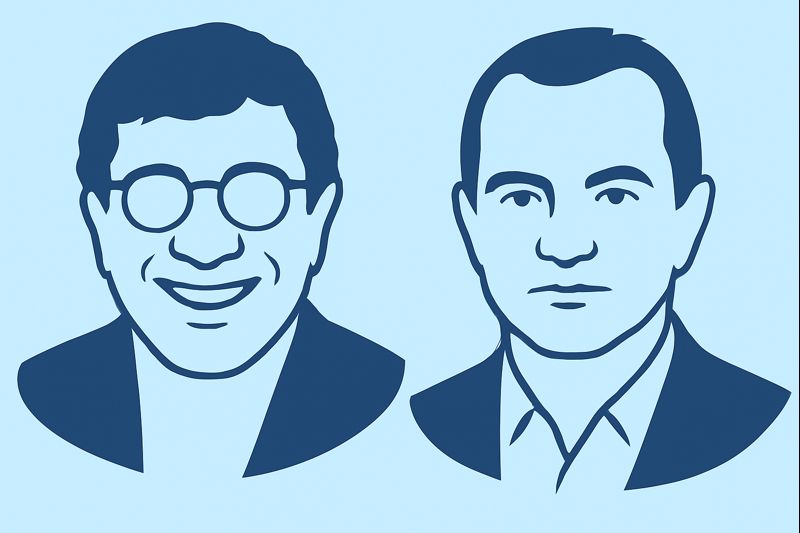
Recent Brazilian capitalism can be traced through two surnames: Batista and Esteves. Joesley Batista, controlling shareholder of J&F, and André Esteves, founder of BTG Pactual, both suffered spectacular falls in the past decade — in episodes linked to the Lava Jato investigations — and, less than ten years later, have returned to the centre of the board under President Luiz Inácio Lula da Silva’s third term.
Joesley resumed strategic control of a group that never stopped generating cash. JBS, its flagship asset, weathered crises and leniency agreements while preserving global scale and access to capital. In 2017, Joesley entered into a plea bargain agreement with the Public Prosecutor’s Office as part of the Lava Jato investigation. The plea bargains did not dismantle the empire; they formalised its reorganisation. Today, Joesley remains publicly active and exercises direct influence over J&F’s core strategic decisions.
Esteves followed a different path, but reached a similar destination. After being sidelined from the financial system in 2015, he gradually returned to the centre of BTG Pactual, which has consolidated its position as one of Brazil’s leading platforms for financial structuring and infrastructure-related investments. The bank emerged larger and more visible in governance, without abandoning the calculated risk appetite and deal-making capacity that have long defined its founder.
In recent weeks, both figures have also occupied a space that extends beyond markets: informal diplomacy. Not the kind conducted by institutions such as Itamaraty, Brazil’s foreign ministry, but a personal, relationship-based form of mediation rooted in economic interests — common, if rarely explicit, in mature democracies. Business-led diplomacy is not new in Brazil; since the days of the Viscount of Mauá, capital and the state have often shared the same counter. According to Bloomberg, Batista held discussions with Donald Trump over US tariffs imposed on Brazilian goods and travelled to Venezuela in an attempt to persuade Nicolás Maduro to step down. Esteves, meanwhile, is reported to have spoken with US Treasury secretary Scott Bessent about both the tariffs and the application of Magnitsky Act sanctions against Brazilian officials, including Supreme Court chief justice Alexandre de Moraes, according to Folha de S.Paulo. Days later, the Trump administration suspended both the tariffs and the sanctions.
For Brazil, this type of intervention has tangible effects. In moments of political tension, external shocks or institutional noise, interlocutors capable of engaging with key governments can help reduce information asymmetries, contain unnecessary escalation and protect flows of trade, credit and investment. Such channels do not replace the state, nor should they be confused with capture; they operate as complements when formal mechanisms prove slow or constrained.
This form of mediation is not a Brazilian anomaly, nor inherently a deviation from institutional norms. In established political systems, informal channels between governments and business leaders often function as auxiliary tools, particularly during economic crises, sanctions disputes or trade conflicts. The risk emerges when mediation slides into privilege. When it serves to reduce friction, reopen dialogue and mitigate systemic damage, politics — even outside formal protocols — performs a role that cannot automatically be criminalised. The model carries a cost. The terms, limits and possible quid pro quos of such conversations remain unknown — whether economic, political or strategic. Markets observe the outcomes; the details stay behind the closed doors typical of high-level negotiations.
In international affairs, sanctity is rarely demanded. Predictability is. Joesley and Esteves have survived because they remain capable of providing it when risk threatens to spill into the real economy. Not all methods are visible. For now, the system appears content with the outcome.