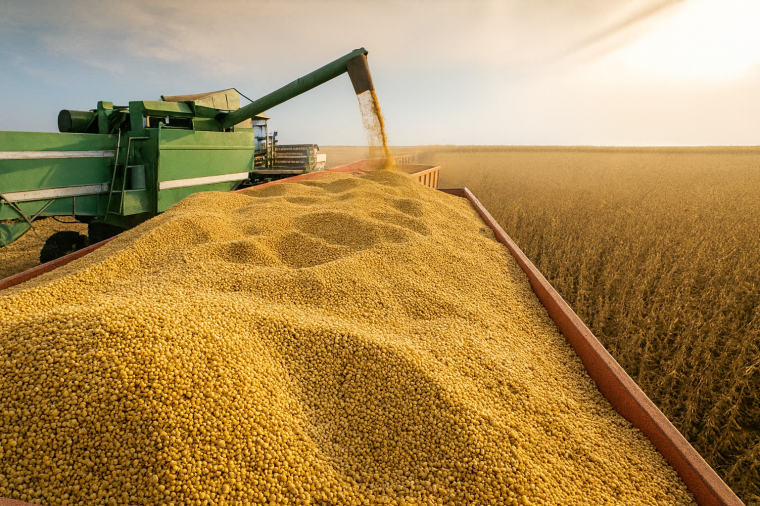
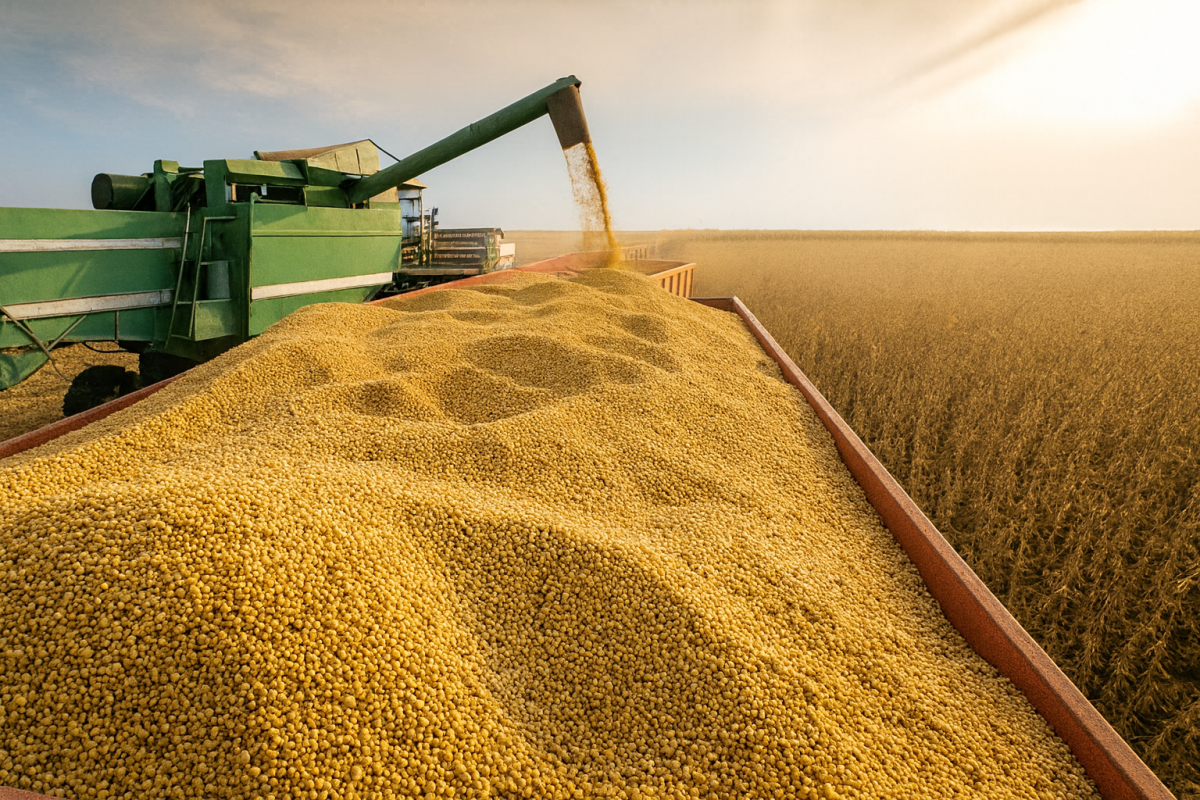
By Brazil Stock Guide – Acelen Renováveis, a renewable energy company backed by Mubadala Capital, has signed a five-year agreement with Bunge for the supply of 1.5 million metric tons of certified soybean oil to produce sustainable aviation fuel, or SAF, and renewable diesel, also known as HVO.
The agreement provides for annual deliveries of 300,000 metric tons beginning in 2029, when Acelen Renováveis expects its planned biorefinery in the Brazilian state of Bahia to begin operations. According to the companies, it is the largest soybean oil supply contract Bunge has ever signed in South America.
The companies describe the facility as the continent’s first large-scale SAF and HVO production project. With planned investment of more than $3 billion, the integrated plant will have the capacity to produce as much as 1 billion liters of renewable fuels per year.
The soybean oil may be sourced from Brazil and Argentina and will be required to comply with international traceability and sustainability standards associated with the U.S. Environmental Protection Agency and the California Air Resources Board.
For Acelen Renováveis, the agreement secures part of the certified feedstock needed to operate the biorefinery and supports the development of a supply chain capable of sustaining large-scale renewable fuel production.
Cristiano da Costa, Acelen Renováveis’ vice president of commercial and trading, said access to certified feedstock will be essential to the project’s competitiveness, traceability and operational reliability, while also expanding the availability of low-carbon fuels in Brazil and international markets.
The biorefinery’s supply strategy is based on a diversified feedstock portfolio. In addition to the soybean oil supplied by Bunge, Acelen Renováveis has signed agreements to purchase used cooking oil and is developing a macaúba palm production chain, which is expected to become the project’s main long-term feedstock.
Bunge will be responsible for connecting the future biorefinery’s demand with its agricultural origination network. The company said that, as of 2024, it had achieved traceability and monitoring across all direct and indirect soybean purchases in regions it considers priorities in Brazil.
Tito Martinho, Bunge’s commercial director, said the partnership could help bring together farmers, financing providers and buyers of low-carbon products, creating conditions for regenerative agriculture practices to be adopted on a broader scale.
The two companies also plan to explore opportunities involving other crops and renewable feedstocks. The biorefinery’s location was selected to allow it to process different types of raw materials, increasing operational flexibility and improving the project’s logistics efficiency.