
By Brazil Stock Guide – Acelen Renewables, the renewable energy company backed by Mubadala Capital, has signed a Memorandum of Understanding with the International Air Transport Association, or IATA, to cooperate on initiatives related to aviation’s energy transition and the development of the sustainable aviation fuel market.
The agreement places Acelen closer to the center of the global debate over aviation decarbonization at a critical moment for the industry. Airlines see SAF as the main lever to reduce emissions, but global supply remains far below the volumes needed to support the sector’s net-zero targets by 2050.
The MoU was signed during IATA’s Annual General Meeting and the World Air Transport Summit in Rio de Janeiro, one of the aviation industry’s most important global gatherings, bringing together airline executives, regulators, investors, aircraft manufacturers, fuel producers and other players across the value chain.
The agreement was signed by Patricia Grossi, Acelen Renewables’ Head of Carbon Markets and Regulatory Affairs, and Dr. Marie Owens Thomsen, IATA’s Senior Vice President of Sustainability and Chief Economist.
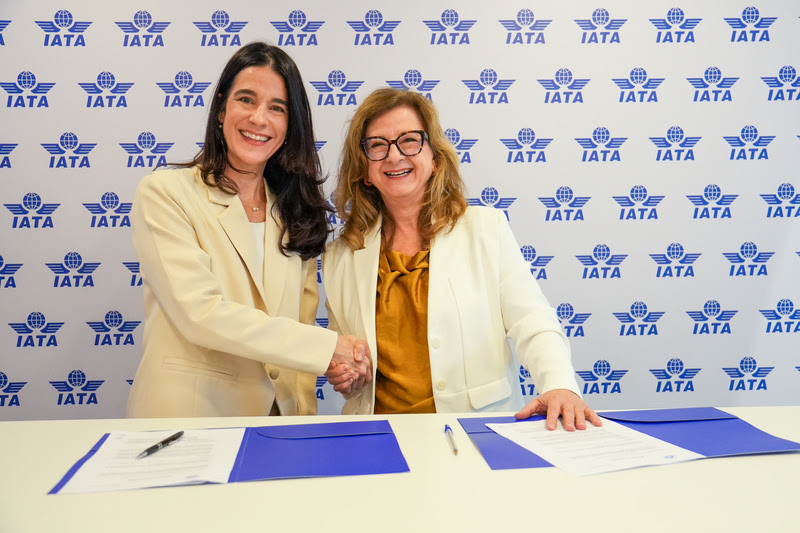
Under the memorandum, the two sides will cooperate in technical forums, working groups, knowledge-sharing initiatives and regulatory discussions related to the development of SAF. In practice, the partnership gives Acelen an institutional platform to present macaúba as a potential large-scale feedstock for renewable fuels, while strengthening its relationship with airlines and policymakers.
Macaúba is central to Acelen Renewables’ strategy. The company is developing an agricultural supply chain based on the cultivation of the native palm, with a focus on degraded land, to supply future production of SAF and hydrotreated vegetable oil, known as HVO or renewable diesel.
The bet is that Brazil can combine land availability, agricultural expertise and industrial technology to become a relevant supplier of low-carbon fuels for sectors that are difficult to electrify.
“Decarbonizing aviation will require innovation, feedstock diversification and collaboration across the entire value chain. The partnership with IATA strengthens our role in this ecosystem and broadens the dialogue on sustainability criteria and the contribution that new technological routes and feedstocks, such as macaúba, can make to building a more sustainable aviation industry,” said Patricia Grossi.
IATA represents more than 370 airlines, accounting for about 85% of global air traffic, and is one of the leading global voices on aviation sustainability, regulation and the development of the SAF market.
“Collaboration across sectors will be essential to accelerate both the production and adoption of sustainable aviation fuels. Initiatives like this help expand knowledge about new feedstock sources and support the development of the sustainable solutions needed to meet global aviation decarbonization targets,” said Marie Owens Thomsen.
For Acelen, the memorandum is more than an institutional partnership. It helps position the Brazilian project within a global race for feedstocks, certifications, regulatory frameworks and future SAF supply agreements.
The company is developing in Bahia one of the world’s largest integrated renewable fuels projects, with more than US$ 3 billion planned for its first unit. The biorefinery is designed to produce 1 billion liters per year of SAF and HVO, combining industrial production with an agricultural supply chain based on macaúba.