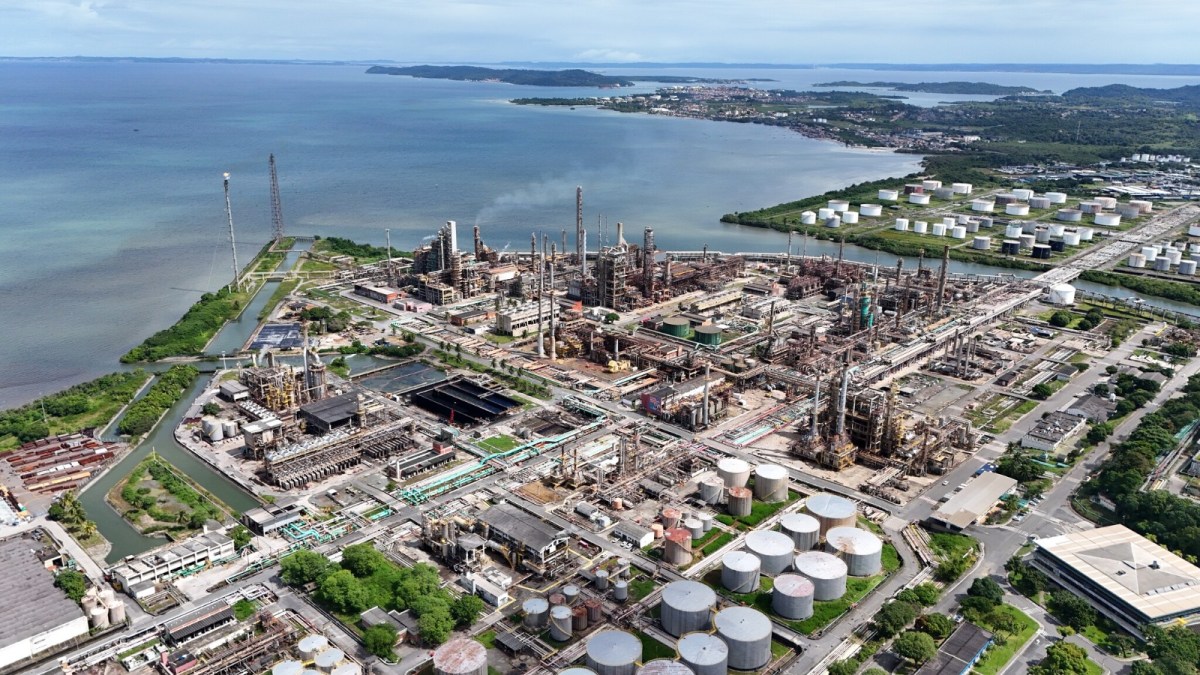
By Brazil Stock Guide – Acelen, the Mubadala Capital-backed energy company that operates Brazil’s Refinaria de Mataripe, is turning efficiency into a structural lever. The company said it reduced total energy consumption at the refinery by 11% between 2022 and 2025, while cutting carbon emissions by roughly 4%, as part of a broader push to modernize operations and lower costs.
Efficiency gains
The reduction, measured in MMBTU per barrel processed, reflects improvements across steam, electricity and natural gas usage. A key shift was the partial replacement of thermal energy with electricity — a cleaner input — which alone drove a 10% drop in steam consumption. The total energy savings are equivalent to the annual consumption of all households in a Brazilian state the size of Roraima, underscoring the scale of the optimization.
Acelen has also upgraded core infrastructure. The replacement of more than 10,000 light fixtures with LED technology reduced electricity use in lighting by about 70%, with an estimated avoidance of 2,900 tons of CO₂ emissions over the equipment’s lifecycle.
Solar as backbone
The most strategic move, however, is the integration of renewable energy into the refinery’s supply chain. The newly operational Acelen SolarPark I, a 162 MWp solar facility located in Bahia’s semi-arid region, now supplies 100% of the refinery’s external electricity demand.
Developed in partnership with Illian Energias Renováveis and Perfin Infra, the project is one of the largest solar assets directly linked to refining operations in Brazil. It is also part of the federal Programa de Aceleração do Crescimento (PAC), aligning private investment with public decarbonization goals.
Cost discipline meets transition
The strategy highlights a broader shift in Brazil’s downstream sector. In a market where refining margins remain exposed to oil volatility and pricing policy uncertainty, energy efficiency is increasingly a financial variable — not just an environmental one.
By reducing energy intensity and securing renewable supply, Acelen effectively lowers operating costs while insulating part of its energy exposure. The result is a refinery that is not only cleaner, but structurally more resilient in a market where both carbon and capital are being repriced.