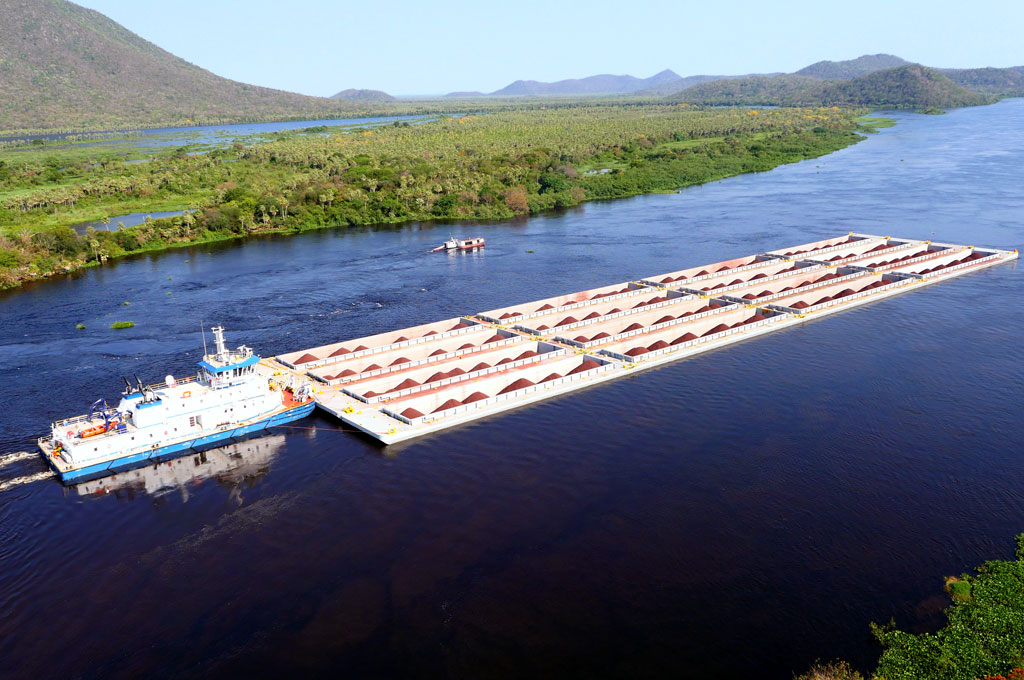
By Brazil Stock Guide – The creation of the Sustainable Transport Alliance for the Amazon, signed during COP30 and backed by the Inter-American Development Bank and the World Bank, has renewed optimism among major logistics players. The agreement brings together Brazil, Bolivia, Colombia, Ecuador, Guyana, Peru and Suriname to coordinate investment in low-carbon transport infrastructure, with a strong emphasis on waterways. The information was first reported by Agência iNFRA.
According to the outlet, the initiative could reopen long-delayed waterway projects along the Madeira, Tocantins and Tapajós rivers, which have stalled amid outdated feasibility studies, regulatory uncertainty, environmental pressures and unresolved concession models. The alliance places river transport as a short-term priority and seeks to attract international capital for projects considered essential to both cargo flows — especially soy — and passenger mobility.
Ronei Glanzmann, CEO of MoveInfra, said the new alliance elevates the role of river corridors at a moment when road construction across the Amazon remains costly and complex. “There is an expectation that this alliance strengthens dialogue,” he said. “Today, roads account for 93% of emissions. Our decarbonization targets require shifting to rail and waterway transport.”
Brazil’s Ministry of Ports and Airports told Agência iNFRA that its National Waterways and Navigation Secretariat is identifying priority investment routes across the Madeira, Solimões, Tapajós, Tocantins and Purus rivers. A regional action plan for 2026–2030 will set fundraising targets and define the alliance’s work program.
The government is also preparing the Programa Ampliar auction on Friday (27) at B3 in São Paulo, which will offer 19 regional airports — nine in the North — to private operators.
Push for Climate-Resilient Infrastructure
During COP30, MoveInfra promoted the use of catastrophe bonds — or cat bonds — as a tool to finance climate-resilient infrastructure. The instruments, used as insurance-like securities in capital markets, were part of a study by Marsh McLennan (MMC) and Oliver Wyman recommending contractual modernization, including mandatory climate-risk mapping in early project design.
Glanzmann said the sector is among those most exposed to extreme events. Many existing concessions were designed under outdated climate conditions, and disasters now create “a huge mismatch in cash flow,” he noted, as revenues collapse just when reconstruction funding is required.
Data from Brazil’s National Transport Confederation indicates that 70.6% of transport companies suffered financial losses from climate-related events over the past five years, with nearly one-quarter reporting damages above R$1 million. Road transport remains the most exposed, with companies citing asphalt damage, bridge failures and flooding.
Since 2024, concession contracts must allocate 1% to 2.5% of gross revenue to climate-adaptation measures. Brazil’s transport regulator ANTT has opened a Regulatory Sandbox to receive eligible project proposals.
Coalition Targets Emissions Cut of Up to 68%
A coalition of 121 transport companies and institutions presented a decarbonization roadmap at COP30 outlining 90 measures that could reduce emissions by up to 68% over two decades. The plan prioritizes expansion of railways, waterways and coastal shipping. Vander Costa, president of the CNT, said the strategy calls for investment in multimodal integration and modern port infrastructure. The initiative estimates R$600 billion in potential investment.