
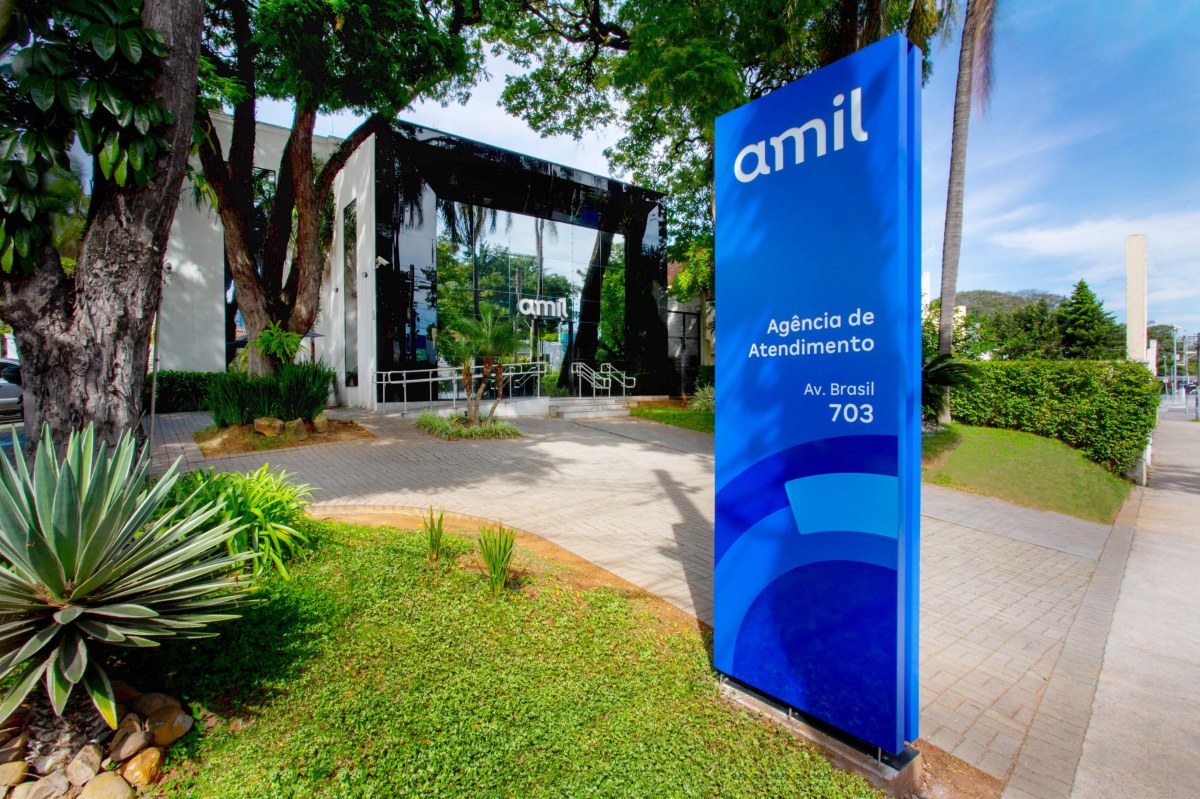
By Brazil Stock Guide – Amil reported net income of R$5.4 billion in 2025, up from R$619.8 million in 2024, the highest among health operators in Brazil, surpassing competitors such as Bradesco Saúde, SulAmérica and Hapvida, the sector’s leader by number of beneficiaries. The result marks a significant turnaround just over a year after the company left the control of UnitedHealth Group and was acquired by entrepreneur José Seripieri Filho.
The company underwent a deep restructuring after years of operational deterioration under its former owner. The effects are beginning to emerge in 2025. The reported profit suggests a strong recovery and places Amil at the top of the sector in terms of profitability.
The comparison with 2024 helps frame the speed of the rebound. Amil had already returned to profit last year, posting net income of R$619.8 million after a period of heavy losses, but the jump in 2025 took the company to a different scale of reported earnings
The number, however, requires a closer look. A meaningful portion of the result did not come from core operations, but from accounting effects and corporate reorganizations.
The company recognized R$2.1 billion in tax credits, related to accumulated losses from previous years. It also recorded around R$1.4 billion in gains linked to its hospital reorganization with Dasa, as part of the creation of a joint venture.
Both items had no direct impact on cash generation. Adjusting for these effects, recurring profit stands at around R$1.9 billion, offering a clearer view of underlying performance.
There has nonetheless been real improvement. Amil reduced its loss ratio by 4.4%, translating into approximately R$0.8 billion in lower medical costs. In a sector pressured by medical inflation, this represents a meaningful gain.
The decline in the loss ratio points to stronger discipline in managing healthcare expenses, one of the main drivers of profitability in the health insurance industry.
The company’s customer base also expanded. Data from Brazil’s health regulator show approximately 3.1 million beneficiaries in medical plans and about 2.6 million in dental plans, reflecting significant growth in scale.
The mix, however, matters. Dental plans carry significantly lower average ticket sizes, meaning that volume growth does not necessarily translate into proportional revenue expansion.
In practice, value generation remains concentrated in the medical segment, where higher pricing and cost control have a greater impact on margins.
The company’s strategy reflects this balance. On one side, expansion of its customer base and distribution. On the other, efforts to increase average ticket and capture higher-income segments.
In this context, the launch of Amil Black signals a move to reposition part of the portfolio, targeting premium customers.
At the same time, the company has reshaped its structure. The creation of the hospital joint venture with Dasa reduced Amil’s direct exposure to capital-intensive assets, altering its operational profile.
The shift points to a less verticalized model, with greater focus on risk management and contracts, and less reliance on owned assets.
The sale of Amil was completed in December 2023, when UnitedHealth decided to exit Brazil after years of pressured results and difficulties adapting its model to the local healthcare system. The transaction was estimated at around R$11 billion, including the assumption of debt.
At the time, Amil was coming out of a period marked by multi-billion-real losses, rising medical costs and margin pressure. The challenge was not growth, but stabilization and compliance with regulatory requirements, particularly those related to technical reserves.
Seripieri is no newcomer to the sector. He founded Qualicorp, a company that pioneered and scaled the model of health plan administrators in Brazil, expanding distribution through group plans.
After selling his stake in Qualicorp, he returned to the sector with the creation of Qsaúde, which was later sold, closing that chapter and paving the way for the acquisition of Amil.
Unlike his previous ventures, the Amil acquisition represented a step change in scale and complexity. Instead of building from scratch, Seripieri took control of one of the country’s largest insurers at a moment of operational fragility.
The new management acted across multiple fronts, including contract renegotiation, cost control and product repositioning, while also restoring compliance with regulatory requirements, particularly those related to technical reserves.
The balance sheet reflects this transformation. Shareholders’ equity increased to around R$13 billion, supported by gains recognized during the period.
Part of this increase is tied to accounting effects, including the expansion of deferred tax assets, reflecting expectations of future taxable profits.
The capital structure remains light, with no significant leverage pressure, providing flexibility for the company to execute its strategy.
The sector, however, remains challenging. Medical inflation continues to push costs higher, while litigation and regulatory changes add uncertainty to the operating environment.
The 2025 result combines two distinct dynamics: an improving operation and earnings amplified by accounting effects.
Amil has moved past the most acute phase of its crisis and is now entering a new stage, where the challenge shifts to turning recovery into consistency. The profit is record-high, but its ability to be repeated remains to be tested.





