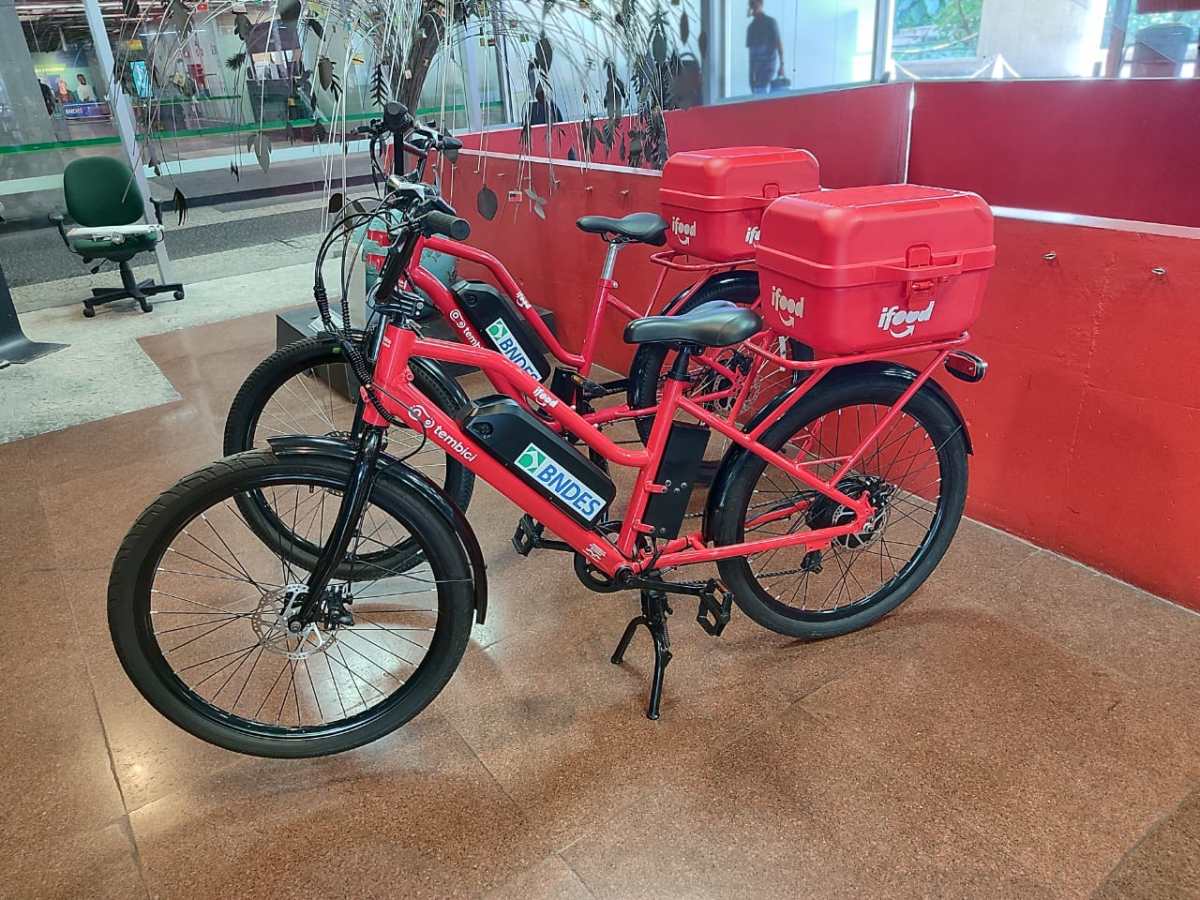
By Brazil Stock Guide – Brazil’s national development bank BNDES approved R$340 million in financing for Tembici Participações SA to buy as many as 85,000 electric bicycles for delivery workers, expanding a micromobility program developed with iFood.
The project will use resources from Brazil’s Climate Fund and is designed to lower rental costs for app-based couriers while increasing productivity and reducing emissions in urban deliveries.
The financing marks a large-scale push into electric bicycles for Brazil’s delivery economy. Tembici, a privately held micromobility company, will rent the e-bikes to couriers at prices below current levels. iFood, also privately held, is a partner in the program and already subsidizes part of the weekly rental cost.
BNDES said the initiative combines social and environmental goals by giving delivery workers access to a cheaper, lower-maintenance vehicle while helping curb a shift from conventional bicycles to fuel-powered motorcycles.
“São 85 mil bicicletas elétricas que vamos disponibilizar. A parte social é ainda mais importante, porque o menino que entrega hoje de bicicleta vai para a elétrica. Se quiser comprar, vai comprar com desconto. Se quiser arrendar vai pagar apenas R$ 71,25 por semana e fica com a bicicleta elétrica no final de semana. Isso vai aumentar muito o retorno por corrida, a remuneração e muito mais qualidade em relação ao esforço que o entregador precisa fazer,” BNDES President Aloizio Mercadante said.
“We will make 85,000 electric bicycles available. The social side is even more important, because the young man who delivers by bicycle today will move to an electric one. If he wants to buy it, he will buy it with a discount. If he wants to lease it, he will pay only R$71.25 a week and keep the electric bicycle over the weekend. This will greatly increase the return per delivery, pay and quality of life in relation to the effort the delivery worker needs to make,” Mercadante said.
The announcement was made Monday (22) during a ceremony marking BNDES’s 74th anniversary, attended by President Luiz Inácio Lula da Silva, cabinet ministers and other officials.
About 5,000 electric bicycles are currently available for rental by delivery workers in Brazil, according to BNDES. Under the new project, that number would expand sharply through purchases and fleet replacement over the next several years.
The current model includes iFood subsidies covering almost half of the weekly rental cost, leaving couriers with a final payment of about R$ 95 a week. Under the BNDES-backed plan, Tembici will add another 25% subsidy during the first 12 months for couriers who use e-bikes in deliveries.
That will reduce the weekly cost to R$ 71.25 during the first year. From the 13th month, the cost will be R$ 85.50, or 10% below the current level.
The bikes will be rented through renewable weekly contracts, allowing couriers to keep temporary possession of the vehicles while the contracts remain active. BNDES said the e-bikes may be used both for deliveries and for personal transportation, including commuting home. The project estimates that couriers will use the bicycles for non-logistics purposes 58% of the time.
“The project approved by BNDES meets President Lula’s government commitment to improving working conditions for delivery workers, who have become essential in Brazilians’ daily lives. In addition to avoiding a potential migration from mechanical bicycles to combustion motorcycles in search of greater productivity, electric bicycles will prevent the emission of 107,200 tons of CO₂ equivalent by 2032, a volume equivalent to the carbon sequestration capacity of approximately 1 million adult trees,” Mercadante said.
The plan calls for the acquisition of 42,500 e-bikes by the end of 2027. Another 42,500 units will be used to replace the fleet through 2031.
Tembici, which describes itself as Latin America’s leading micromobility technology company, will lead the initiative. The company said the bicycles will be manufactured in Brazil and were developed with domestic industry partners to meet the needs of delivery workers.
“Acreditamos que a bicicleta tem o poder de transformar cidades e criar oportunidades. Este projeto amplia o acesso à mobilidade elétrica para entregadores, promovendo mais eficiência, redução de custos e geração de renda, enquanto contribui para um modelo de desenvolvimento urbano mais sustentável. Esse é o propósito da Tembici: conectar empresas, governos e a sociedade em torno de soluções que geram impacto positivo para as pessoas e para as cidades. É um exemplo de como inovação e inclusão podem caminhar juntas para transformar realidades,” said Tomás Martins, Tembici’s chief executive officer and co-founder.
“We believe the bicycle has the power to transform cities and create opportunities. This project expands access to electric mobility for delivery workers, promoting greater efficiency, lower costs and income generation, while contributing to a more sustainable urban development model. This is Tembici’s purpose: connecting companies, governments and society around solutions that generate positive impact for people and cities. It is an example of how innovation and inclusion can move together to transform realities,” Martins said.
iFood said it supports the use of electric bicycles because it sees the model as a way to increase income opportunities and make delivery work more efficient and sustainable. The BNDES financing gives scale to the partnership between iFood and Tembici, according to the bank.
“Ao ampliar o acesso às bicicletas elétricas, estamos criando condições para que milhares de entregadores possam aumentar sua capacidade de gerar renda, com mais autonomia, eficiência e menor custo operacional. É uma forma de transformar inovação em impacto real, promovendo inclusão produtiva, desenvolvimento econômico e cidades mais sustentáveis,” said Luana Ozemela, iFood’s chief sustainability officer and vice president for impact and sustainability.
“By expanding access to electric bicycles, we are creating conditions for thousands of delivery workers to increase their ability to generate income, with more autonomy, efficiency and lower operating costs. It is a way to turn innovation into real impact, promoting productive inclusion, economic development and more sustainable cities,” Ozemela said.
Tembici said it has surpassed 300 million rides with shared bicycles across major Brazilian cities including Rio de Janeiro, São Paulo, Belo Horizonte, Salvador, Recife, Brasília, Curitiba, Florianópolis and Porto Alegre, as well as Santiago, Buenos Aires and Bogotá. The company said its operations have helped avoid a potential 47,000 tons of CO₂ emissions in recent years.