By Brazil Stock Guide – Banco Nacional de Desenvolvimento Econômico e Social, Brazil’s state development bank, will allocate an additional R$70 billion ($ equivalent varies with FX) to the government’s Nova Indústria Brasil (NIB) program through December 2026, raising total commitments to R$370 billion over four years. The move deepens President Luiz Inácio Lula da Silva’s strategy to revive domestic manufacturing and reduce the economy’s dependence on commodities such as soybeans, iron ore and crude oil.
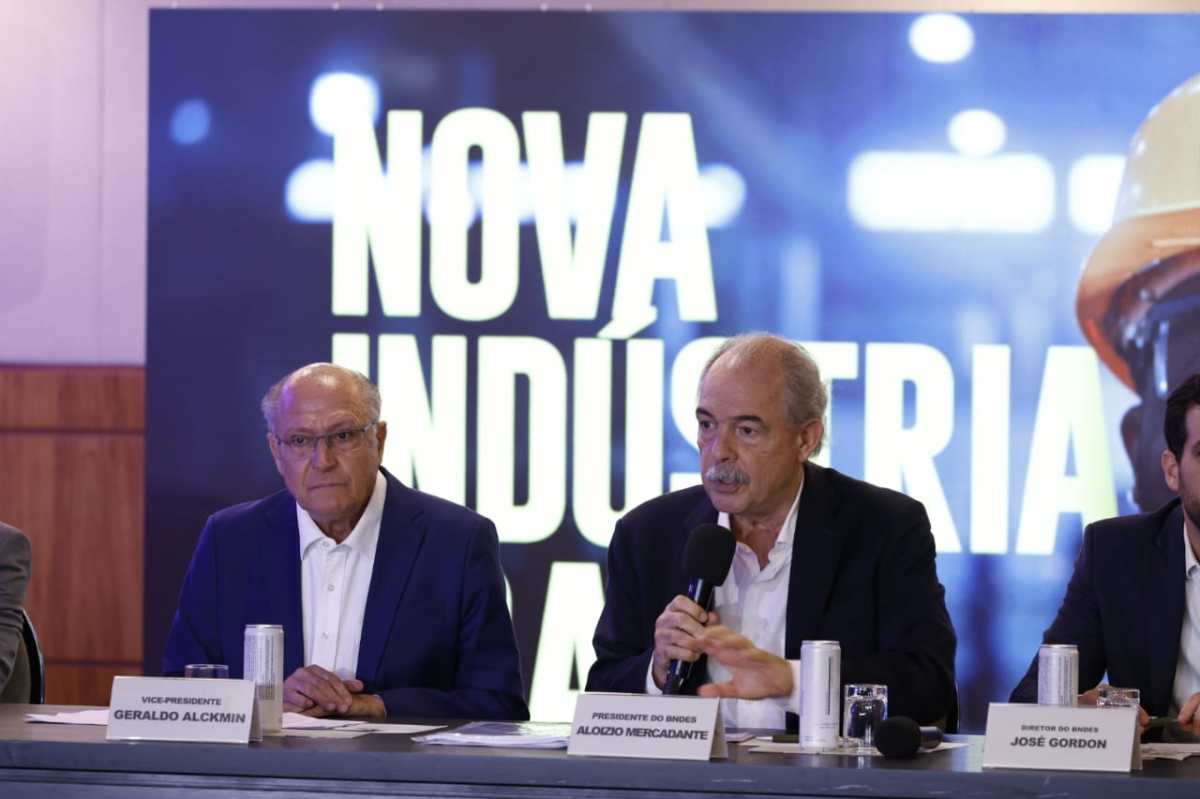
The bank had already reached its initial R$300 billion target ahead of schedule in late 2025. Friday’s announcement in São Paulo by Vice President Geraldo Alckmin and BNDES President Aloizio Mercadante signals that Brasília intends to accelerate credit expansion even as global financial conditions remain tight.
What is Nova Indústria Brasil?
Launched in 2023, NIB is Brazil’s industrial policy framework designed to modernize factories, expand clean energy capacity and rebuild strategic supply chains — including pharmaceuticals, defense technologies and semiconductors. It reflects a broader global trend in which governments, from the U.S. to Europe and Asia, are using public funding to secure critical industries.
The largest share of BNDES funding has been directed to digital transformation (R$84.6 billion) and sustainable agroindustrial chains (R$76.9 billion). Infrastructure and urban mobility projects received R$63.1 billion. Strategic technologies linked to sovereignty and defense absorbed R$27.8 billion, while bioeconomy and decarbonization initiatives accounted for R$27 billion. Health-related industrial projects received R$7.9 billion.
Through its equity arm, BNDES Participações S.A., the bank also committed R$12.6 billion in fund and equity structures — a sign it aims to crowd in private capital rather than rely solely on subsidized loans.
Green and digital metrics
Officials highlighted measurable outputs to justify the scale: financing supported 608 medicines and active ingredients, 15 new industrial plants, 216,000 square meters of laboratories and R$4.7 billion in artificial intelligence projects. On the environmental front, backed projects reportedly removed 95.5 million metric tons of CO₂ equivalent and increased annual ethanol output by 2.3 million cubic meters.
Export financing totaled R$56 billion over three years — double the volume seen in the previous six-year period — reinforcing Brazil’s ambition to move up the value chain in global trade.
Of the total lending, R$111.8 billion supported micro, small and mid-sized manufacturers, while R$175.6 billion went to large industrial groups. Authorities emphasized a low non-performing loan ratio of 0.06%, countering criticism that aggressive state-directed credit could strain public finances.