
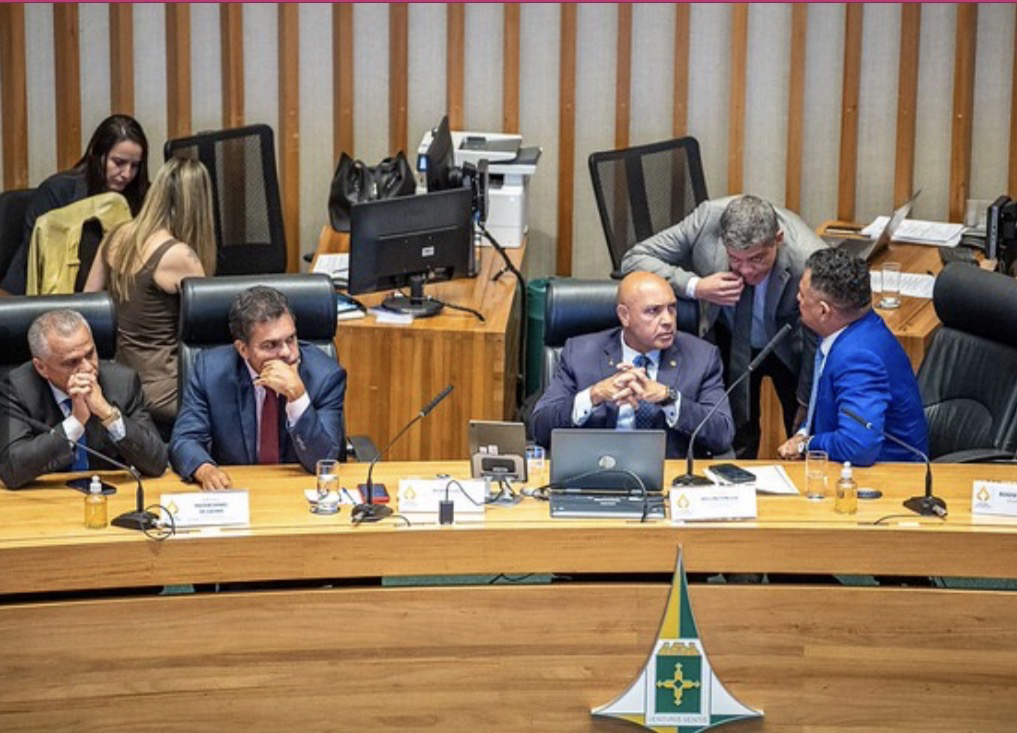
By Brazil Stock Guide – Lawmakers in Brazil’s Federal District approved a bill allowing the government to inject up to R$6.6 billion ($1.3 billion) into Banco de Brasília (BRB), a regional lender controlled by the local government, through a mix of loans and the monetization of public land assets after losses linked to Banco Master, a financial institution that was recently liquidated.
The proposal, approved Tuesday by the Câmara Legislativa do Distrito Federal (CLDF) with 14 votes in favor and 10 against, aims to reinforce the bank’s capital base and preserve its ability to expand lending. The bill now awaits final approval from Governor Ibaneis Rocha, who represents the executive branch of the Federal District government.
How the Capital Plan Works
The law allows the Federal District — which is BRB’s controlling shareholder — to raise funds by selling or transferring nine government-owned land parcels currently held by state-controlled companies such as Terracap (the district’s land development agency), Caesb (water utility), CEB (electricity company) and Novacap (public works company).
Six of the properties are located in the Setor de Indústria e Abastecimento (SIA), an industrial and logistics district in Brasília. Others are in Taguatinga Sul, the Setor de Áreas Isoladas Norte, and a large 716-hectare tract known as Gleba A, which could represent the most valuable asset in the portfolio.
Under the bill, the government may sell the properties and transfer the proceeds to the bank, or transfer the land directly to BRB so the lender can monetize the assets itself through sales, development projects or financial structures.
The legislation also authorizes the creation of real estate investment funds (FIIs) and special-purpose companies, allowing the government and the bank to package the land into investment vehicles and attract private investors.
Why the Government Is Acting
The capital plan follows losses linked to BRB’s exposure to Banco Master, a Brazilian financial institution that was placed into liquidation by the Central Bank of Brazil. Lawmakers said the measures are necessary to stabilize the bank’s balance sheet and maintain regulatory capital levels.
BRB plays an important role in Brasília’s financial system, providing credit to households, local companies and public employees, and acting as the main banking partner for the Federal District government.
Safeguards and Oversight
During the legislative debate, lawmakers added seven amendments aimed at increasing transparency and protecting public assets.
One amendment requires market-based valuation and public oversight of any property sales to avoid selling state land below market prices. Another stipulates that if the assets generate more value than needed to stabilize the bank, the excess must return to the Federal District government or the original public owner.
Additional provisions require the government to present a formal economic return plan whenever public assets are used to reinforce BRB’s capital, outlining expected financial benefits and timelines.
The bill also provides for the participation of Iprev-DF, the pension fund for public employees in the Federal District, which must hold at least 20% of the capital generated through the operation.
If signed into law, the measure will allow the government to begin valuing the properties and structuring the financial transactions, potentially creating one of the largest recapitalization efforts involving a regional public bank in Brazil in recent years.