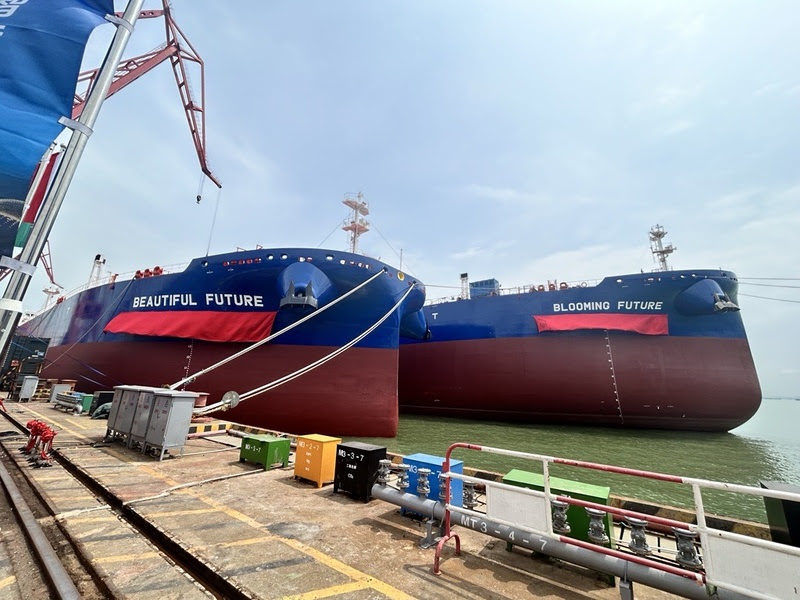
By Brazil Stock Guide – Braskem (BRKM5; BAK) is expanding the fleet of Braskem Trading & Shipping in a move that goes beyond cleaner maritime transport. By adding two new LR1 tankers to its logistics platform, the Brazilian petrochemical group is deepening control over a critical part of its own supply chain: the long-distance transport of naphtha from the U.S. Gulf Coast to Brazil.
The vessels, named Beautiful Future and Blooming Future, are expected to reduce CO₂ emissions by about 30% compared with the average ships currently operated by the company. That represents an estimated cut of roughly 6,500 tons of emissions per year. But the larger strategic point is fleet verticalization. Braskem is bringing a key logistics function closer to its industrial core, reducing dependence on third-party shipping capacity while improving efficiency on one of its most important feedstock routes.
Control of supply
Naphtha remains a central raw material for Braskem’s Brazilian petrochemical operations. It is used to produce resins and chemicals that end up in packaging, medical supplies, household goods, construction materials and other everyday products. In that context, maritime logistics is not a side issue. It is part of the company’s industrial backbone.
The new LR1 vessels were designed for long-range routes between the United States and Brazil, with a typical journey of more than 5,500 nautical miles. For a company exposed to commodity cycles, freight volatility and feedstock costs, having more direct control over vessels can improve planning, reliability and cost discipline.
“We are expanding our fleet with more modern and efficient vessels, aligned with Braskem’s commitment to increasingly sustainable and competitive operations,” said Hardi Schuck, director of Braskem Trading & Shipping. “These ships represent an important step in the company’s logistics evolution and reinforce our long-term vision for more efficient maritime transportation.”
Verticalization angle
Braskem is expanding a specialized shipping structure inside the group, tightening the connection between trading, freight management, industrial supply and emissions reduction. That matters in petrochemicals because logistics can be both a risk and a competitive advantage. The industry depends on large, regular and reliable flows of feedstock. Any disruption in shipping, fuel prices, port conditions or vessel availability can affect margins and operating stability.
By reinforcing Braskem Trading & Shipping, the company is trying to turn maritime logistics into a more controlled part of its operating model. The new vessels can operate at optimized speed, reducing fuel consumption and emissions, while also supporting a more predictable supply chain for Brazilian plants.
Cleaner efficiency
The ships were officially presented in China on May 8. According to Braskem, they include next-generation engines, optimized hull design to reduce fuel consumption and energy-efficiency systems that go beyond current regulatory requirements for the maritime industry.
The environmental gain is important, but it is best understood as part of a broader operational strategy. In a cyclical industry where Braskem remains exposed to petrochemical spreads, feedstock prices, leverage and governance questions, logistics efficiency is one of the levers the company can influence directly.
The Beautiful Future and Blooming Future are the first LR1 vessels delivered to Braskem Trading & Shipping in 2026. Two additional ships are already under construction and are expected to join the fleet by early 2027, suggesting the initiative is not a one-off but part of a broader fleet modernization plan.
“The initiative follows a global movement in the maritime industry toward fleet modernization and lower CO₂ emissions,” said Silvia Migueles, Braskem’s logistics director. She said the trend is being driven by new international targets for energy efficiency and the decarbonization of maritime transport.